



Blog
US Stock Market SPAC Express | Chinese Companies' US Listings Active Again!
Click the blue text above
Follow us
For cooperation regarding IPOs, financing, investment attraction, etc., please send business plans
to email: [email protected]
Gold Box
US Stock SPAC Express

With the signing of an audit regulatory cooperation agreement between relevant Chinese and US authorities last year, which eliminated the delisting risk for China concept stocks, Chinese companies' listings in the US have become active again.
However, this time many Chinese companies chose to go public in the US via SPAC reverse mergers.
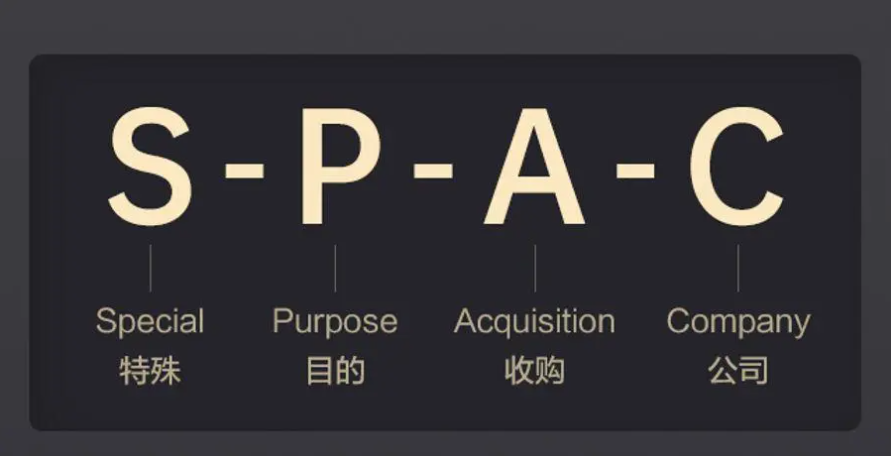
A Special Purpose Acquisition Company (SPAC), also known as a "blank check company," is a new indirect listing method for enterprises that has emerged in recent years. Specifically, SPAC sponsors first establish shell companies to list on Nasdaq or the NYSE to raise funds, and then seek to acquire target companies within an agreed period of two years to complete asset injection. As assets are injected, the SPAC's stock price rises, allowing all participants to profit together.
According to incomplete statistics, at least 30 Chinese companies listed on major US capital markets last year, with 12 of them going public via SPAC reverse mergers. These include Fosun's Lanv Group (LANV), Geely's Polestar Automotive (PSNY), ECARX Technology (ECX), coffee chain Tims China, beauty tech company Perfect Corp, Mengyun Holographic, Weiyi Chip Technology, NIO Power, and others.
Since the beginning of this year, several Chinese companies have completed mergers with US SPACs to go public, including Great Wall Huaguan, the parent company of Qiantu Motor, and Metaverse Holdings (MMV). Additionally, more than 10 other Chinese companies plan to complete their US listings by merging with US SPACs.
An investment director at a Chinese venture capital firm told reporters that currently, many Chinese companies view SPAC reverse mergers as a shortcut to listing in the US. They are now arranging meetings between US SPAC sponsors and domestic high-tech startup founders to discuss opportunities for injecting assets into SPACs to achieve US listings through capital operations.
"After all, listing in the US via SPAC reverse merger involves lower operational costs and shorter timelines, making it quite popular among Chinese business owners," he pointed out.
Reporters learned from multiple sources that besides cost and speed, there are two other major factors driving Chinese companies' preference for SPAC reverse mergers for US listings. First, due to external environmental impacts, many secondary market hedge funds on Wall Street still underweight China concept stocks, leading some Chinese companies to worry that direct IPOs may not achieve expected fundraising amounts. In comparison, many US SPACs raised hundreds of millions of dollars in previous years, potentially enabling Chinese companies to secure higher actual fundraising amounts through SPAC mergers than through IPOs, thus achieving better results in raising capital in the US. Second, many Chinese companies have signed valuation adjustment mechanisms (VAM) agreements with VC shareholders, requiring business owners to list early to avoid VAM failures; therefore, they value the operational convenience of SPAC reverse mergers to expedite their US listings.
A partner at a domestic law firm familiar with US SPAC market dynamics told reporters that the current difficult situation facing US SPACs also benefits Chinese companies by giving them stronger bargaining power in asset injection negotiations.
Data shows that approximately 400 US SPACs with total assets of around $100 billion have yet to complete asset merger transactions. If these SPACs fail to complete asset injections within two years of their inception, they must undergo liquidation upon expiration—requiring them to return investment cash to investors.
However, according to the Inflation Reduction Act of 2022 issued by the US last year, starting this year, if SPAC sponsors return cash to investors, they must also pay a 1% excise tax. This means SPAC sponsors not only lose profits but also have to pay the excise tax out of pocket.
In this context, an increasing number of US SPACs are competing to attract Chinese companies to complete asset injections quickly, avoiding the "embarrassment" of paying excise taxes during liquidation upon expiration.
The same domestic law firm partner also told reporters that currently, many US SPACs are proactively reaching out to Chinese companies, hoping the latter will operate asset injections and reverse mergers as soon as possible, thereby allowing the former to be "revived."
Reporters have learned that many Chinese companies remain confident about listing in the US and continue to advance their processes for going public via SPAC reverse mergers. These include LE Worldwide Limited, Hyperbeast, Maikobo, FAW Jilin Automobile, and other Chinese-funded enterprises.
Several domestic venture capital professionals pointed out that they also support some Chinese-funded companies listing in the US, because in sectors such as biotechnology, new energy vehicles, and internet e-commerce, the US stock market still offers relatively high valuations, helping Chinese companies develop better and faster.

Disclaimer: The information in this article is sourced from the internet. The content published by this official account is for sharing purposes only. If there are any issues regarding content or copyright, please contact us. We will handle it immediately.

Jinhe Enterprise Management Group is a global financial consulting and one-stop full-cycle listing advisory institution, providing domestic and foreign enterprises with rapid growth services from 1 to 10000, guiding enterprises to go public quickly and continuously enhancing their capital value to gain global market competitiveness.
Jinhe Enterprise Management Group specializes in how business owners should operate correctly and increase capital value in the era of Internet+, capital+, and continuous competition upgrading, providing entrepreneurs and business owners who aspire to go public and achieve continuous value appreciation with 1-3 years of strategic restructuring, capital operation, investment and financing, business planning, investment promotion and expansion, management consulting, and a comprehensive package of solutions for rapid listing. It is also a promoter of the new business model under the concept of common prosperity, and its concepts and systems are at the leading level in the global marketing field.
The company's overseas headquarters covers the United States, Canada, the United Kingdom, Sweden, the Middle East, Malaysia, Singapore and other countries; its China headquarters is located in Lujiazui, Shanghai, and has offices in Shenzhen, Hainan, and Chengdu. Shanghai Jinhe Enterprise Management Consulting Group, Zhongjin Tianxia (Hainan) Investment Co., Ltd., Shanghai Mian Equity Investment Fund Management Co., Ltd., Shanghai Brand Development Fund, Shanghai Shijie Enterprise Management Group Co., Ltd., Jinhe (Shanghai) Industrial Co., Ltd. and others form a business matrix, and have in-depth cooperation with many internationally renowned investment banks, funds, accounting firms, and law firms.
Contact Us
Contact Us
Consultation Tel:13052224666 (WeChat same number) Ms. Jin
BP Submission:[email protected]
Company Website:https://www.jinhevip.com
Company Address:Jinhe Group, 22nd Floor, China Financial Information Center, No. 18 Dongyuan Road, Pudong New Area, Shanghai
Originally published on 金盒企业管理集团
