




Blog
OTC market raised $5.6 million in just 10 days

If you think the OTC market is just a place where "companies that can't get listed on the main board just list a random code", this article will change your view. Just this month, an OTCQB company used a textbook-style PIPE financing to tell you: in the OTC market, you can actually raise money, and the path is clear, the terms are transparent, and it is well-documented.
Core Overview
KOIL Energy Solutions, an American deepwater energy equipment company (OTCQB: KLNG), completed a PIPE private placement financing of about $5.6 million in October 2026. From hiring a placement agent to the funds arriving, it took less than half a month. This article fully breaks down the process, terms and underlying logic of this financing — it proves that the OTC market is not just a place for "listing and quoting", but also a functioning public capital market where money can be raised.
I. A deepwater energy company raised $5.6 million in the OTC market
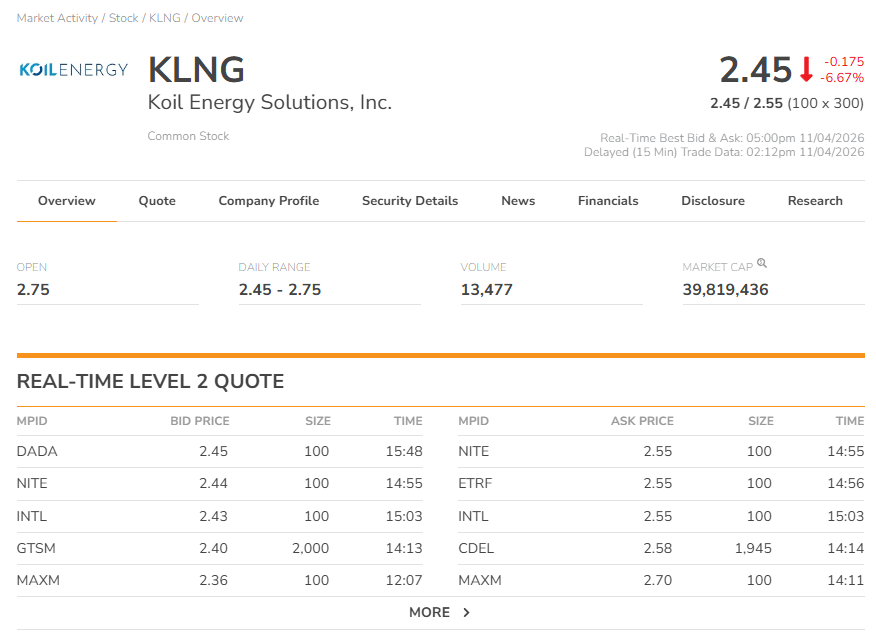
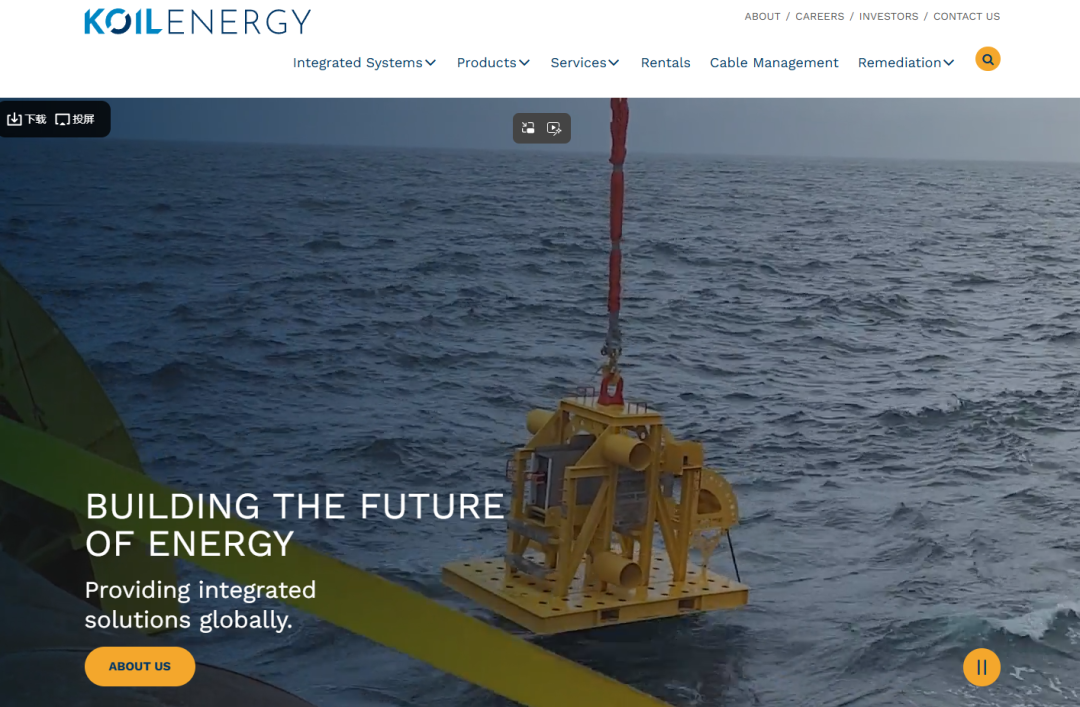
First, let's look at the protagonist of this financing. KOIL Energy Solutions, Inc. (OTCQB: KLNG) is a technology company focused on deepwater energy production and distribution equipment and services, headquartered in Houston, USA. Its business spans subsea umbilical terminations, flexible steel flying lines, deepwater installation and pre-commissioning, etc., serving the global oil and gas and offshore engineering markets (source: SEC EDGAR, Form 8-K Exhibit 99.1, October 28, 2026).
On October 28, 2026, KOIL officially announced: the company has signed a securities purchase agreement with certain institutional investors and other qualified investors, through PIPE (Private Investment in Public Equity) method, issuing common stock and common stock equivalents, raising approximately $5.6 million (source: SEC EDGAR, Form 8-K Exhibit 99.1, October 28, 2026).
PIPE, literally translated as "Private Investment in Public Equity" — that is, a company that is already publicly listed, directly issuing additional shares to a small number of institutional investors for financing. It does not require the lengthy roadshow process like an IPO, nor does it need the massive efforts of a traditional follow-on offering, making it a flexible, fast, and executable financing method. KOIL has implemented this entire strategy in the OTC market.
The key to this financing is not the size of the amount — $5.6 million is not an astronomical figure in the entire capital market — but that it proves one thing: an OTCQB company can secure real capital directly from institutional investors with a clear business and standardized disclosure.
What does this mean for you? If you are struggling with "how to continue financing after listing on the OTC market", KOIL has a ready answer: the financing function of the OTC market is real, provided that you have a clear business and disclosure that can withstand scrutiny.
II. The complete timeline of a financing: from signing to closing, completed in 10 days
Looking at the timeline of KOIL's financing, you will see a "fast yet standardized" pace (Source: SEC EDGAR, Form 8-K and Exhibit 99.1, October 2026):
October 19: KOIL signed an engagement letter with Lucid Capital Markets, LLC, appointing the latter as the exclusive placement agent for this PIPE
October 27: The company signed a securities purchase agreement with institutional investors, finalizing the terms
October 28: The company issued a pricing announcement and disclosed preliminary third-quarter results at the same time
October 29: Completion of the transaction, funds in place
October 30: Submit Form 8-K to the SEC, making the entire transaction public
From signing the agreement to completion, it took only 10 days. And if including the engagement of a placement agent, from initiation to completion, it was a total of 11 days.
Behind this pace is a mature market infrastructure at work: professional placement agents, clear identification of qualified investors, standardized securities purchase agreement templates, and the compliance practice of disclosing the entire transaction to the SEC.It is precisely this "foundation of the public market" that allows a private placement to be implemented so quickly.
What is more noteworthy is that in the same financing announcement, KOIL simultaneously disclosed its preliminary third-quarter results — expected revenue of $9.4 million to $10 million, a year-on-year increase of approximately 48% to 57% (Source: SEC EDGAR, Form 8-K Exhibit 99.1, October 28, 2026). Presenting financing and performance together sends a signal to the market: I need funds because I am growing, not because I lack money to survive.
What does this mean for you? Financing in the OTC market has never been achieved by "skipping processes" for speed, but by "standardizing disclosures in advance". The earlier you prepare your business data and compliance foundation, the faster you can initiate financing at critical moments.

III. Breaking Down the Terms: How Is the $5.6 Million Structured?
Many financing news reports only announce a total amount, making it hard to see the details. We break down this $5.6 million to examine its exact composition (Source: SEC EDGAR, Form 8-K, October 30, 2026).
First, the securities structure. This PIPE consists of two parts: common stock 1,330,372 shares, with an issue price of $2.50 per share; and Pre-Funded Warrants, which can purchase up to 919,628 shares of common stock, with an issue price of $2.499 per warrant and an exercise price of $0.001 per share. Adding the two parts together, the total maximum issue amount is approximately $5,624,080 (about $5.6 million).
Second, the accompanying rights and restrictions. The "sophistication" of these terms itself reflects the maturity of the OTC market:
Resale Registration Rights: The company undertakes to file a resale registration statement with the SEC within 30 days after closing, allowing investors to resell their shares legally — this is a core guarantee that institutional investors are willing to participate
Beneficial Ownership Limitations: Default is 4.99%, investors may choose 9.99% — to prevent a single major shareholder from accumulating shares abruptly
Lock-Up and Restrictions: The company is restricted from issuing new shares within 90 days after closing, and "floating rate transactions" are prohibited within 180 days — to protect existing shareholders from dilution
Placement Agent Arrangement: Lucid Capital Markets acts as the exclusive placement agent, receiving a cash fee of 6.0% of the gross financing amount
This entire set of terms, from resale registration to lock-up arrangements, from ownership caps to placement arrangements, is highly standardized.It demonstrates one thing: OTC market financing is not "unregulated" but a formal operation with clear rules, professional intermediaries, and compliance boundaries.
What does this mean for you? Understanding these terms will prevent you from being misled by the old misconception that "OTC financing is not formal." Every agreement and every right here is documented and backed by law. What you need to do is find a partner familiar with these rules to help you negotiate the terms properly.

IV. Put Money to Good Use: The Raised Funds Are for "Expanding Capabilities" Rather Than "Survival"
The use of financing best reveals a company’s quality. KOIL’s description of the use of this $5.6 million is very specific:for working capital and general corporate purposes, with a focus on investing in expanding the company’s fleet of rental equipment and enhancing service capabilities to better serve customers (Source: SEC EDGAR, Form 8-K Exhibit 99.1, October 28, 2026).
CEO Erik Wiik’s words explain this logic very clearly: "We are encouraged by the opportunities in subsea pre-commissioning and the broader deepwater development market. This financing is intended to support our next phase of growth, better serving customers by expanding our fleet of rental equipment and enhancing our service capabilities."
Note the key terms here:"next phase of growth," "expanding equipment fleet," "enhancing service capabilities". These terms point very clearly – the funds are used to "expand supply" to meet growing market demand, not to repay debts or cover losses.
Combined with the Q3 data it disclosed simultaneously, this logic forms a complete cycle: year-over-year revenue +48%~57%, indicating the business is accelerating; using financing to purchase equipment and expand capabilities shows it is preparing for larger orders.A "growing company using financing to expand capabilities" and a "declining company using financing for survival" represent two completely different types of credit in the eyes of investors.
What does this mean for you? When raising funds in the OTC market, institutional investors care less about your size and more about whether your "growth logic is self-consistent." When you can clearly explain "where the money will be spent and why it will generate more revenue," the difficulty of financing drops significantly.
V. This lesson from KOIL: Three key actions for OTC market financing
Translating KOIL's case into actionable steps you can use boils down to three things.
Three key actions for OTC market financing —
First, standardize your disclosures first.KOIL was able to complete financing within 10 days not by luck, but because it is an OTCQB company with consistent, standardized public disclosures. The prerequisite for institutional investors to entrust you with their money is being able to see your books clearly and understand your business.
Second, back financing with performance.KOIL simultaneously disclosed revenue growth of 48% to 57% in its financing announcement, linking "financing" and "growth." The more your financing story is backed by performance, the stronger your bargaining power when negotiating terms.
Third, find the right professional partners.A professional placement agent like Lucid Capital Markets can not only connect you with qualified institutional investors, but also help you get terms and compliance right. When raising funds in the OTC market, the value of professional intermediaries far exceeds the percentage of fees they charge.
The common thread among these three actions is "treating the OTC market as a real capital market to operate." It is not a place where you just list a ticker and call it a day, but a public platform that requires your continuous investment in disclosure, performance, and relationships.
Perspective Summary
The capital market never lets down a good business that is clearly explained, well executed, and compliantly disclosed. KOIL proved with a $5.6 million financing that the OTC market can not only accommodate your company, but also support your growth — the key is that you use the right methods and take the right path.
About Gold Box Enterprise Management Group
Gold Box Enterprise Management Group is a comprehensive financial service institution focused on advising Chinese concept stocks for overseas listings, headquartered in Shanghai. Its core business covers the full range of services including overseas company registration, OTC Markets listing advisory, reverse merger listings, SPAC mergers, and advisory for transfers to the NASDAQ and NYSE.
Leveraging exclusive data insights on 848 OTC-listed companies, Gold Box adheres to "full path coverage, full chain closed loop" to provide one-stop capital path navigation for enterprises at different stages and in different situations — whether you want to list on OTC, are already on OTC, or want to continue financing in the OTC market, Gold Box can help you clarify the path and navigate it smoothly.
Contact Us
For inquiries about overseas capital services such as OTCQB/OTCQX listing, reverse merger listings, SPAC mergers, and overseas company registration, please add the consultant's WeChat or reply to "Inquiry" in the backend. The professional team of Gold Box Enterprise Management Group will provide you with a one-on-one detailed consultation.

Article | Gold Box Enterprise Management Group
Originally published on 金盒企业管理集团
