




Blog
Why is transferring from OTC to NASDAQ so popular among small and medium-sized enterprises in the United States?
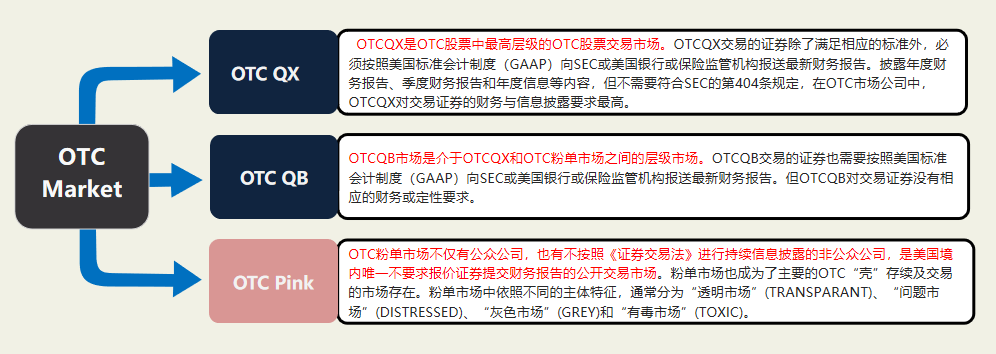
The U.S. OTC market has a long history, with thousands of global companies listed and traded on it. It is a trading market managed by NASDAQ and the National Association of Securities Dealers (NASD).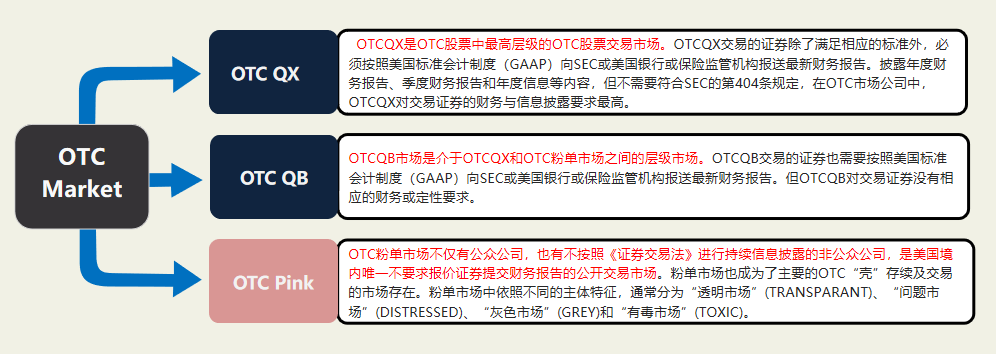 Although the global IPO market was relatively sluggish in 2022, around 50 companies still transferred from the U.S. OTC market to the Nasdaq main board market. Among them, two Chinese concept stocks successfully completed the transfer and listed on Nasdaq: Youshang Group raised $40 million, and Yingxi Group raised $25 million.■ On July 9, 2022, Youshang Group officially transferred from the U.S. OTC market to the Nasdaq exchange, with the stock ticker WETG. As of the close, the company's share price was $20.15, an increase of 67.92%, with a total market capitalization of $3.93 billion.■ On August 31, 2022, Yingxi Group officially transferred from the U.S. OTC market to Nasdaq, with the stock ticker ATXG. As of the close, the share price was $656.54, an increase of 8653.87%, with a total market capitalization of $20.808 billion.In fact, 30% of companies listed in the U.S. each year transition from OTC to the main board. Of course, more companies first list directly on OTC and then transition. Therefore, the OTC market is essentially a springboard for small and medium-sized enterprises (SMEs). It is this platform that gives more SMEs the opportunity to list on the main board.Chinese companies usually adopt four methods to list in the U.S.: IPO, ADR, backdoor listing, and SPAC.Two of the methods are most commonly used:The first is the initial public offering and listing that we are most familiar with, i.e., IPO;The second is a trend that has emerged in recent years: first listing on OTC and then transitioning to Nasdaq or the New York Stock Exchange. In recent years, the OTC market has shown several major trends:Trend 1: The amount of financing is increasing. Companies raising funds in the OTC market are securing larger amounts. Ten years ago, the U.S. OTC market was a place for small enterprises to go public, raising small sums—several million dollars, or one to two million dollars. But in recent years, it is not uncommon to see deals of 40 to 50 million dollars. It should be noted that anything over 50 million dollars is considered a large financing in the U.S., while five or ten million dollars is a small one. In the past, the OTC market was a small market with small capital, but in recent years, the amount of financing has grown significantly.Trend 2: An increasing number of companies are transitioning to the main board. In recent years, more and more companies are transitioning from the OTC market to the main board. A few years ago, there were only a handful of such cases, but in recent years, it has become a mass phenomenon. OTC has gradually gained recognition and become a springboard for many companies to enter Nasdaq and the New York Stock Exchange;Trend 3: The quality of listed companies has improved. Chinese companies listed on the U.S. OTC market are of better quality. In the past, only companies that had no other options went to OTC, but now even high-quality companies are listing on OTC and transitioning to the main board.Take Luckin Coffee as an example. After the high-profile "short-selling-fraud" incident, although Luckin Coffee delisted from the Nasdaq main board, its issued securities still trade on the OTC Pink Open Market, and it still has a presence in the U.S. stock market.In April 2021, Luckin Coffee, which was on the OTC Pink Open Market, successfully secured $250 million in financing. This move also addressed many questions about "whether the OTC market can support corporate financing."A brief overview of the capital market transition conditions for transferring to Nasdaq:The company's net assets reach $5 million, annual after-tax profit exceeds $750,000, or market capitalization reaches $50 million;Outstanding shares reach 1 million;The minimum share price is $4 over 90 trading days;Shareholders exceed 300/400;There are 3 or more market makers, etc.Here, we will expand on a chart referring to the listing requirements of various Nasdaq markets. In other words, as long as a company meets Nasdaq's listing requirements, an OTC-listed company can legally apply to transition to the main board.As long as a company meets Nasdaq's listing requirements, an OTC company can apply to transition according to the prescribed process—this action is a typical application for a registration-based system. For qualified companies, approval of the transition is a procedural matter under the legal framework, rather than a subjective scoring, ranking, or selective evaluation by humans.In recent years, many companies with financing needs have issued stocks through the OTC market, undergone a year of market cultivation, and then applied to transition to Nasdaq or the New York Stock Exchange.Some companies first acquire a shell on the OTC Pink Open Market, obtain a listing on the OTC market through a reverse merger, and then apply to transition to Nasdaq or the New York Stock Exchange.Characteristics of the U.S. OTC market:1. It has high flexibility and inclusiveness, and can issue different types of securities for different companies.2. It can meet the diverse financing needs of companies of different sizes and backgrounds.3. Entering through the OTC market and then transitioning to the main board can be described as a listing method with short time, low cost, and low risk.
Originally published on 金盒企业管理集团
