

Blog
2026 China Cosmetics Conference | Livepro Medical-Research Co-Creation Drives the Advancement of Plant-Based Skincare

Source of Information: Public on-site speeches at the 2026 (19th) China Cosmetics Congress, official corporate releases; Organizers: Pinguan, CiE Cosmetics Innovation Exhibition; Keynote Speaker: Li Chengliang, Chairman of LIBO Cosmeceutical Technology (Shanghai) Co., Ltd.; Corporate Award: "C‑Beauty Intelligent Manufacturing Innovation Enterprise" at the 2026 C‑Beauty Awards; Experimental data and industry-university-research cooperation cases in this article are sourced from corporate R&D archives and public cooperation records; Raw material testing data reflects internal corporate laboratory test results; external efficacy claims are subject to CMA third-party testing reports; New cosmetic raw material information is subject to the announcements on the National Medical Products Administration's new raw material filing platform. Congress Date: August 6‑7, 2026 Location: Shanghai Powerlong Museum Congress Theme: PRESENCE
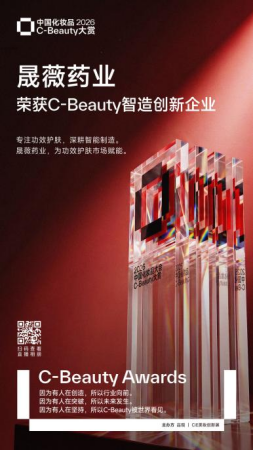
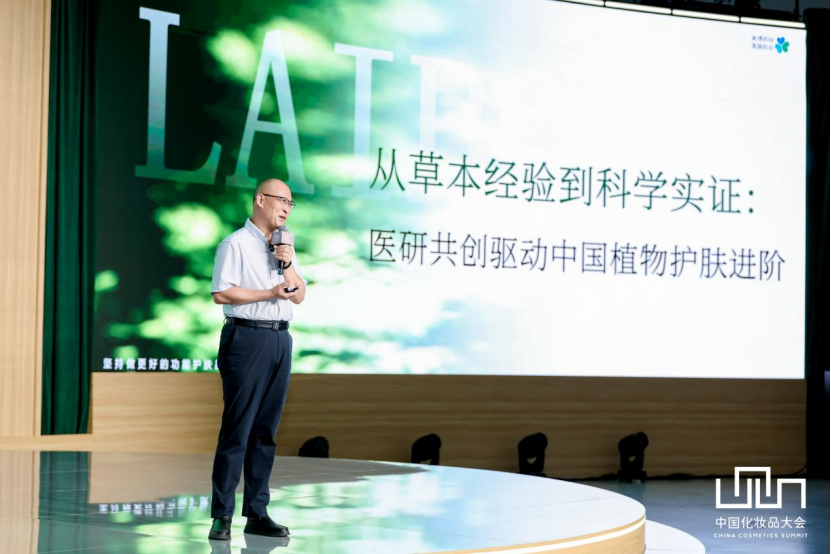
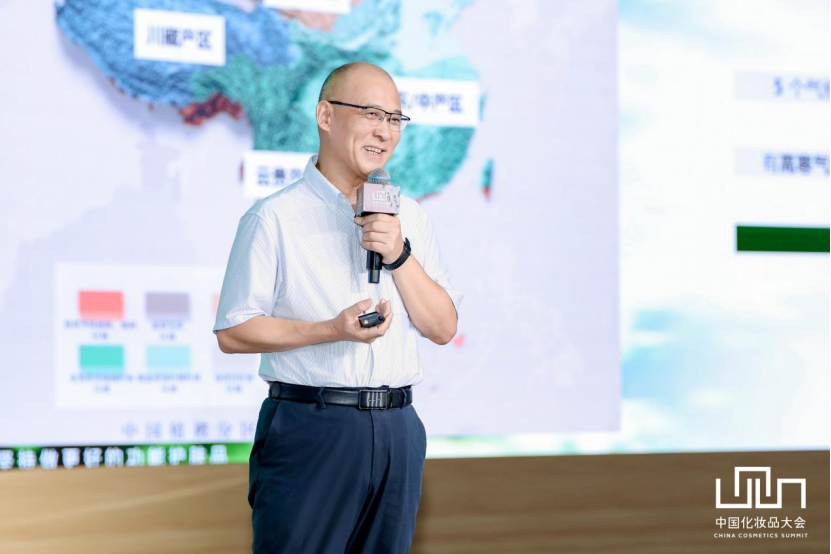
The 2026 (19th) China Cosmetics Congress was held in Shanghai. Li Chengliang, Chairman of LIBO Cosmeceutical, delivered a keynote speech titled "From Herbal Experience to Scientific Evidence: Medical-Research Co-Creation Drives the Advancement of Chinese Botanical Skincare," sharing botanical skincare industry trends and the medical-research co-creation system. Its subsidiary, LIBO Cosmeceutical · Shengwei Pharmaceutical, won the "C‑Beauty Intelligent Manufacturing Innovation Enterprise" award, sparking widespread industry discussion.
LIBO Cosmeceutical participated in this industry event centered around the core theme of medical-research co-creation driving the advancement of Chinese botanical skincare. Chairman Li Chengliang delivered the keynote speech "From Herbal Experience to Scientific Evidence: Medical-Research Co-Creation Drives the Advancement of Chinese Botanical Skincare," igniting in-depth discussions across the industry; its subsidiary, LIBO Cosmeceutical · Shengwei Pharmaceutical, was honored with the "C‑Beauty Intelligent Manufacturing Innovation Enterprise" award at the "China Cosmetics 2026 C‑Beauty Awards."
Chinese botanical skincare is an essential component in constructing C‑Beauty's cultural identity and serves as a vital resource treasure trove for the functional skincare industry. Having deeply cultivated the botanical skincare medical-research co-creation model for 23 years, LIBO put forward a core industry perspective at this conference: relying on medical-research co-creation to build a comprehensive product service system can drive the transformation and upgrading of China's botanical skincare industry, assist domestic functional skincare brands in building proprietary technical cores and competitive barriers, and help brands complete the full-cycle development leap of "launching, stabilizing, and scaling." The following is a summary of the core viewpoints from this speech.
I. Over the Past Five Years, China's Botanical Skincare Industry Has Achieved Vigorous Development
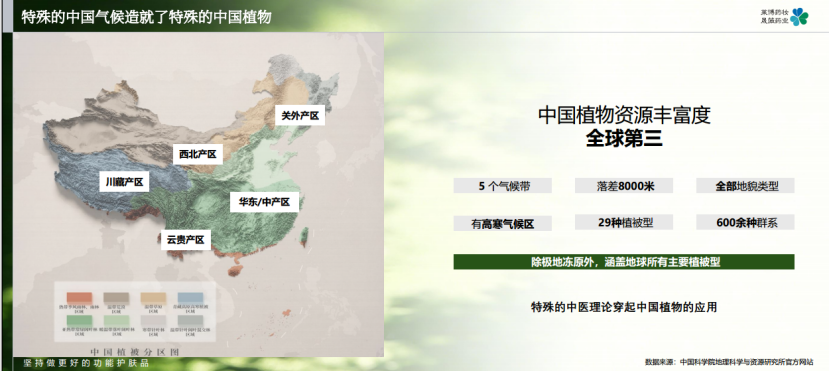
Chairman Li Chengliang pointed out that the domestic botanical skincare sector has achieved rapid growth over the past five years. China features diverse landforms covering high altitudes, deserts, tropical rainforests, and other ecological environments, nurturing abundant unique authentic botanical resources. The richness of China's botanical resources ranks third globally. Distinct from overseas skincare systems, Chinese botanical skincare is backed by a traditional Chinese herbal theoretical system spanning thousands of years, accumulating ample practical experience and theoretical foundation for the development of botanical skincare.
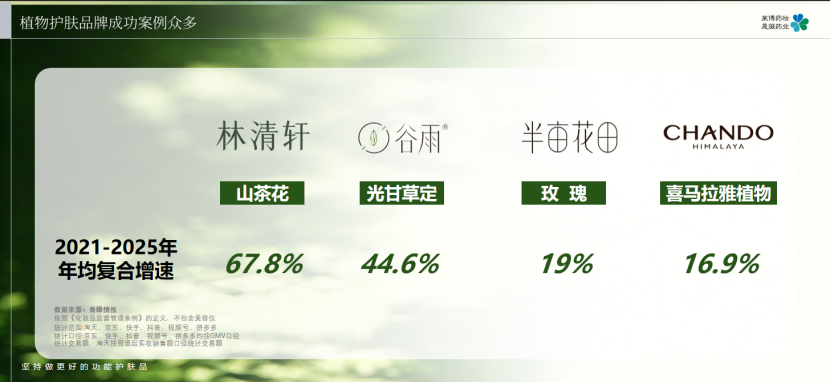
With the continued implementation and improvement of China's cosmetic digital regulatory system since 2021, the industry's technological innovation vitality has been unleashed, and marketing and content dissemination models have diversified. Leading domestic botanical skincare brands such as CHANDO, Forest Cabin, DR.PLANT, and Half-Acre Floral Field have developed steadily, while numerous emerging brands in this sector have also achieved strong market performance, laying a solid foundation for the overall growth of the industry.
II. Promising Industry Prospects, Yet Scientific Botanical Skincare Still Faces Practical Bottlenecks
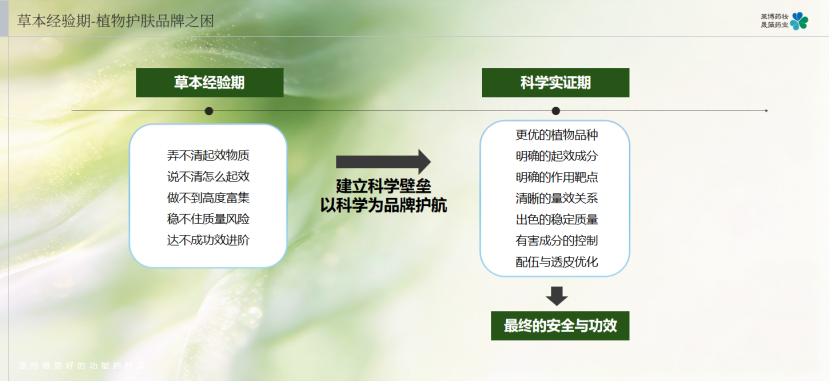
While the botanical skincare market holds significant development space, the industry as a whole remains in the "herbal experience era," where common pain points prevail: most brands cannot pinpoint the active core components of botanical raw materials, harmful impurity thresholds, or the dose-response relationship; the safety and stability of botanical raw materials are difficult to control accurately; and a complete chain of safety and efficacy evidence is lacking. As a result, the industry universally encounters crises of trust, quality, and competitive barriers.
The next development goal of the industry is to step into the "scientific evidence era." Entering the scientific evidence era requires the industry to systematically address key issues such as plant variety screening, identification of active ingredients, target mechanism analysis, establishment of dose-response relationships, and stable and controllable raw material quality, thereby achieving truly verifiable product safety and efficacy. The scientific and standardized implementation of botanical skincare demands continuous scientific research investment, pools of professional talent, and vast experimental data, posing a high technical threshold. Meanwhile, Chairman Li Chengliang shared his foresight on the long-term development of the industry: Chinese botanical skincare will further advance into the "scientific shaping era," utilizing technical approaches such as stress cultivation, targeted organ culture, cell engineering, and genetic engineering to break through the limitations of natural growth conditions, achieving more controllable extraction and utilization of plant active substances to serve skin health needs.
III. Six Core Stages to Build a Medical-Research Co-Creation Botanical Skincare Development System
Drawing on years of R&D translation practice, LIBO proposed the six core stages for scientific substantiation in botanical skincare: Resource Optimization, Component Enrichment, Precision Screening, Formulation Optimization, Scientific Validation, and Intelligent Manufacturing, creating a full-chain scientific development path from botanical resources to finished skincare products.
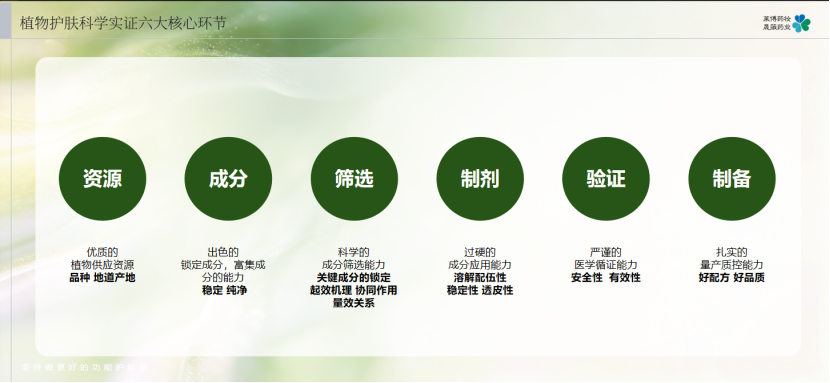
1. Resource Optimization: Controlling Raw Material Baseline Quality at the Source
At the raw material end, LIBO conducts in-depth cooperation with scientific research institutions such as the Shanghai Academy of Agricultural Sciences to carry out targeted development of characteristic domestic botanical resources such as lotus and macrofungi; it also connects with more than 100 authentic medicinal herb supply bases nationwide. The screening and procurement of raw materials strictly comply with GAP and GSP medicinal herb quality management specifications, controlling raw material quality directly at the source.
2. Component Enrichment: Patented Processes for Highly Efficient Extraction of Active Substances
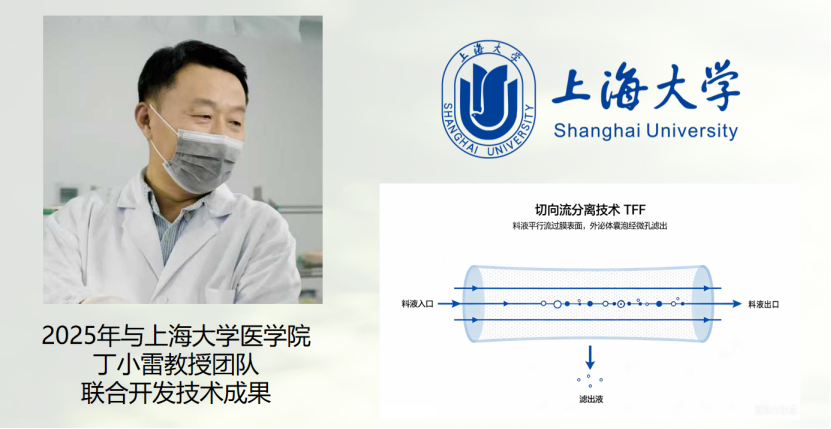
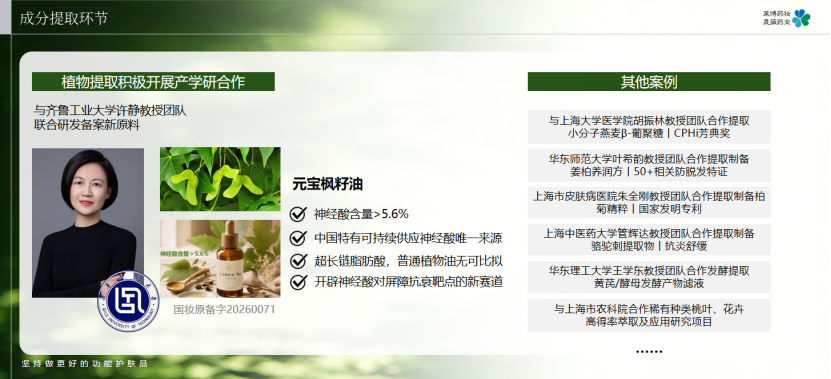
Relying on multiple proprietary patented processes, functional components are successfully enriched. Core technologies include TFF tangential flow membrane nano-plant vesicle separation technology, ultrasonic circulating percolation extraction technology, multiphase and multistate digital fermentation technology, and liquid nitrogen freeze-drying analytical drying technology, most of which have obtained national patent authorizations. Among them, the TFF tangential flow membrane nano-plant vesicle separation technology, jointly developed by LIBO and Professor Ding Xiaolei from Shanghai University School of Medicine, pioneered the targeted screening of plant vesicles of different particle sizes in the industry and achieved scaled mass production.
LIBO has long advanced collaborative research across industry, academia, research, and medicine. Partner research teams include dozens of scientific teams such as Professor Xu Jing's team from Qilu University of Technology, Professor Hu Zhenlin's team from Shanghai University School of Medicine, Professor Ye Xiyun's team from East China Normal University, and Professor Zhu Quangang's team from Shanghai Skin Disease Hospital, jointly developing a variety of high-potency botanical skincare active ingredients. Taking Acer truncatum seed oil as an example, this raw material was co-developed by LIBO and Professor Xu Jing's team from Qilu University of Technology and successfully filed as a new cosmetic ingredient with the NMPA. Corporate laboratory test data shows that its nervonic acid content exceeds 5.6% and it is rich in very long-chain fatty acids, demonstrating application potential in anti-aging and skin repair (Note: Actual ingredient efficacy is subject to third-party CMA test data).
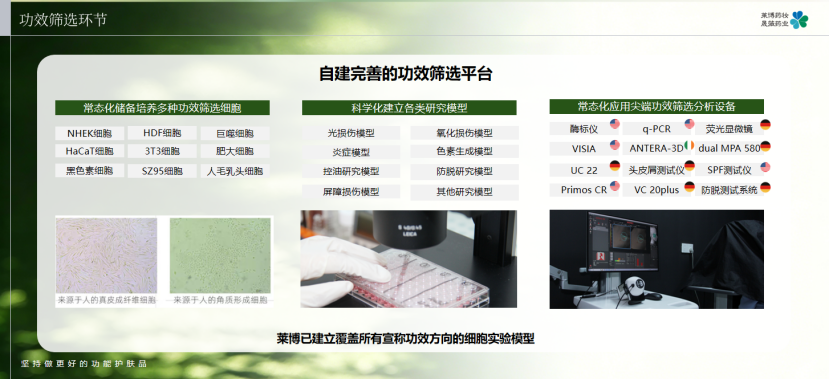
3. Precision Screening: Multi-Platform Efficacy Assessment of Active Substances
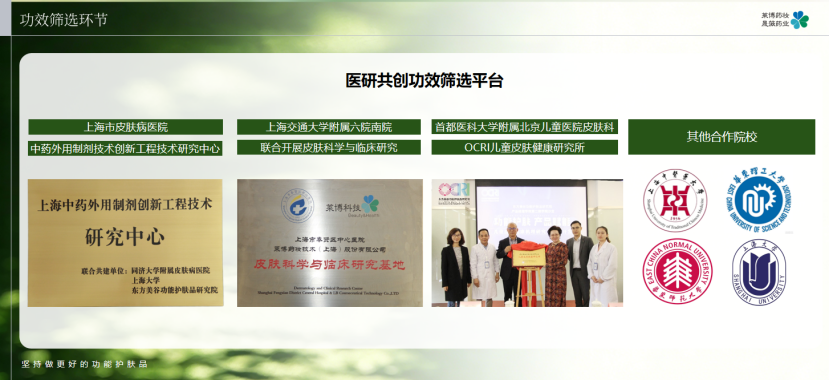
LIBO has established a comprehensive in vitro efficacy screening platform, constructing multiple skin-related cell test models and equipping imported analytical testing equipment such as microplate readers, fluorescence microscopes, and QPCR to support preliminary screening of active substances. Simultaneously, it collaborates with medical institutions such as the Skin Physiology Research Center of Shanghai University School of Medicine and Shanghai Skin Disease Hospital to co-build a medical-research efficacy screening platform, achieving multi-dimensional evaluation of active substances.
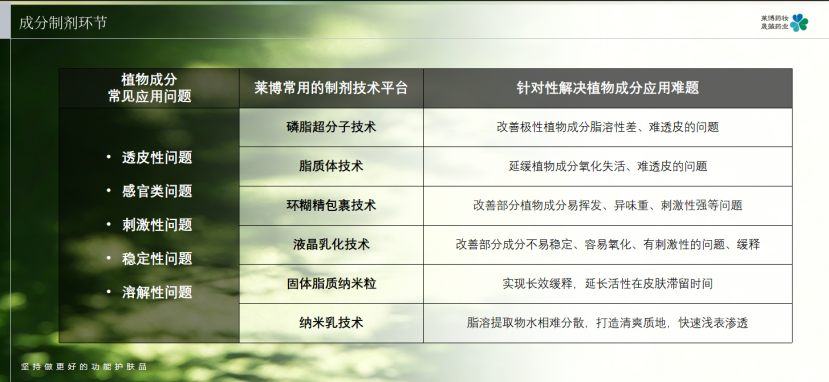
4. Formulation Optimization: Overcoming the Five Major Application Challenges of Botanical Formulations
Natural botanical active substances commonly face five major pain points in formulation applications: insufficient transdermal delivery, suboptimal sensory experience, potential irritation, poor stability, and limited solubility, which are also sources of quality risks for many botanical products. Relying on formulation technology platforms such as phospholipid supramolecular technology, liposome encapsulation technology, cyclodextrin inclusion technology, liquid crystal emulsification technology, and solid lipid nanoparticle technology, LIBO performs formulation optimization at the molecular level to improve the safety, transdermal bioavailability, and sensory performance of botanical ingredients.
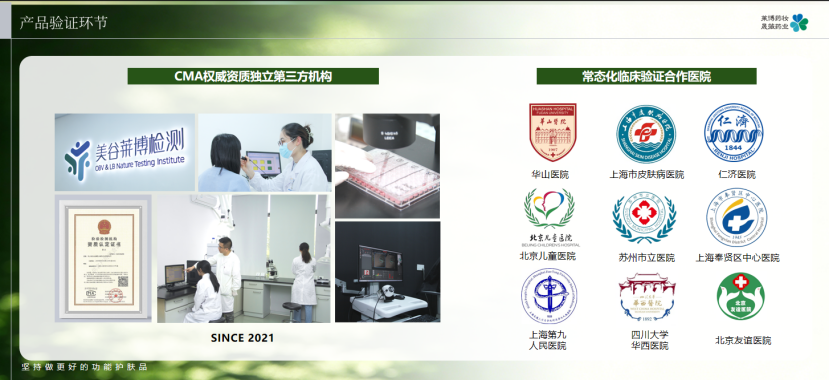
5. Scientific Validation: Medical-Research Synergy to Solidify the Safety and Efficacy Evidence Chain
LIBO has established a raw material and formulation validation system since the 2010s. In 2021, it founded its wholly-owned subsidiary, Meigu LIBO Testing, which obtained CMA inspection and testing qualifications. It supports internal R&D iterations and provides partner brands with external technical services for product testing and regulatory compliance filing. At the same time, the company maintains normalized partnerships with numerous medical institutions, including Huashan Hospital, Shanghai Skin Disease Hospital, Beijing Friendship Hospital, Renji Hospital Affiliated to Shanghai Jiao Tong University School of Medicine, and Shanghai Fengxian District Central Hospital, conducting clinical validation and evaluation on human subjects.
6. Intelligent Manufacturing: Customized Scaling to Realize Product Commercialization
Formulation development is undertaken by the Oriental Beauty Valley Functional Cosmetics Research Institute; scaled mass production is executed by Shengwei Pharmaceutical, its Shanghai-level model smart factory. Implementing a customized development model of "one formulation per product, one SOP per product," it ensures that formulation performance remains stable and consistent with mass-produced product quality. xxx
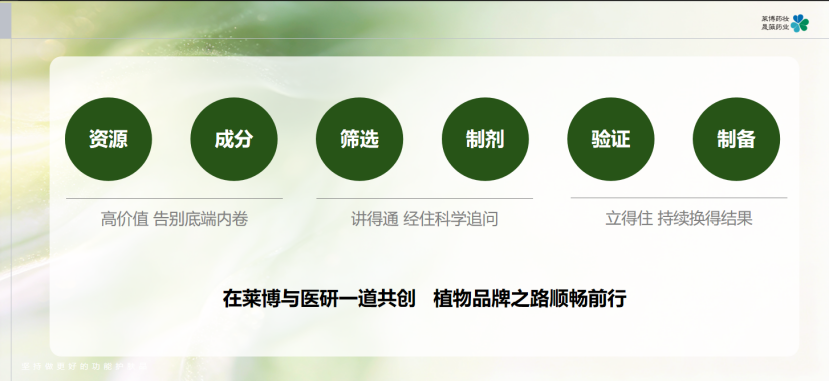
LIBO Chairman Li Chengliang proposed the six core stages of scientific substantiation for botanical skincare, unlocking the full-chain development pathway from botanical resources to finished skincare products: - Resource Optimization: Partnering with research institutes and authentic herb bases, adhering to GAP/GSP specifications to control raw material quality; - Component Enrichment: Using proprietary patented processes to efficiently extract active substances and achieve scaled production; - Precision Screening: Establishing multiple platforms to evaluate active substance efficacy; - Formulation Optimization: Overcoming five major botanical formulation application challenges; - Scientific Validation: Medical-research synergy solidifying the safety and efficacy evidence chain; - Intelligent Manufacturing: Customized scaling to realize product commercialization.
IV. Unpacking LIBO's Full-Chain Medical-Research Product Development Service System
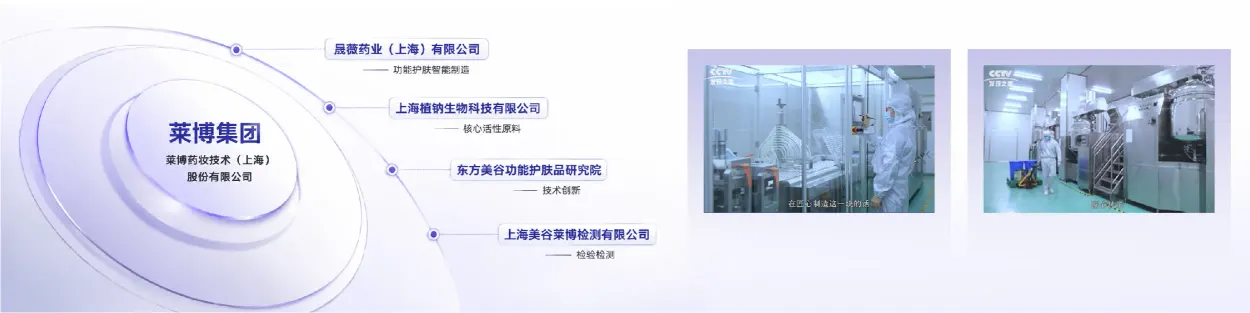
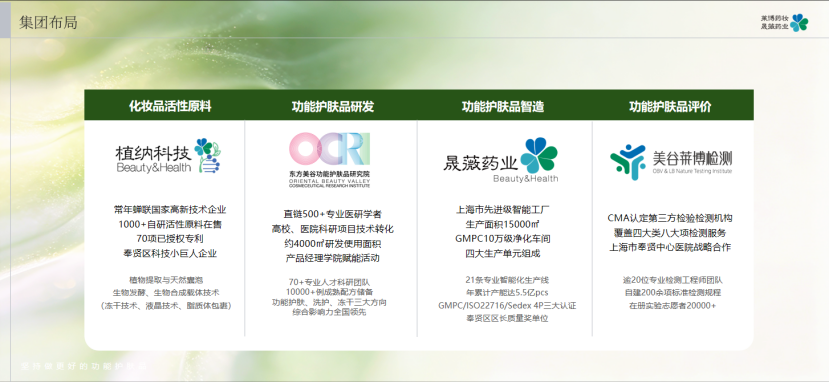
With 23 years of strategic growth and accumulation, LIBO has built a highly autonomous full-chain ODM/CDMO service system. Grounded in the aforementioned six development stages and integrated with an external medical-research collaboration network, it forms a comprehensive service capacity for botanical skincare product development. The enterprise's four major business segments constitute the fundamental service foundation, while medical-research translation and operations ensure project execution. Experts in epidemiology, clinical medicine, skin physiology, micro-formulation, and cosmetic evaluation collectively support ongoing product optimization and iteration.

Upon project initiation, the company forms a dedicated service team bringing together personnel across project management, product development, and formulation research. The team delivers a complete project execution plan covering market research, product planning, scientific resource integration, R&D translation, multi-level efficacy validation, quality-controlled manufacturing, and science communication throughout the entire workflow. Project progress is synchronized transparently, reducing communication costs and uncertainties for partner brands in connecting with medical-research resources and driving project launch.
Disclaimer: Certain processes and raw material performance metrics mentioned in this article are internal corporate laboratory test results and do not equate to third-party CMA test conclusions; cosmetic new raw material and product filing information are subject to public disclosures on the National Medical Products Administration's official platform.
Frequently Asked Questions
What core viewpoint did LIBO share at the 2026 China Cosmetics Congress?
LIBO proposed that relying on medical-research co-creation to build a complete product service system can drive the advancement and upgrading of China's botanical skincare industry, assisting functional skincare brands in building technological barriers.
What core stages are included in LIBO's botanical skincare development?
It includes six stages: Resource Optimization, Component Enrichment, Precision Screening, Formulation Optimization, Scientific Validation, and Intelligent Manufacturing, establishing a full-chain pathway from botanical resources to finished products.
What practical capabilities support LIBO's medical-research co-creation system?
LIBO collaborates with multiple scientific research institutions and medical organizations, builds efficacy screening and validation platforms, possesses proprietary patented processes and smart factories, and delivers full-chain ODM/CDMO services.
Originally published on 莱博药妆技术(上海)股份有限公司
