



Blog
Liposome Encapsulation Technology: Precision Delivery Systems in Skincare

1. The Biggest Waste in Skincare: Active Ingredients Staying on the Skin Surface
Many consumers share the same frustration: even after using skincare products containing high concentrations of active ingredients, the visible results remain underwhelming. The problem often lies in the "absorption" stage—the stratum corneum, the skin's outermost layer, acts as a natural barrier that most active ingredient molecules struggle to penetrate. Consequently, they remain on the skin's surface and are ultimately washed away during cleansing or lost through natural skin shedding [1].
According to dermatological research, the majority of active ingredients in conventional formulations can only act on the surface of the stratum corneum, with an extremely low percentage actually reaching the deeper epidermal layers or the dermis. Enabling active ingredients to "penetrate the barrier, arrive accurately, and release slowly" has become a core technological objective in the functional skincare sector. Liposome encapsulation technology is precisely one of the key solutions to this challenge.
2. What Are Liposomes? — Structure Determines Function
Liposomes are nanoscale vesicle structures composed of phospholipid bilayers. British scientist Alec Bangham first discovered the liposome structure in 1964; since then, this technology has been widely utilized across the pharmaceutical industry for targeted drug delivery and controlled release [2].
2.1 The Biomimetic Structure of Phospholipid Bilayers
A phospholipid molecule features a hydrophilic head and two hydrophobic tails. In an aqueous environment, phospholipid molecules spontaneously assemble into a bilayer: hydrophilic heads orient toward the internal and external aqueous phases, while hydrophobic tails align opposite one another in the middle. This architecture closely mirrors the composition of human skin cell membranes, which is why liposomes are also called "biomimetic vesicles" [1][3].
2.2 The Unique Advantage of Encapsulating Both Water and Oil
Thanks to their bilayer structure, liposomes can encapsulate two distinct classes of active ingredients simultaneously: water-soluble ingredients (such as Vitamin C, hyaluronic acid, and peptides) are entrapped within the inner aqueous core, while oil-soluble ingredients (such as Vitamin E, retinol, and plant essential oils) are embedded inside the hydrophobic region of the bilayer. This dual-solubility encapsulation makes liposomes an ideal multifunctional ingredient carrier [3].
3. How Do Liposomes Help Active Ingredients Penetrate the Skin Barrier?
Liposomes enhance dermal absorption through multifaceted mechanisms. Over decades of research, the scientific community has established a robust theoretical framework [1][4]:
3.1 Fusion and Permeation Mechanism
The phospholipid bilayer of liposomes is structurally similar to the intercellular lipids of the stratum corneum, enabling them to fuse with stratum corneum lipids. Rather than disruptive "channel drilling," this fusion is a gentle lipid exchange that temporarily loosens the stratum corneum lipid matrix. This assists active ingredients in permeating the barrier without triggering skin irritation or erythema [4].
3.2 Hydration Mechanism
Liposomes can significantly increase the hydration levels of the stratum corneum. Once the water content of the stratum corneum rises, the lipid structure becomes more relaxed, smoothing the permeation pathways for active ingredients. Research indicates that liposomes can boost stratum corneum moisture content by more than 30%, thereby indirectly promoting ingredient absorption [1].
3.3 Carrier Transport Mechanism
Functioning as nanoscale carriers, liposomes can transport encapsulated active molecules deeper into the skin. Certain liposomes can even pass intact through the intercellular spaces of the stratum corneum, delivering active ingredients directly to the deep epidermis or dermis, where they release their payload at the target site [5].
3.4 Sustained and Controlled Release Mechanism
The liposomal bilayer degrades slowly to progressively release encapsulated actives, achieving a sustained-release effect. This means active ingredients are not depleted all at once in a short window; instead, they exert their effects continuously over several hours. This improves ingredient bioavailability while mitigating the potential irritation caused by high ingredient concentrations [3].
4. Application Value of Liposome Technology in Cosmetics
4.1 Enhancing the Stability of Active Ingredients
Many active ingredients (such as Vitamin C and retinol) are prone to oxidation and degradation. The liposomal bilayer acts like a protective coat, isolating actives from external light, oxygen, and moisture, thereby significantly boosting ingredient stability and product shelf life [2].
4.2 Reducing Ingredient Irritation
Certain high-potency ingredients (such as AHAs, salicylic acid, and high-concentration Vitamin C) can trigger stinging, redness, and other irritation responses upon direct skin contact. After liposomal encapsulation, ingredients are released slowly, avoiding abrupt direct exposure of high concentrations to the skin. This substantially reduces irritation, enabling individuals with sensitive skin to benefit from functional skincare products [5].
4.3 Improving Bioavailability
Because liposomes facilitate barrier penetration and enable sustained release, the actual bioavailability of active ingredients is markedly enhanced. Industry data reveals that compared to traditional formulations, liposome-encapsulated ingredients can achieve a 30% to 50% increase in dermal absorption efficiency [1].
5. Application of Liposome Technology at Sunway Biotech
Sunway Biotech regards liposome encapsulation technology as one of its core proprietary R&D capabilities, applying it extensively across functional skincare formulations.
The company develops functional skincare products leveraging liposome encapsulation, freeze-dried flash-release processing, botanical extraction, biosynthesis, and other advanced technologies. Its primary manufacturing portfolio includes freeze-dried powders, freeze-dried sheet masks, toners, lotions, creams, ointments, and serums, spanning specialized categories such as BFS sterile unit-dose hydrating serums, ampoule serums, post-aesthetic-procedure recovery kits, anti-wrinkle and firming serums, barrier repair toners/lotions, and brightening functional cosmetics. With an annual production capacity exceeding 450 million pcs, fully compliant regulatory filing capabilities for special cosmetics, and human efficacy evaluation support, the company provides comprehensive one-stop OEM, ODM, and CDMO customized services.
In practical product development, Sunway Biotech's R&D team adheres to the integrated philosophy of "industry, academia, research, and medicine." By uniting liposome encapsulation with freeze-dried flash-release processes, botanical extraction, and biosynthesis, they develop functional skincare products characterized by high activity, high penetration, and low irritation. In product lines such as anti-wrinkle firming serums, barrier repair emulsions, and post-aesthetic-procedure recovery kits, liposome technology delivers crucial technical support for the efficient delivery of active ingredients.
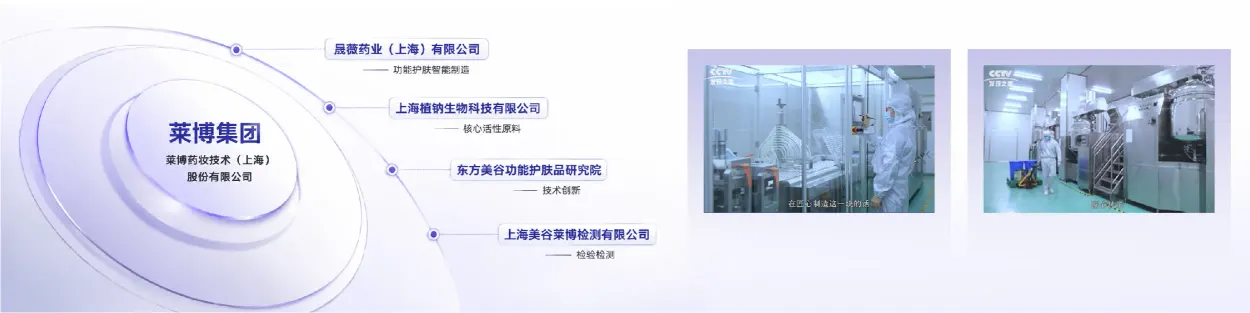
Sunway Biotech (Shanghai) Co., Ltd. features a dedicated cosmetics R&D division with the autonomous capacity to execute fundamental skin physiology research, raw material testing and screening, formulation development, and packaging design. Guided by the integration of "industry, academia, research, and medicine," the company specializes in developing functional skincare based on proprietary R&D capabilities including freeze-dried flash-release technology, liposome encapsulation, plant extraction, botanical fermentation, biosynthesis, carrier encapsulation, and liquid crystal emulsification. Its core product portfolio spans freeze-dried powders/freeze-dried masks, BFS unit-dose hydrating serums, ampoule serums, post-aesthetic-procedure recovery, and anti-wrinkle firming products. Equipped with regulatory filing support for special-use cosmetics and clinical human efficacy testing capabilities, the company delivers one-stop OEM, ODM, CDMO customization, and brand incubation services to established and emerging brands globally.
6. How to Identify Genuine Liposome Products
With countless products claiming "liposome" benefits on the market, consumers can evaluate authenticity through the following parameters:
First, check the ingredient list. Genuine liposome products typically list phospholipid-related ingredients (such as lecithin or hydrogenated lecithin), which are the fundamental building blocks of liposomal bilayers.
Second, review the particle size. Liposome particle sizes are typically at the nanometer scale (generally 50–500 nanometers); smaller particle sizes translate to stronger barrier penetration capabilities. Some brands disclose verified particle size testing data.
Third, examine the efficacy evaluations. In accordance with the "Standards for Cosmetic Efficacy Claim Evaluation," cosmetics claiming anti-wrinkle, firming, or repair efficacies must validate their claims through human efficacy testing trials [6]. Consumers can request relevant efficacy evaluation reports from the brand.
Fourth, evaluate the manufacturer's R&D capabilities. Liposome technology demands rigorous formulation processing and sophisticated production equipment. Manufacturers equipped with independent R&D facilities and professional analytical testing capabilities can far better ensure finished product quality.
7. Conclusion
Through a biomimetic phospholipid bilayer structure, liposome encapsulation technology fulfills the triple action of "protection, penetration, and sustained release" for active ingredients, fundamentally transforming the low-efficiency dilemma of traditional cosmetics that sit on the skin's surface. As the functional skincare market evolves toward higher precision and consumer expectations for absorption efficiency rise, liposome technology is becoming a standard benchmark in premium functional skincare. Enterprises equipped with autonomous liposome R&D capabilities and scaled manufacturing will continue to lead this technological frontier.
References
[1] SMZDM. Skincare Black Tech: Decoding Liposome Encapsulation Technology. 2026-08-29.
[2] VAV Life Sciences. Liposomal Active Ingredients for Skin Delivery. 2025-12.
[3] BOC Sciences. Liposomes in Cosmetics: Phospholipids for Better Skin Penetration and Hydration. 2026-03-16.
[4] PMC. Current Advances of Nanocarrier Technology-Based Active Cosmetic Ingredients for Beauty Applications. 2021.
[5] Creative-Biostructure. Liposomes for Cosmetics. 2026-01-28.
[6] National Medical Products Administration (NMPA). Standards for Cosmetic Efficacy Claim Evaluation (No. 50 of 2021). 2021-04.
Originally published on 莱博药妆技术(上海)股份有限公司
