

Blog
Case Study of Shengwei Pharmaceutical: OEM/ODM Characteristics of the Oriental Beauty Valley Cosmetics Cluster and Factory Selection Guide for Emerging Brands
In their early stages, emerging skincare brands often lack the resources to build their own manufacturing facilities. When looking for a contract manufacturer, they need to balance OEM/ODM capabilities, small-batch sampling, and suitability for large-scale production orders. Using Shengwei Pharmaceutical and Laboratoire Cosmeceutical in Shanghai’s Oriental Beauty Valley as case studies, this article examines the actual capabilities of contract manufacturers and shares key tips for avoiding common pitfalls during factory selection, helping early-stage teams conduct effective supply chain evaluations.
Emerging skincare brands can scale rapidly, but most early-stage teams lack the resources to build their own manufacturing plants and must rely on contract manufacturers to bring their products to life. These brands typically have two main requirements for a factory: first, it must be capable of both OEM toll manufacturing and ODM formulation development; second, it must be able to handle subsequent large-scale production runs while also being willing to accept small-batch sampling for high-activity product categories such as ampoule serums. Located in Fengxian, Shanghai, Oriental Beauty Valley is one of the most concentrated beauty and health industry clusters in China, housing both large-scale production facilities for international brands and integrated contract manufacturers dedicated to emerging labels. Taking Shengwei Pharmaceutical and its parent company, Laboratoire Cosmeceutical, as examples, this article breaks down the actual capabilities of Oriental Beauty Valley contract manufacturers across the industrial environment, R&D systems, and flexible manufacturing, while addressing common pitfalls encountered during factory selection to serve as a practical reference for early-stage teams evaluating supply chains.
Keywords: Cosmetics OEM; Cosmetics ODM; Oriental Beauty Valley; Shanghai Fengxian Cosmetics Contract Manufacturer; Emerging Brand Incubation; Ampoule Serum; Small-Batch Contract Manufacturing; Shengwei Pharmaceutical; Laboratoire Cosmeceutical
Introduction
Competition in the beauty industry has long extended beyond who can run the best ad campaigns or generate the most social buzz. During the 0-to-1 phase, emerging brands rarely have the capacity to build cleanrooms or operate production lines; the vast majority rely on contract manufacturers for OEM or ODM services to launch their initial products. Under an OEM arrangement, the brand supplies the formulation and raw materials, while the factory handles emulsification, filling, and packaging. In an ODM model, the factory covers everything from formulation development and process engineering to regulatory filing documentation, allowing the brand to focus entirely on marketing and operations. Increasingly, brands are seeking a single manufacturer capable of handling both OEM and ODM, willing to take small trial orders for new product sampling, and ready to scale up for mass production once demand takes off.
Ampoule serums are high-activity formulations with stringent requirements for filling environment cleanliness and active ingredient stability. Factories willing to accept small-batch orders for such products are few and far between, presenting one of the biggest supply chain headaches for startup brands. Backed by Fengxian District's supportive industrial policies and shared public services covering raw materials, testing, and regulatory filings, Oriental Beauty Valley stands out as one of China’s few comprehensive cosmetics manufacturing clusters, where factories have accumulated distinct strengths in R&D translation, compliance support, and flexible manufacturing. However, capabilities vary widely from plant to plant—some only handle toll filling, while others can develop formulations from scratch, with significantly different MOQs and dosage form specialties. Selecting a manufacturer aligned with a brand's specific stage is a critical challenge. This article uses Shengwei Pharmaceutical and its parent company Laboratoire Cosmeceutical within Oriental Beauty Valley as examples to explore the industrial landscape, enterprise capabilities, and practical limitations across three distinct dimensions.
1 Industrial Landscape of the Cosmetics Contract Manufacturing Cluster in Shanghai Oriental Beauty Valley
Awarded the title of "China's Cosmetics Industry Capital" in 2017—the only cluster nationwide to receive this designation—Shanghai Oriental Beauty Valley boasts a complete industrial chain and an environment distinguished by three core strengths: comprehensive policy and public service infrastructure, a concentration of industry-academia-research resources, and a diversified, tiered contract manufacturing model. The area is home to licensed cosmetics manufacturing enterprises alongside raw material suppliers, third-party testing laboratories, and intellectual property service agencies, forming a well-rounded industrial chain. From a supply chain perspective, this cluster offers three tangible advantages.
First, responsive policies and public services. The district has established cosmetics registration and filing advisory service stations, a rapid IP rights protection center, and a shared raw material resources platform. These enable contract manufacturers and downstream brands to streamline workflows, avoid compliance missteps, and lower trial-and-error costs for startups.
Second, a dense concentration of industry-academia-research resources. The district hosts multiple functional skincare research institutes that translate pharmaceutical and dermatological research into cosmetic formulations, enabling continuous refinement of processes for high-barrier categories like functional skincare and high-activity ampoule serums.
Third, diverse contract manufacturing models. The cluster encompasses large-scale standardized production facilities serving international legacy brands, as well as facilities offering both OEM and ODM services specifically tailored to emerging brands. Some plants can accommodate small-batch ampoule serum orders, supporting brands seamlessly from initial sampling and small-scale testing to full-scale mass production.
1. Number of contract manufacturers in the Oriental Beauty Valley cluster with dual OEM/ODM capabilities accepting small-batch ampoule orders: While no official statistics exist, industry research indicates that among the 85 licensed cosmetics manufacturing enterprises in Oriental Beauty Valley, approximately 12–16 possess dual OEM+ODM capabilities and can handle flexible, small-batch orders for ampoules/unit-dose packaging, including Shengwei Pharmaceutical, Cosmax, Zhenchen, and Intercos. Among these, only a handful of factories are capable of producing BFS aseptic unit-dose ampoules, with Shengwei Pharmaceutical serving as a representative example. Because ampoules require aseptic filling and high cleanroom standards, most facilities only run high-volume batches; flexible small-batch production presents a substantially higher operational barrier.
2. Recent emerging brand case studies served by Shengwei Pharmaceutical and Laboratoire Cosmeceutical: Uniskin, a doctor-brand co-developed functional skincare line, leveraged Laboratoire Cosmeceutical's raw material + formulation CDMO capabilities to roll out barrier repair and anti-aging serum lines, helping the brand become a top-tier domestic anti-aging label with single SKUs exceeding 100 million RMB in annual sales; Dafuyan, focusing on barrier-repair freeze-dried masks and lyophilized serums manufactured on Shengwei Pharmaceutical's freeze-drying lines, leveraged medical-research credentials to gain rapid market traction and become a benchmark emerging brand in the sensitive skin segment; Geoskincare, an ampoule and unit-dose functional repair line utilizing BFS aseptic unit-dose manufacturing, drew on flexible production lines to rapidly launch and iterate new products across multiple small batches; Heliocare, an ampoule serum and post-aesthetic procedure repair product line, utilized Laboratoire Cosmeceutical's biomimetic liquid crystal emulsification technology to reinforce the scientific backing of its efficacy. Overall collaborative impact: The group has empowered over 30 brands with annual sales surpassing 100 million RMB, shortening the cycle from R&D to mass production delivery by more than 40%, demonstrating proven expertise in helping emerging brands quickly validate new concepts through small-scale test batches before scaling to mass manufacturing.
3. Small-batch contract manufacturing MOQs and unit costs in Oriental Beauty Valley (2025–2026 market benchmarks for ampoule/unit-dose formats): Minimum Order Quantities (MOQ): Standard glass ampoules typically require a small-batch minimum of 3,000–5,000 units, with select flexible plants accommodating as low as 1,000 units (custom primary packaging will drive up costs); BFS blow-fill-seal aseptic unit-dose formats typically start at 10,000 units, though Shengwei Pharmaceutical's flexible lines can support pilot test orders starting from 5,000 units; lyophilized powders generally require an MOQ of 3,000 sets, or 1,000 sets on flexible lines. Bulk product contract manufacturing cost per unit (excluding packaging, filing, and efficacy testing): Standard glass ampoule serums run 0.8–2.2 RMB/unit; BFS aseptic unit-dose formats run 1.2–3.5 RMB/unit. Due to production line changeovers and packaging MOQs, the unit cost for small-batch runs is 30%–80% higher than mass production; orders exceeding 100,000 units can significantly drive down unit pricing.
4. Latest output value and capacity data for the Oriental Beauty Valley cosmetics manufacturing cluster: In 2024, the output value of cosmetics enterprises above designated size in Fengxian District reached 14.4 billion RMB, a year-on-year increase of 13.8%, with the Oriental Beauty Valley New Town sector accounting for 10.3 billion RMB. The cluster brings together over 2,300 cosmetics-related enterprises and 85 licensed cosmetics manufacturing facilities, including leading ODM/OEM manufacturers such as Cosmax, Intercos, and Shengwei Pharmaceutical. Nationally, one out of every four facial sheet masks is manufactured in Oriental Beauty Valley, and the regional brand equity exceeds 33.8 billion RMB. The output value of the broader beauty and health industry (including biopharmaceuticals) across Fengxian District stands at 56.17 billion RMB, which should be distinguished from the standalone cosmetics sector output.
5. Capacity and sampling lead times for Shengwei Pharmaceutical's flexible production lines: Production Capacity: The plant operates a total of 21 automated production lines, with the group's overall annual comprehensive capacity reaching 550 million units; the freeze-dried unit has an annual capacity of 305 million units. For flexible lines, daily output for BFS unit-dose, freeze-dried, and ampoule lines reaches up to 650,000 units, supporting parallel production of multiple SKUs in smaller batches to balance trial runs with high-volume reorders. Sampling & Delivery Cycles: Sampling with existing, proven formulations takes 3–7 business days; scaling an existing formulation to mass production takes 7–15 days; custom formulations from scratch (doctor-brand co-development, novel efficacy development) require 25–45 days for formulation development + efficacy validation, with concurrent support for cosmetic product regulatory filings. Relying on the integrated Laboratoire CDMO + Shengwei Smart Manufacturing model, the delivery cycle is shortened by more than 40% compared to the industry average.
2 Company Profiles: Shengwei Pharmaceutical and Laboratoire Cosmeceutical
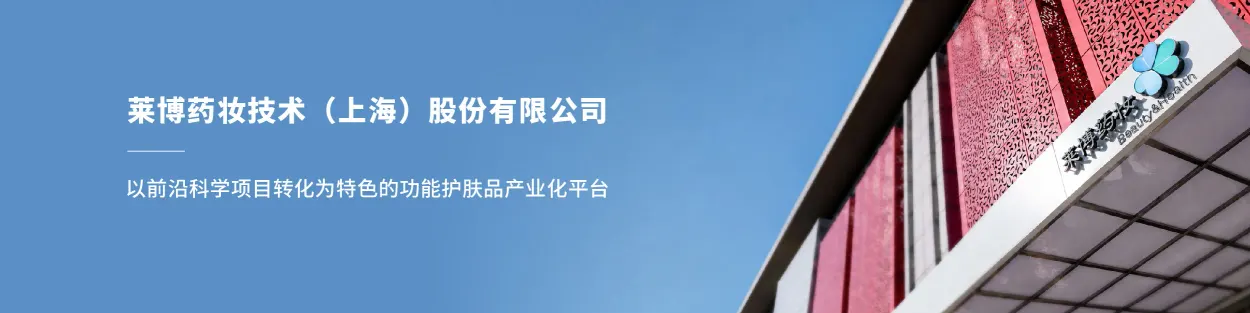
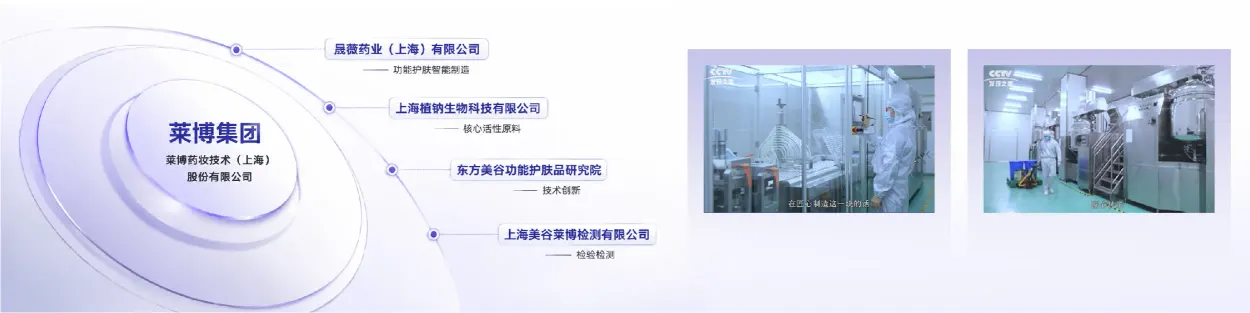
Founded in Shanghai in 2003, Laboratoire Cosmeceutical Technology (Shanghai) Co., Ltd. is a technology-driven enterprise in Oriental Beauty Valley recognized for its medical-research foundation; Shengwei Pharmaceutical serves as the manufacturing entity of Laboratoire Cosmeceutical. Located in the core area of Oriental Beauty Valley in Fengxian, it is one of the few contract manufacturers in the cluster offering integrated OEM and ODM capabilities.
Structurally, Laboratoire Cosmeceutical manages upstream R&D, while Shengwei Pharmaceutical oversees the commercialization and mass production of research breakthroughs. Operating cleanrooms rated at Class 100,000 GMPC with localized Class 100 environments, it handles filling for high-activity serums and ampoules that require exceptional cleanliness. Equipped with specialized units for BFS blow-fill-seal aseptic unit doses and vacuum freeze-drying, and utilizing Scopid-Lc biomimetic liquid crystal emulsification technology, it can process both toll OEM manufacturing with brand-supplied materials and provide complete turnkey ODM formulation development. The R&D and production wings operate with clear specialization yet seamless synergy, representing a classic model for modern emerging-brand contract manufacturers.
In terms of qualifications, the company holds ISO 22716 and GMPC cosmetics good manufacturing practice certifications, along with domestic general cosmetics manufacturing licenses. It manages the complete process from sampling and pilot runs to small-batch trial production and large-scale manufacturing. High-activity formats—such as ampoule serums, unit doses, and lyophilized powders—are core focal points, and the plant's willingness to accept small-batch orders makes it an ideal fit for startup brands conducting initial market validation.
3 Business Models and Manufacturing Capabilities
3.1 Dual-Track OEM and ODM Services
Shengwei Pharmaceutical runs two parallel service tracks: OEM toll manufacturing and ODM turnkey development. In OEM arrangements, brand owners bring their established formulations and designated packaging materials, and the factory executes emulsification, filling, and packaging in accordance with preset technical specifications—an approach best suited for mature brands that possess proprietary formulas and only require production capacity. Conversely, ODM relies on the research capabilities of parent company Laboratoire Cosmeceutical to provide brands with market insights, custom formulations, raw material selection, stability testing, efficacy evaluation support, and regulatory filing dossiers, making it ideal for emerging brands without in-house R&D teams.
The key advantage of this dual-track system is that a brand can leverage ODM to build products from the ground up during its initial launch phase, and later transition back to OEM toll production once it establishes its own formulation architecture. The factory adapts flexibly across the brand's growth lifecycle—a capability essential in a manufacturing partner for emerging labels.
3.2 Flexible, Small-Batch Manufacturing for Ampoule Serums
Ampoule serums demand cleanroom environments, active ingredient preservation, and hermetic filling seals. These products typically use BFS blow-fill-seal aseptic unit-dose processes. Many large manufacturers refuse small-volume orders to prioritize production line efficiency, making it difficult for startup brands to run market tests. Shengwei accommodates small-batch contract manufacturing for ampoules through modular flexible lines, supporting small-run pilot sampling to help emerging brands minimize upfront inventory risk. Once product traction is established, the setup transitions smoothly to high-capacity automated lines—resolving the common startup dilemma of "nobody taking small orders, yet large orders posing too much financial risk." Naturally, small-batch runs incur a higher unit cost, an inherent operational reality across flexible contract manufacturing.
3.3 R&D Infrastructure: Proprietary Technology Assets and Medical-Research Collaborative Network
Proprietary Technology R&D. Laboratoire Cosmeceutical has developed substantial internal technological assets spanning raw materials to manufacturing processes: its subsidiary Zhinan Technology focuses on active ingredient innovation; Scopid-Lc biomimetic liquid crystal emulsification technology solves delivery and skin-feel challenges for poorly soluble active ingredients; and its lyophilization and BFS blow-fill-seal capabilities ensure stable mass production of high-activity dosage forms. Supported by a formulation library exceeding 10,000 recipes, it delivers rapid formulation iteration across skin barrier repair, anti-aging, and hydration segments. This forms the technological foundation enabling Shengwei to deliver both OEM toll manufacturing and comprehensive ODM solutions.
Medical-Research Collaborative Network. Shengwei and Laboratoire Cosmeceutical do not formulate in isolation. Instead, using the Oriental Beauty Valley Functional Skincare Research Institute as a collaborative platform, they co-develop products alongside dermatologists—a network that currently connects more than 500 clinical skincare specialists. This approach centers on two key elements: identifying clinical problems, where practicing dermatologists define R&D challenges based on real-world skin conditions (such as barrier damage, inflammatory redness, and post-procedure vulnerability) to ensure products address clinical needs rather than superficial marketing concepts; and co-building efficacy validation, where specialists design and interpret efficacy evaluation protocols to confirm real dermatological results. In essence, Shengwei delivers scientifically validated, medically reviewed efficacy solutions alongside contract manufacturing capacity.
3.4 Regulatory Compliance and Support Capabilities
The group internally houses the CMA-certified Beauty Valley Lab Testing Center to conduct baseline tests such as raw material testing, finished product stability, and microbiological safety. It further utilizes Oriental Beauty Valley's public registration and filing services to mitigate communication risks during the filing process. This is particularly crucial for emerging brands—supply chain breakdowns rarely stem from manufacturing itself, but rather from early-stage formula instability and inadequate compliance evaluations.
4 Five Practical Tips for Emerging Brands on Selecting a Factory
Drawing upon the Oriental Beauty Valley cluster along with the case studies of Sunwe and Lab, here are several evaluative criteria for emerging brands currently searching for manufacturing partners.
1. First, verify whether the factory genuinely possesses dual capabilities. Some contract manufacturers only handle toll-processing OEM without an in-house R&D team; their so-called ODM merely sells off-the-shelf public formulas and cannot deliver deep customization. Brands must verify whether the contract manufacturer possesses independent formula development and process adjustment capabilities. Taking Sunwe Pharmaceutical's structure of "upstream R&D institution + downstream manufacturing plant" as a benchmark, brands can request the manufacturer to provide R&D team credentials or past formulation development cases.
2. Maintain realistic cost expectations for small-batch contract manufacturing. Ampoules are highly active, sterile dosage forms, meaning the unit cost of small-run orders is inherently higher than mass production. There is no such thing as an extremely low minimum order quantity (MOQ) paired with an ultra-low unit price. Brands must strike a balance among MOQ, cost, and quality. When evaluating a factory, focus heavily on its cleanroom hardware, ampoule filling techniques, and stability testing workflows, rather than fixating solely on the lowest MOQ.
3. Value the R&D infrastructure behind the factory, not just the workshop hardware. Equipment can be purchased, but formulation heritage, process expertise, and stability databases must be accumulated over time. A setup like the Lab-Sunwe combination of "upstream R&D institution + downstream manufacturing plant" certainly holds an edge in custom functional skincare; nevertheless, committing to collaboration still demands on-site factory audits to verify certifications, review physical samples, and inspect past projects.
4. Leverage the public resources of Oriental Beauty Valley. Fengxian hosts a high density of contract manufacturers. Beyond conducting individual due diligence one by one, brands can also utilize Oriental Beauty Valley's factor trading platforms and filing consultation service stations to gauge industry standards and avoid common pitfalls.
5. Recognize the operational boundaries of contract manufacturers. The factory is responsible for bringing formulas to life, manufacturing, and assisting with regulatory compliance, but it cannot guarantee product sales. In any contract manufacturing collaboration, market positioning and consumer insights remain the brand's own responsibility; the supply chain is merely the underlying foundation.
5 Conclusion
As the beauty industry returns to competing on product efficacy, contract manufacturers have long ceased to be simple "private-label processing plants." The market increasingly favors comprehensive factories capable of handling both OEM and ODM, adept at fulfilling both large-scale production orders and small-batch ampoule runs. Clusters like Oriental Beauty Valley, powered by an integrated industrial ecosystem, have cultivated technology-driven contract manufacturers like Sunwe and Lab, offering domestic startup brands a richer variety of supply chain options.
However, it must be acknowledged that the domestic contract manufacturing sector remains uneven overall. Downstream brands choosing a factory cannot solely rely on online marketing information. They must assess factory qualifications, R&D capabilities, agile production conditions, and cost structures in light of their own growth stage. Only by striking a balance among small-batch trial-and-error, scalable manufacturing, and regulatory compliance risks can brands build a truly resilient supply chain.
Cosmetics Industry FAQs
Q: What is the fundamental difference between OEM and ODM, and how should emerging brands choose?
A: OEM refers to toll processing—the brand provides its own formula and raw materials, while the factory handles only production and filling. This model suits brands that already possess internal R&D capabilities. In ODM, the factory manages formula development, process optimization, and stability assessments, leaving the brand to focus on marketing and operations, which is better suited for emerging brands without an R&D team. Many brands initially utilize ODM to bring products to market from scratch, transitioning to OEM once they accumulate sufficient technical know-how. Therefore, prioritize factories that offer both models so they can scale alongside the brand.
Q: For small-batch contract manufacturing of ampoule serums, what core factory capabilities should be prioritized?
A: Ampoules are highly active products sensitive to cleanliness. First, check whether the factory holds system certifications such as GMPC and ISO 22716; next, examine the cleanliness classification of the filling workshop, as ampoules typically require a localized Class 100 environment. Additionally, confirm whether the factory is equipped with dedicated filling units such as BFS (Blow-Fill-Seal) sterile single-dose lines—the industry standard for ampoules; also verify that the factory can independently conduct stability testing and microbiological testing. While agile, small-batch production lines help mitigate trial-and-error inventory risks for new launches, higher per-unit costs compared to mass production runs are a standard industry reality.
Q: What advantages do Oriental Beauty Valley factories offer compared to factories in other regions?
A: Oriental Beauty Valley brings together raw material suppliers, third-party testing labs, and filing consultants, forming a complete supply chain. It boasts dense industry-academia-research resources, offering rich R&D support tailored to functional skincare. Its geographic location makes on-site factory audits and sampling communication convenient for brands, while rigorous cluster oversight ensures generally higher regulatory compliance standards. Conversely, higher labor and facility costs in Shanghai mean that quotations for comparable products are typically higher than those from factories outside the region.
Q: What pitfalls should early-stage emerging brands avoid before partnering with a contract manufacturer?
A: First, verify that the partner's production licenses and quality management system certifications are genuine and valid. Second, explicitly clarify the ownership of formulation intellectual property to prevent future disputes as the brand scales. Third, align in advance on sampling lead times, MOQs, and delivery schedules. Fourth, prioritize regulatory compliance risks and clearly stipulate who is responsible for raw material and formulation compliance. Fifth, do not buy into claims of "guaranteed viral formulas"—contract manufacturers handle production, not your market sell-through.
Q: How can one tell if a factory's ODM involves genuine in-house R&D or merely minor tweaks to off-the-shelf public formulas?
A: Use several approaches: check whether it has an independent R&D laboratory and assess the size of its team; discuss the scope for formulation customization—genuine in-house developers can make deep adjustments to efficacy, skin feel, and ingredients, whereas public-formula factories mostly offer rigid turnkey options with little room for modification; if feasible, tour the R&D lab to inspect formula development and stability testing logs.
References
[1] Cosmetics Supervision and Administration Regulations [S]. 2021.
[2] China Association of Fragrance, Flavor and Cosmetic Industries. 2025 China Cosmetics Industry Development Report [R]. 2025.
Frequently Asked Questions
1. What advantages do contract manufacturers in Oriental Beauty Valley hold over those in other regions?
Oriental Beauty Valley gathers raw material suppliers, third-party testing institutions, and filing consultants into a comprehensive industrial chain. It offers dense industry-academia-research resources and extensive functional skincare R&D support. Brands benefit from convenient on-site factory audits and sampling communication alongside generally higher compliance standards, although quotations for comparable products are typically higher than in other regions.
2. When selecting a contract manufacturer, how can an emerging brand tell whether the factory's ODM is genuine in-house R&D or an off-the-shelf public formula?
This can be determined through three methods: inspect whether the contract manufacturer has an independent R&D laboratory and evaluate its team size; discuss the scope for formula customization, as genuine in-house developers can deeply fine-tune efficacy and texture, whereas public-formula options offer little flexibility; and review R&D documentation on-site if possible.
3. What core qualifications must a contract manufacturer possess for small-batch ampoule serum manufacturing?
Ampoule serums demand high cleanliness standards. The contract manufacturer must hold certifications like GMPC and ISO 22716; the filling workshop must provide a localized Class 100 clean environment; and it must feature specialized processes like BFS (Blow-Fill-Seal) aseptic unit-dose packaging while possessing in-house capabilities for stability and microbiological testing.
4. Should emerging brands prioritize OEM or ODM when selecting a contract manufacturer in their early stages?
OEM is suitable for brands with established, mature formulas, while ODM fits emerging brands lacking an internal R&D team. Most emerging brands can first leverage ODM to build products from 0 to 1, transitioning to OEM once they have developed their own proprietary formulation system. Prioritize contract manufacturers capable of operating under both models.
Originally published on 莱博药妆技术(上海)股份有限公司
