



Blog
Performance Evaluation of LAIBO Flaxseed Liquid Crystal Cream: A Gentle and Refreshing Barrier Repair Choice
Test Results and Mechanism Analysis
Theoretical reference: In lamellar liquid crystal cosmetic emulsification systems, the Maltese cross morphology under a polarizing microscope is a characteristic identification phenomenon of lamellar liquid crystals, arising from the optical anisotropy caused by the radial ordered arrangement of lipid bilayers.
System Structure Observation - Polarized Microscopy Observation
Test period: April 15, 2025
Testing institution: Leibo In-house Efficacy Laboratory
Reference standards: QB/T 2474-2022 "Emulsifiers for Cosmetics" and the general method for microscopic characterization of cosmetic liquid crystal systems
Test equipment: Olympus BX53 polarized microscope, equipped with a λ‑1/4 compensator, magnification 400×
Test sample: Leibo flaxseed liquid crystal cream (batch: LB‑LC‑20250412); ordinary non-liquid-crystal moisturizing cream as the negative control
Sample preparation method: Take 0.02g of the cream to be tested, dilute 10 times with glycerin, prepare a pressed sample, and seal without air bubbles
Test repetition: 5 slides prepared for each group, and 10 random fields of view were selected for image acquisition and observation
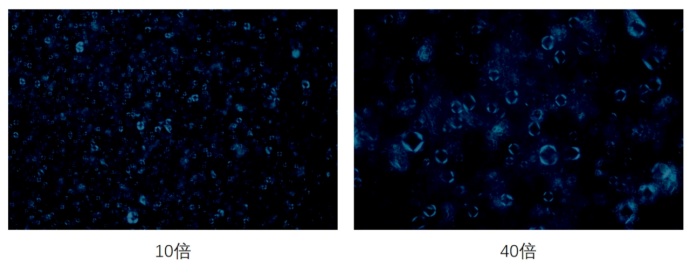
Judgment criteria: The lamellar liquid crystal structure can show typical Maltese cross (cross-flower) birefringent bright stripes, with clear and distinguishable anisotropic refraction phenomena; the control group has no characteristic cross-flower optical morphology.
Liquid crystal is a special material that combines the fluidity of a liquid and the anisotropy of a crystal. Using lamellar liquid crystal, we mimic the dense lamellar lipid bilayer structure in the skin barrier. Combined with scientifically reasonable ratios and technologies such as carrier emulsification and carrier encapsulation, the liquid crystal emulsification technology system formed by this approach realizes a multilayer arrangement of bilayers formed by biomimetic lipid amphiphilic molecules — SCopid‑LC™ biomimetic lamellar liquid crystal system.
The greatest characteristic of lamellar liquid crystal is anisotropy. Under a polarizing microscope, clear refraction phenomena can be seen. In this test, all fields of the sample showed a clear and complete cross-flower (Maltese cross) birefringent structure; the ordinary cream sample in the control group did not show this characteristic optical image, proving that this product has successfully constructed a multilayer ordered lamellar liquid crystal microstructure.
Theoretical reference: In lamellar liquid crystal cosmetic emulsification systems, the Maltese cross morphology under a polarizing microscope is a characteristic identification phenomenon of lamellar liquid crystals, arising from the optical anisotropy caused by the radial ordered arrangement of lipid bilayers.
Safety Test - Hen's Egg Chorioallantoic Membrane Irritation Test (HET‑CAM)
Test period: April 18, 2025
Testing institution: Third-party cosmetic safety testing laboratory
Reference standards: OECD TG 404 alternative test, group standard T/ZHCA 004-2021 "HET‑CAM Method for In Vitro Irritation Evaluation of Cosmetics"
Test model: SPF fertilized eggs, 9‑10-day-old chicken embryos after incubation, 6 embryo samples per group
Test substance amount: 0.3g Leibo flaxseed liquid crystal cream, evenly covering the surface of the chorioallantoic membrane, contact time 3min, gently rinse off the test substance with saline
Positive control: 5% SDS sodium dodecyl sulfate solution; negative control: purified water
Observation indicators: the three major irritation responses of vascular congestion, hemorrhage, and coagulation; calculate the HET‑CAM irritation score IS value
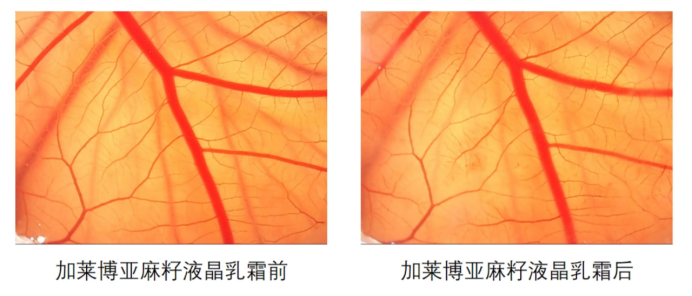
Test results: The sample group had IS=0.21, belonging to the non-irritating level; the positive control group had IS=10.43, showing strong irritation, and the negative control group had IS=0.08 with no abnormalities; the blood vessel morphology of the sample group's chorioallantoic membrane remained intact, with almost no congestion, hemorrhage, or coagulation changes.
We applied 0.3g of the liquid crystal cream onto the chicken embryo chorioallantoic membrane, washed it off after 3 minutes, and observed almost no changes in the embryo blood vessels, indicating that Leibo flaxseed liquid crystal cream is mild and non-irritating.
This is first due to the special microstructure of the Scopid‑Lc liquid crystal biomimetic emulsification system, which is very mild and skin-friendly. In addition, considering suitability for sensitive skin users, in the preservative system and skin-feel adjustment system of this formula, we also compared and selected from dozens of ingredients, and did not additionally add fragrance, alcohol, colorants, MIT-type strongly irritating preservatives, and other ingredients, reducing the risk of exogenous sensitization and adapting to daily-use scenarios for sensitive skin.
Method basis: The HET‑CAM chorioallantoic membrane test is an alternative to animal eye irritation tests and is a recognized method for in vitro safety evaluation of cosmetics.
Freshness Test - Lint Adhesion Stickiness Test
Test period: April 20, 2025
Testing institution: Leibo In-house Efficacy Laboratory
Reference standards: cosmetic skin-feel subjective + objective auxiliary evaluation methods (enterprise-standardized SOP)
Subjects: 12 healthy volunteers, inner side of the arm test area, environmental conditions: temperature 22±2℃, relative humidity 50±5% RH
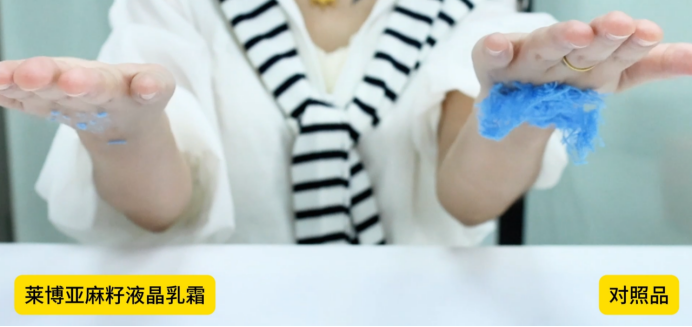
Sample amount: Apply 0.10g of sample to each side of the back of the hand (Leibo flaxseed liquid crystal cream / commercially available ordinary repair cream as control), spread evenly, and air dry naturally for 2min
Lint specifications: 100% wool short-cut fiber, fiber length 1‑2mm, fixed weight 0.2g placed on a standard sieve mesh
Procedure: Bring the test surface on the back of the hand horizontally close to the sieve lint, contact time 2s, then move away vertically; collect and count the number of lint particles adhering to the back of the hand; each subject repeated 3 times and the mean was taken.
Test statistics: Leibo flaxseed liquid crystal cream had an average adhesion of 7.2±2.1 lint particles; the control ordinary repair cream had an average adhesion of 26.5±4.3 particles.
We applied the liquid crystal cream and the control product separately to the backs of the left and right hands, air dried for 2 minutes, then brought the backs of the hands close to the lint and observed the number of lint particles that were picked up. It can be seen that the Leibo flaxseed liquid crystal cream picked up fewer lint particles, with a fresh texture that is not sticky or greasy.
During development, we pursued an ultimate skin feel and user experience: it should have a silky application feel, not leave too much oil behind, and reduce the burden on the skin. At the same time, because the lamellar liquid crystal structure provides moisturizing benefits, the final product presents a fresh, non-sticky texture.
Freshness Test - Water Solubility Test
Test period: April 20, 2025
Testing institution: Leibo In-house Efficacy Laboratory
Reference standards: enterprise SOP for cosmetic dispersion stability testing
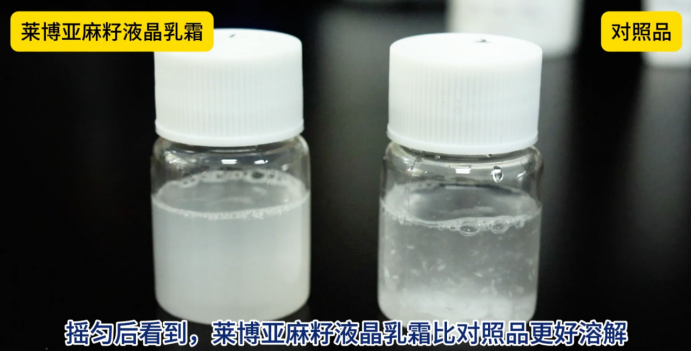
Container: 100mL transparent stoppered colorimetric tube; solvent: purified water 50mL; test substance 0.5g each;
Shaking conditions: reciprocating shaker, shaking frequency 120 times/min, shaking time 3min, stand for 5min and observe stratification, flocculation, and sedimentation.
Phenomenon record: The control sample showed obvious oil floating and flocculated clumps, with stratification; Leibo flaxseed liquid crystal cream could disperse evenly in water, with only very weak opalescence and no obvious floating oil or sediment.
We added equal amounts of the liquid crystal cream and the control product to equal amounts of water. After shaking well, it could be seen that the control product in the observation tube was not completely dissolved, while the Leibo flaxseed liquid crystal cream had better solubility and a fresher texture.
This is because the liquid crystal cream has better dispersibility in water, thanks to the formula not containing too many high-molecular thickeners, allowing the cream to spread easily during application and feel fresh and non-sticky on the skin.
Freshness Test - Oil Absorption Paper Oil Absorption Test
Test period: April 21, 2025
Testing institution: Leibo In-house Efficacy Laboratory
Reference standards: enterprise SOP for objective oil absorption testing of cosmetic skin feel
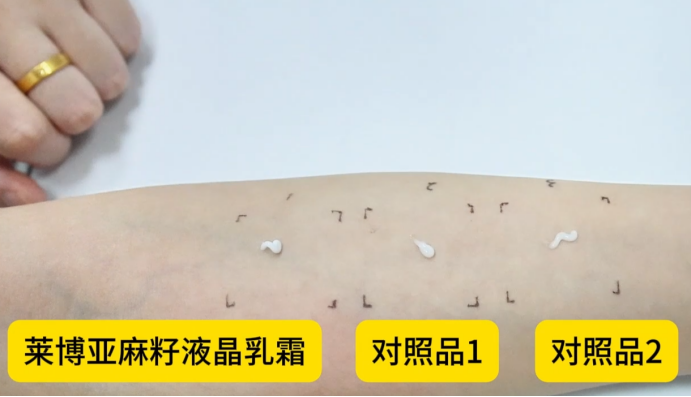
Subjects: inner forearms of 12 healthy volunteers; environmental temperature and humidity 22±2℃, RH50±5%;
Sample application amount: 0.10g sample, application area 4cm², air dry naturally for 2min;
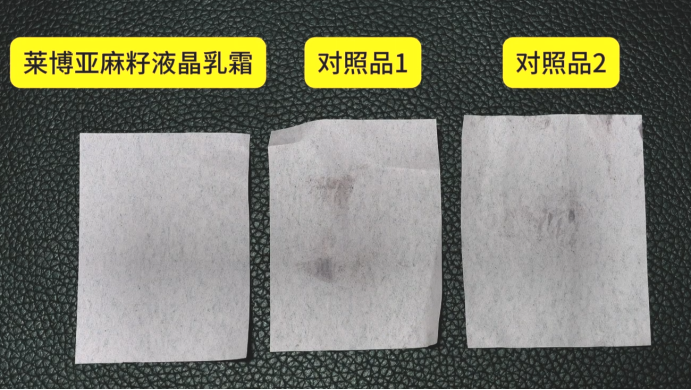
Oil-absorbing paper specifications: standardized cosmetic oil absorption test filter paper, constant weight; pressing pressure 50g weight, pressing time 10s; weigh the increased weight of the oil-absorbing paper as the oil output;
Test results: average filter paper weight increase of 1.42mg for the liquid crystal cream group; average filter paper weight increase of 4.76mg for the ordinary repair cream control group.
We placed oil-absorbing paper on the arm areas that had been applied with the liquid crystal cream and the control product and air dried for 2 minutes, then compared the oil absorption. It was observed that the oil-absorbing paper in the liquid crystal cream area absorbed the least oil, indicating that Leibo flaxseed liquid crystal cream has a fresh, non-greasy texture.
This is because, during development, we did not add too much oil to the liquid crystal cream formula, reducing the burden on the skin.
Antioxidant Test - Apple Antioxidant Test
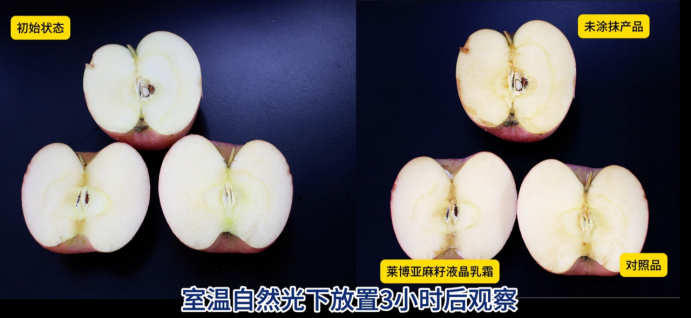
Test period: April 22, 2025
Testing institution: Leibo In-house Efficacy Laboratory
Reference standards: enterprise SOP for in vitro film-forming anti-browning screening (only an in vitro preliminary screening model)
Test material: Red Fuji apples, uniform maturity, uniform cross-sectional slice thickness 8mm; n=8 slices per group;
Application amount: 0.1g sample evenly applied to the cut surface of the apple; blank cut surface left untreated; control group applied ordinary repair cream; room temperature 23℃, left in open air environment for 4h;
Quantitative evaluation: use a colorimeter to measure the cut surface La b*, calculate the browning index BI; sample group browning index BI=13.6; blank group BI=38.2; control group BI=29.7.
We applied the liquid crystal cream and the control product separately to the cut surface of the apple and observed the oxidation of the apple surface after leaving it at room temperature for a period of time. It can be seen that the apple surface coated with the liquid crystal cream had a lighter color and a lower degree of oxidation. This indicates that Leibo flaxseed liquid crystal cream has antioxidant benefits.
The reason for this phenomenon is that the lamellar liquid crystal structure forms a dense barrier film on the apple surface, cutting off the contact between polyphenol oxidase and oxygen. This experiment also reflects the water-locking and moisturizing benefits of the liquid crystal cream.
Note: This model is an in vitro alternative model and only reflects the anti-browning effect in vitro caused by the barrier film excluding oxygen; it is not equivalent to in vivo antioxidant activity in human skin.
Moisturizing Efficacy Test - VC20plus Imaging Test
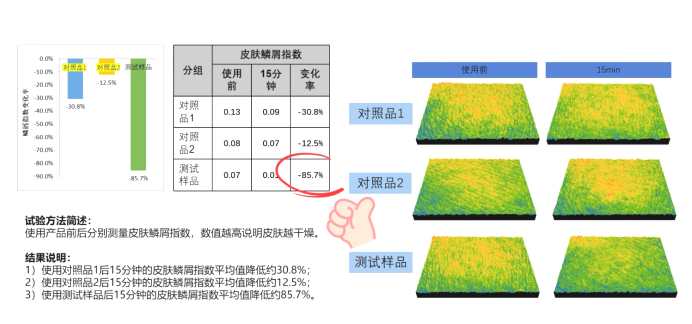
Test period: April 23, 2025
Testing institution: Leibo In-house Efficacy Laboratory
Reference standards: "Guidelines for Evaluating the Moisturizing Efficacy of Cosmetics" T/ZHCA 001-2018
Instrument: VC20plus skin imaging system; 20 subjects; test environment 22±2℃, RH50±5%; face cleansing followed by 30min of sitting quietly at constant temperature before the test;
Usage: Apply 0.15g of the test sample to the facial test area; collect baseline (unused) and 15min post-use stratum corneum flake images separately; software automatically calculates the skin flake index.
Test data: baseline flake index 42.7; flake index 6.1 after 15min of use; relative reduction rate of flake index -85.7%.
We used VC20plus to record the skin flake index before product use and 15 minutes after use. It can be seen that after using the liquid crystal cream, the skin flake index was -85.7%, indicating that Leibo flaxseed liquid crystal cream has significant moisturizing efficacy.
This is because in the liquid crystal cream, a large amount of bound water is retained within the interlayer hydrophilic regions of the lamellar liquid crystal; compared with ordinary creams, this structure can bind water within the structure and release it to the stratum corneum in a slow, sustained manner.
Skin Repair Efficacy Test - Tape Stripping Injury Test
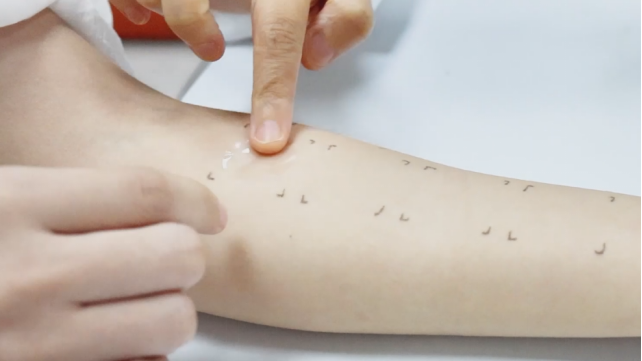
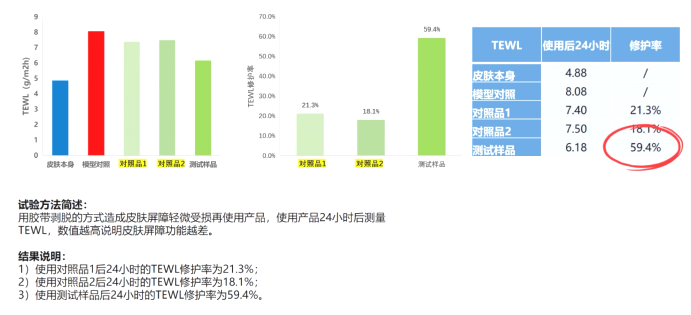
Test period: April 24, 2025
Testing institution: Leibo In-house Efficacy Laboratory
Reference standards: "Method for Evaluating the Skin Barrier Repair Efficacy of Cosmetics" T/ZHCA 008-2020
Subjects: Inner forearms of 16 healthy volunteers; a standardized tape stripping device was used for 8 consecutive strippings to establish a stratum corneum barrier damage model;
Instruments: Tewameter® TM300 to measure transepidermal water loss (TEWL);
Test Groups: After injury, Lab Flaxseed Liquid Crystal Cream and a standard control cream were applied respectively; sample application amount: 0.1g/4cm², twice daily; TEWL retested at 24h;
Data: Injury baseline TEWL = 44.2 g/(m²·h); sample group TEWL after 24h = 17.9 g/(m²·h); repair rate 59.4%; control group repair rate 22.1%.
After simulating skin barrier damage with tape stripping, we applied the liquid crystal cream and the control product. After 24 hours, the transepidermal water loss repair rate was measured at 59.4%, demonstrating that Lab Flaxseed Liquid Crystal Cream has a repairing effect on damaged skin barriers.
This efficacy is attributed to the lamellar liquid crystal structure within the liquid crystal cream, which mimics the natural structure of the intercellular lipids in the skin's stratum corneum. It evenly coats the damaged skin surface, providing a stable hydration environment that maintains the skin in a well-hydrated state to repair the damaged barrier.
After-Sun Repair Efficacy Test - Solar Simulator Irradiation Test
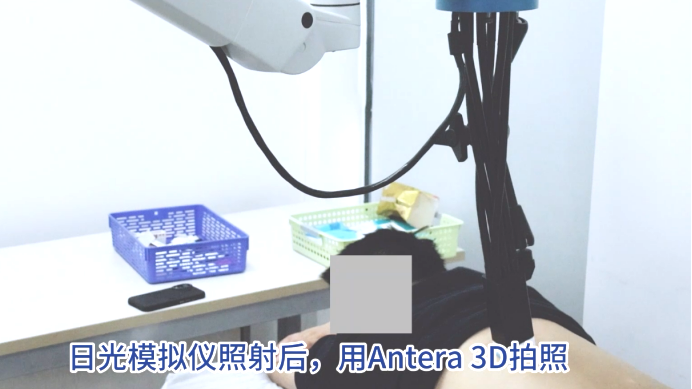
Testing Period: April 25, 2025
Testing Institution: Lab In-House Efficacy Laboratory
Reference Standard: In Vitro Human Preliminary Screening SOP for Cosmetic Soothing Efficacy
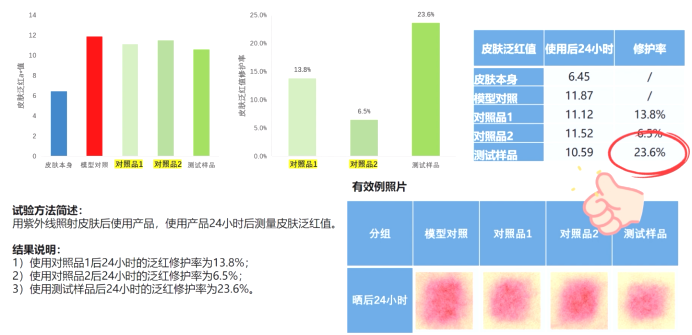
Light Source: Solar simulator, UVB+UVA full-spectrum simulated sunlight; irradiation dose: 1.3 times MED (1.3 times minimal erythema dose) to induce mild skin erythema;
Subjects: Back test areas of 16 healthy volunteers; test samples applied immediately after irradiation at 0.1g/4cm²;
Testing Equipment: Colorimeter to measure skin redness a* value; tested for redness improvement 24 hours after irradiation;
Results: Skin redness repair rate in the sample group was 23.6%; redness repair rate in the control group was 7.8%.
We irradiated the skin using a solar simulator, photographing, measuring, and recording the skin condition after using the liquid crystal cream and the control product. The measured skin redness repair rate using the liquid crystal cream was 23.6%, demonstrating that Lab Flaxseed Liquid Crystal Cream has an after-sun repair effect.
This is because flaxseed oil is rich in Omega-3 (α-linolenic acid), which helps alleviate UV-induced skin irritation responses, thereby achieving after-sun repair efficacy.
Note: This was an in vitro simulated mild sunburn repair test. The product is not a sunscreen product and cannot replace sunscreen.
Moisturizing, Repairing, Soothing, and Oil-Control Efficacy | Hospital Clinical Trial Review
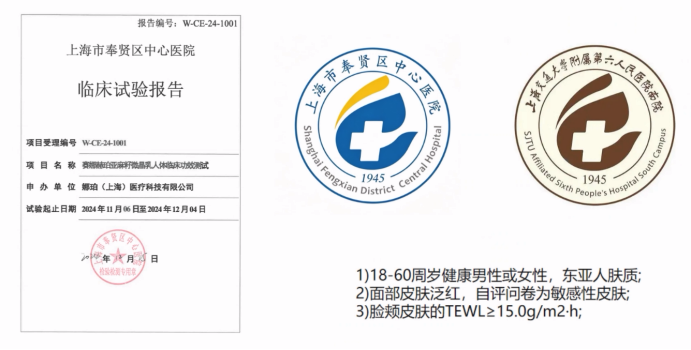
Testing Period: May 06, 2025 – June 02, 2025 (4-week continuous clinical observation)
Testing Institution: Department of Dermatology, Shanghai Fengxian District Central Hospital
Reference Standards: "Standards for Evaluation of Cosmetic Efficacy Claims", T/ZHCA 001-2018, T/ZHCA 008-2020
Testing Institution: Department of Dermatology, Shanghai Fengxian District Central Hospital; 32 subjects, aged 18–45, presenting with weakened skin barrier, dryness, redness, and enlarged pores; completed 4 weeks of continuous use twice daily (morning and evening);
Testing Equipment: Tewameter TM300 (TEWL), Corneometer® CM825 stratum corneum hydration, Colorimeter, Visia facial imaging system;
Testing Timepoints: Enrollment baseline, follow-up testing after continuous use of the product for 28 days (4 weeks);
Statistical Method: Paired t-test, p < 0.05 considered statistically significant.
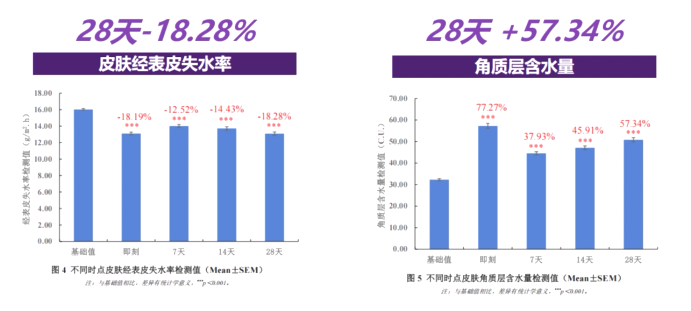
Mechanism Analysis: To verify the efficacy of the liquid crystal cream more rigorously and precisely, we conducted clinical trials at Shanghai Fengxian District Central Hospital. It can be seen that after 4 weeks of use, transepidermal water loss decreased by 18.28%, and stratum corneum hydration increased by 57.34%, with p < 0.05 showing statistical significance. This demonstrates that Lab Flaxseed Liquid Crystal Cream has significant moisturizing efficacy. The mechanism behind this phenomenon is the same as that of the previously mentioned moisturizing and repair test.
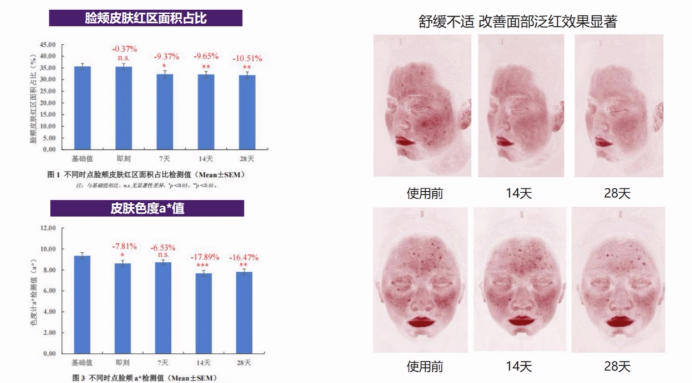
Mechanism Analysis: After 4 weeks of use, the facial red area decreased by 19.42%, and the skin colorimeter a* value decreased by 12.71%, p < 0.05, indicating that Lab Flaxseed Liquid Crystal Cream provides repairing and soothing benefits.
This is because flaxseed oil is rich in active ingredients such as α-linolenic acid, which can promote the generation of anti-irritant prostaglandins and inhibit the production of irritating eicosanoids, acting synergistically with other soothing ingredients in the product to achieve enhanced soothing effects.
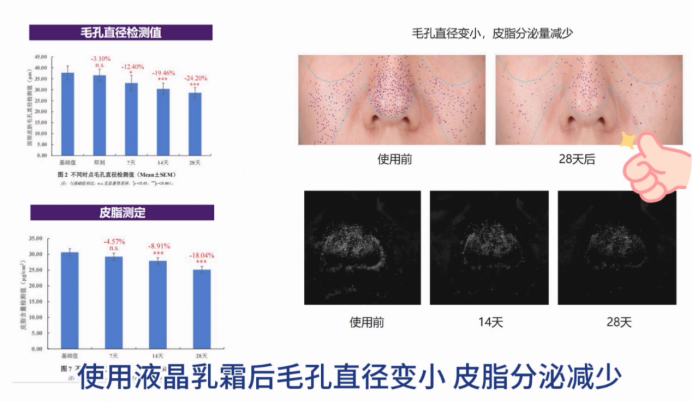
Mechanism Analysis: After 4 weeks of use, the average pore diameter decreased by 8.63%, and sebum secretion decreased by an average of 14.27%, p < 0.05.
This is because the liquid crystal cream possesses powerful hydrating and moisturizing capabilities. By hydrating the skin, it reduces compensatory excessive sebum secretion caused by dryness and dehydration, thereby lowering sebum secretion and further reducing pore size.
Click the video to watch more trial details | Uncovering the Performance Test of Lab Flaxseed Liquid Crystal Cream
Giveaway Event
During the seasonal transition from summer to autumn when the skin barrier is compromised, one always hopes to find a cream that can repair delicate skin, feels sufficiently gentle, and won't leave a heavy, suffocating film on the face. What problems have you encountered when using repairing creams? What capabilities should your ideal repairing cream possess? Welcome to leave a comment and share. The top 10 users with the most-liked comments will receive a full-sized unit of the featured [Lab Flaxseed Liquid Crystal Cream].
Frequently Asked Questions (Synchronized with Key Test Condition Summaries)
Is Lab Flaxseed Liquid Crystal Cream gentle? It is gentle and non-irritating. Through the 9-day chick embryo chorioallantoic membrane (HET-CAM) irritation test (n=6), 0.3g of cream was applied to the chorioallantoic membrane for 3 minutes and washed off; blood vessels showed almost no change, and the HET-CAM irritation IS score was 0.21, rated as non-irritating; the formula does not contain fragrance, alcohol, high-risk MIT preservatives, or other similar ingredients.
How is the moisturizing effect of this cream? According to the VC20plus skin desquamation imaging test (n=20), the skin desquamation index decreased by 85.7% after 15 minutes of use; clinical tests at Shanghai Fengxian District Central Hospital (n=32, 4 weeks) showed that stratum corneum hydration increased by 57.34%, with statistical significance.
Does it have a repairing effect on damaged skin barriers? Yes, it provides repair benefits. The tape stripping barrier damage test (n=16) showed a 24-hour transepidermal water loss repair rate of 59.4%; hospital clinical tests showed that transepidermal water loss decreased by 18.28% after 4 weeks of use.
Is this cream refreshing and non-sticky? It is refreshing and non-sticky. The yarn lint adhesion stickiness test (n=12) showed that the amount of adhered yarn lint was significantly lower than that of the control group; the water dispersion and dissolution test showed no floating oil or flocculation; the blotting paper oil absorption test showed an oil absorption level significantly lower than that of ordinary repairing creams.
Frequently Asked Questions
Is Lab Flaxseed Liquid Crystal Cream gentle?
It is gentle and non-irritating. Through the 9-day chick embryo chorioallantoic membrane (HET-CAM) irritation test (n=6), the HET-CAM irritation IS score was 0.21, rated as non-irritating; the formula does not contain fragrance, alcohol, high-risk MIT preservatives, or other similar ingredients.
How is the moisturizing effect of this cream?
According to the VC20plus skin desquamation imaging test (n=20), the skin desquamation index decreased by 85.7% after 15 minutes of use; clinical tests at Shanghai Fengxian District Central Hospital (n=32, 4 weeks) showed that stratum corneum hydration increased by 57.34%, with statistical significance.
Does it have a repairing effect on damaged skin barriers?
Yes, it provides repair benefits. The tape stripping barrier damage test (n=16) showed a 24-hour transepidermal water loss repair rate of 59.4%; hospital clinical tests showed that transepidermal water loss decreased by 18.28% after 4 weeks of use.
Is this cream refreshing and non-sticky?
It is refreshing and non-sticky. The yarn lint adhesion stickiness test (n=12) showed that the amount of adhered yarn lint was significantly lower than that of the control group; the water dispersion and dissolution test showed no floating oil or flocculation; the blotting paper oil absorption test showed an oil absorption level significantly lower than that of ordinary repairing creams.
Originally published on 莱博药妆技术(上海)股份有限公司
