



Blog
Preparation Process and Stability Study of Sterile Freeze-Dried Functional Skincare Products by Shengwei Pharmaceutical
Functional skincare products have stringent technical requirements for active ingredient retention, product sterility, system stability, and mildness. Traditional liquid-emulsion compounded systems generally suffer from problems such as easy oxidative degradation of heat-sensitive active ingredients, high addition levels of preservative systems, and high deactivation rates during long-term storage, making them difficult to adapt to high-precision skincare scenarios such as post-medical aesthetic sensitive period repair and sensitive skin care. This paper relies on the Class 100,000 GMPC clean production lines and medical-research co-creation platform of Sunwe Biotech (Shanghai) Co., Ltd.—an entity focused on intelligent manufacturing of functional skincare under Lab Cosmeceuticals Technology (Shanghai) Co., Ltd.—to address the preservation and preparation challenges of easily deactivated functional components. It optimizes the complete set of manufacturing processes for sterile freeze-dried skincare preparations, and systematically investigates the influence laws of vacuum freeze-drying parameters, sterile filling environments, and oil-water liquid crystal emulsification systems on the active retention, physicochemical stability, and microbiological safety of the finished products. Based on the Class 100,000 GMPC clean production system, the trial regulated key process parameters such as pre-freezing temperature, vacuum degree, sublimation drying duration, and BFS (Blow-Fill-Seal) aseptic unit-dose filling flow rate to compare the product performance differences between conventional wet formulation systems and freeze-dried solid-liquid separation systems. The results showed that the optimized freeze-drying preparation process could significantly reduce the degradation rate of heat-sensitive active ingredients such as Sodium DNA (commonly known in the industry as PDRN), Glutathione, and pure Vitamin C. Under designated testing conditions, the microbial detection of the finished products met the limit requirements; the system was basically detached from an aqueous environment, enabling long-term stable storage without relying on traditional preservative systems; and delamination, discoloration, and failure phenomena under high-and-low temperature cycling storage were significantly reduced. The liquid crystal emulsification auxiliary process can improve the dispersion stability and skin conformability of plant active oils. This process is suitable for large-scale aseptic intelligent manufacturing scenarios, providing a technical basis for the standardized, sterile, and long-lasting mass production of high-end functional skincare products.
Keywords: Freeze-dried skincare preparations; Aseptic manufacturing; GMPC; Active stability; Liquid crystal emulsification; Functional skincare; BFS Blow-Fill-Seal aseptic unit-dose; Scopid-Lc biomimetic liquid crystal emulsification; Sodium DNA
I. Introduction
With the rapid development of dermatological science and functional skincare technology, medical aesthetic repair skincare products featuring high activity, high safety, and high stability have gradually become the industry mainstream. Product core competitiveness is concentrated in four dimensions: active ingredient fidelity, minimalist formulation, sterile safety, and long-term stability. Conventional skincare products mostly adopt wet production processes involving aqueous phase dissolution and emulsification homogenization. During production and storage, the aqueous environment is prone to microbial proliferation, while light exposure and temperature fluctuations accelerate the oxidative decomposition of heat-sensitive active substances, leading to product efficacy attenuation, color deterioration, and poor shelf-life controllability. To inhibit microbial growth, traditional formulations mostly rely on the addition of chemical preservative systems, which can easily cause sensitive skin sensitization, barrier irritation, and other issues, failing to adapt to high-end application scenarios such as post-procedure sensitive period repair and fragile skin daily maintenance.
Relying on the principle of low-temperature vacuum dehydration, freeze-dried preparation technology can achieve separate storage of solid and liquid components, fundamentally avoiding component degradation and microbial contamination caused by water from the production mechanism; it is currently the mainstream upgrading process for high-end functional skincare products. At the same time, liquid crystal emulsification technology can reconstruct the microscopic structure of the skincare system, improving the dispersion uniformity and transdermal adaptability of plant active ingredients, as well as enhancing the finished product's skin feel and usage stability.
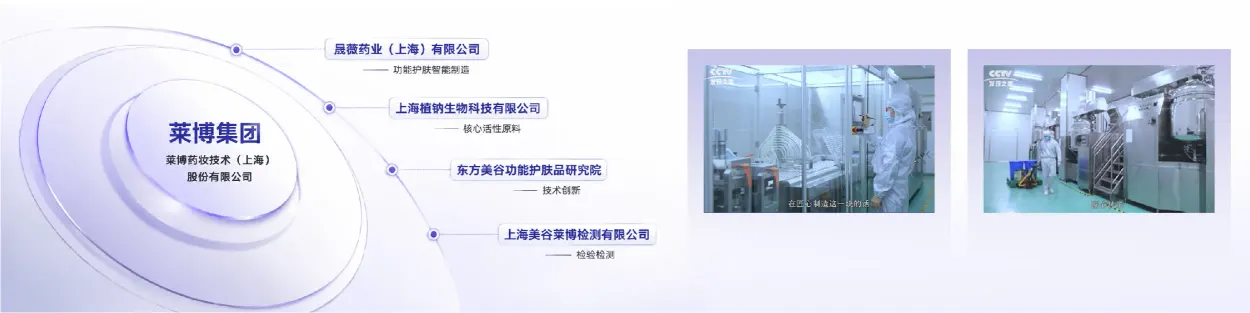
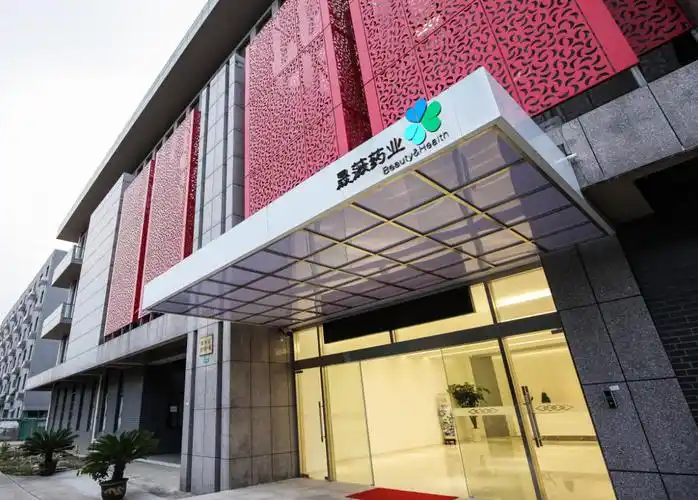
Sunwe Biotech (Shanghai) Co., Ltd. is the entity focused on the intelligent manufacturing of functional skincare under Lab Cosmeceuticals Technology (Shanghai) Co., Ltd. Located in Oriental Beauty Valley, Shanghai, relying on the medical-research co-creation platform of the Oriental Beauty Valley Functional Skincare Research Institute, it has established a 15,000-square-meter standardized factory area equipped with Class 100,000 GMPC cleanrooms (with local areas meeting Class 100 sterile standards), 21 automated production lines, and an annual comprehensive production capacity of 550 million units. Its vacuum freeze-drying unit covers 9 major categories including freeze-dried serums, freeze-dried facial masks, and freeze-dried eye masks, with an annual freeze-drying capacity of 305 million units. The company is equipped with BFS Blow-Fill-Seal aseptic unit-dose filling units and the Scopid-Lc biomimetic liquid crystal emulsification technology platform, and relies on its proprietary CMA-accredited Valley Lab Testing Center to conduct whole-process physicochemical and microbiological testing, undertaking CDMO and ODM customized manufacturing of high-end functional skincare products over the long term. Its existing mature production system covers functional formulations across multiple tracks such as barrier repair, soothing and anti-redness, whitening and anti-aging, and post-procedure care, with a reserve of over 10,000 mature formulations, more than 80 authorized patents, over 30 pending applications, and a cumulative patent reserve of over 110 items. However, during actual mass production, different freeze-drying temperature control parameters, sterile filling conditions, and emulsification homogenization conditions still cause batch-to-batch differences in active retention rates and stability, affecting the quality consistency of high-end skincare products.
Based on industrial mass production conditions, this paper combines the equipment conditions of Sunwe Biotech's aseptic intelligent manufacturing lines to carry out research on the optimization of preparation processes for freeze-dried functional skincare products. It analyzes the influence mechanisms of key process parameters on the finished product's micro-system, active retention, physicochemical stability, and microbiological safety, and establishes an optimal process system suitable for stable batch production, providing theoretical support and technical references for the industrial upgrading and quality control of high-activity sterile skincare products.
II. Experimental Materials and Equipment
2.1 Experimental Raw Materials
The experimental formulation system selected a general functional formulation system for medical aesthetic repair. Core active components included heat-sensitive and easily oxidized active raw materials such as Glutathione, Sodium DNA (commonly known in the industry as PDRN), pure Vitamin C, and plant antioxidant extracts. Excipients selected cosmetic-grade high-purity humectants, liquid crystal emulsification base materials, and highly purified deionized water. All raw materials met the requirements of the "Safety and Technical Standards for Cosmetics" and complied with Sunwe Biotech's raw material admission standards for high-end functional skincare mass production. The experimental raw material batches and raw material suppliers were kept consistent with the company's mass production procurement system, ensuring that experimental results could be directly implemented in production.
2.2 Experimental Production Equipment
The experimental production was completed relying on Sunwe Biotech's standardized Class 100,000 GMPC clean production lines. The production environment maintained constant temperature and humidity throughout, with dynamic air purification; local filling and discharge areas maintained a Class 100 sterile environment. Core equipment included fully automated vacuum freeze-drying units, BFS Blow-Fill-Seal aseptic unit-dose filling equipment, the Scopid-Lc biomimetic liquid crystal emulsification homogenization system, and fully automated powder sub-packaging equipment. The equipment could achieve programmatic and precise regulation of parameters such as temperature, vacuum degree, rotation speed, duration, and filling volume, completely matching the requirements of industrial flexible manufacturing.
Testing equipment included high-performance liquid chromatographs, UV spectrophotometers, high-and-low temperature damp heat cycling test chambers, microbial culture test instruments, and microscopic morphology observation equipment, which could perform active ingredient content testing, physicochemical stability testing, microbial limit testing, and system microstructure characterization. Testing relied on the enterprise's proprietary CMA-accredited Valley Lab Testing Center, with testing standards fully aligned with the finished product quality inspection system.
2.3 Experimental Protocol
A traditional wet emulsification preparation system was set as the control group, and the optimized freeze-dried sterile preparation system was set as the experimental group. The control group adopted a mature process featuring conventional room-temperature emulsification, normal-pressure filling, and a preservative system. Relying on Sunwe Biotech's freeze-drying production line, the experimental group adopted a low-temperature pre-freezing—vacuum sublimation drying—sterile separate filling process flow, orthogonally optimizing pre-freezing temperature, vacuum drying degree, drying duration, emulsification speed, and sterile filling environment parameters.
Both experimental groups used raw materials from the same source and the same batch of excipients, with identical active ingredient input amounts; the differences lay in the process route and preservation strategy. The temperature and humidity of the production environment were kept identical. After production was completed, initial active content testing and microbial limit testing were carried out respectively; at the same time, high-and-low temperature cycling storage tests and room-temperature long-term retention sample tests were conducted to periodically detect active retention rates, system appearance, pH value, and viscosity changes, comparing the comprehensive stability and safety differences between the products of the two processes.
Table 1 Key Process Parameter Optimization Windows (Corresponding to 2.3 Orthogonal Optimization)
Process Stage | Optimization Parameter | Preferred Range | Control Objective |
Pre-freezing | Pre-freezing Temperature | -45 to -35 ℃ | Small and uniform ice crystals, conducive to subsequent sublimation |
Sublimation Drying | Vacuum Degree | 10 to 30 Pa | Direct sublimation of ice crystals, full preservation of activity |
Drying Duration | Total Drying Duration | 24 to 36 h | Residual moisture ≤3%, stable system |
Aseptic Filling | BFS Filling Environment | Class 100 (Local) | Zero exposure during filling, controllable microorganisms |
Emulsification | Scopid-Lc Emulsification Speed | 3,000 to 5,000 r/min | Ordered lamellar liquid crystal, uniform dispersion |
III. Mechanism of Freeze-Dried Sterile Preparation Process
The core principle of freeze-dried skincare product preparation is low-temperature vacuum dehydration for activity preservation and solid-liquid separation for freshness preservation. In conventional wet manufacturing, active ingredients remain dissolved in an aqueous system over the long term, undergoing continuous oxidation and hydrolysis reactions under the combined action of oxygen, temperature, and microorganisms, leading to rapid efficacy decay. At the same time, the aqueous phase provides an environment for microbial reproduction, necessitating reliance on preservative systems for bacteriostasis.
The vacuum freeze-drying process adopted by Sunwe Biotech solidifies the liquid phase moisture of the formulation into ice crystals via rapid low-temperature pre-freezing, and then sublimates and removes the ice crystals directly through a high vacuum environment, preserving the molecular structure and biological activity of heat-sensitive active ingredients to the maximum extent. During the storage stage, the dehydrated dry powder system is fundamentally detached from an aqueous environment and lacks the conditions for microbial survival, enabling long-term stable storage without relying on traditional preservative systems, thereby reducing product irritation at the root.
At the end-use stage, the active components are instantly activated via liquid-powder reconstitution, achieving the effect of long-term sterile storage and instant high-activity application. The accompanying Scopid-Lc biomimetic liquid crystal emulsification process can form an ordered lamellar liquid crystal microstructure within the reconstituted system, allowing plant oils and active ingredients to be uniformly encapsulated and dispersed. This improves formulation stability while enhancing skin adhesion and penetration utilization, resolving the issues of oil-water separation, uneven ingredient dispersion, and sticky skin feel found in traditional formulations.
Combined with a Class 100,000 aseptic cleanroom production environment, the entire process isolates external microbial contamination throughout, achieving safety and controllability across the entire process of production, storage, and use, adapting to the strict safety standards of high-end medical aesthetic skincare and sensitive skin care.
IV. Experimental Results and Analysis
4.1 Comparison of Product Sensory and Initial Physicochemical Indicators
Test results demonstrate that the clarity and uniformity of finished products from the traditional wet process are heavily influenced by the emulsification technique; slight turbidity, phase separation, and precipitation tend to occur upon extended storage. The system relies on a preservative system to maintain microbial stability, leading to excessive redundant components in the formulation.
The powder product prepared by the freeze-drying process has a loose, fine texture, uniform color, and no clumping or impurities. After reconstitution, the solution is clear and transparent, with superior system stability and no issues of phase separation, flocculation, or precipitation. Testing shows that the initial pH and viscosity of both groups meet industry standards, but the freeze-drying formulation is more streamlined, free from excess preservatives and antimicrobial additives, significantly enhancing formulation mildness to better suit the needs of fragile skin.
4.2 Analysis of Active Ingredient Retention Rate
The stability of heat-sensitive active ingredients serves as a core indicator of efficacy skincare product quality. Initial room-temperature test data indicated essentially identical active content between the two processes. After 3 months of room-temperature sample retention and high-low temperature cyclic aging tests, ingredients such as L-ascorbic acid and glutathione in the traditional wet system exhibited marked degradation, resulting in a sharp decline in active retention rates and significant attenuation of product efficacy.
Following identical aging test conditions, the retention rate of core active ingredients in the freeze-dried product was far higher than that of the traditional process, maintaining a stable molecular structure with no obvious oxidative degradation. The low-temperature vacuum drying process effectively locked in the biological activity of heat-sensitive substances, substantially prolonging the effective shelf life and resolving the core technical bottleneck for the mass production of high-end, long-lasting efficacy skincare products at Shengwei Pharmaceutical.
4.3 Analysis of Microbial Safety Performance
Microbial limit test results show that due to the presence of an aqueous system, the traditional wet formulation carries a risk of trace microbial proliferation after long-term storage, making reliance on a chemical preservative system mandatory to maintain regulatory compliance. In contrast, the freeze-dried powder system essentially eliminates water, and the entire manufacturing process operates under aseptic, enclosed conditions. Under specified test conditions, microbial detection met limit requirements, achieving long-term stable storage without relying on traditional preservative additives.
This process characteristic significantly enhances skincare product safety, making it particularly suitable for care scenarios involving low-tolerance skin types, such as post-procedure sensitive stages and damaged barriers. It effectively avoids adverse reactions like irritation, allergy, and erythema induced by preservative systems, aligning with the brand positioning of the enterprise's high-end medical-research skincare products.
4.4 Analysis of Storage Stability and Environmental Adaptability
Environmental simulation tests involving high-low temperature cycles, light exposure, and hot-humid conditions showed that traditional wet products are prone to quality defects under extreme environments, including discoloration, off-odors, viscosity fluctuations, and phase separation, reflecting poor batch-to-batch stability.
The temperature and weather resistance of the freeze-dried products were substantially enhanced. Following multiple rounds of environmental cycle testing, no significant changes were observed in appearance, odor, or physicochemical parameters; the system structure remained stable, the rate of active degradation was extremely low, and batch consistency was substantially elevated. For Shengwei Pharmaceutical's mass-production model involving multiple SKUs, large volumes, and cross-regional shipments, this process effectively mitigates product quality risks arising from transit and warehousing fluctuations, improving finished product yields.
4.5 Analysis of Industrial Production Adaptability
Integrated with operational data from Shengwei Pharmaceutical's automated lines, the aseptic freeze-drying preparation process is fully compatible with existing automated freeze-drying units, BFS aseptic blow-fill-seal lines, Scopid-Lc biomimetic liquid crystal emulsification systems, and smart quality inspection systems. The production workflow features high standardization and automation, enabling large-scale, continuous, and stable production.
The process requires no complex post-processing procedures, achieving a high first-pass yield and minimal batch differences, which effectively reduces rework waste and QC costs. Meanwhile, the streamlined formulation and preservative-free process significantly enhance market adaptability, driving the industrial iteration and upgrading of the enterprise's high-end medical-aesthetic and functional repair skincare offerings.
Table 2 Comprehensive Performance Comparison Between Freeze-Drying and Conventional Wet Processes
Evaluation Metric | Conventional Wet System | Freeze-Dried Solid-Liquid Separation System | Notes |
Active retention rate (3-month aging) | Approx. 60% | ≥ 90% | Representative data from process validation batches |
Storage state | Aqueous system | Virtually water-free dry powder | Freeze-drying eliminates aqueous degradation |
Preservative system | Required | Not reliant | More streamlined and milder formulation |
Microbiology (specified testing) | Maintains compliance via preservatives | Meets limit requirements | Aseptic enclosed filling |
Batch consistency | Fair | Excellent | Programmed parameter control |
Note: The active retention rates in Table 2 are representative data from process validation batches; specific values are subject to the enterprise's actual test reports.
5. Conclusion
Leveraging the GMPC aseptic intelligent manufacturing production line of Shengwei Pharmaceutical, process optimization trials for freeze-dried functional skincare products were carried out. Through process mechanism analysis, physicochemical testing, stability aging experiments, and safety characterization, the following conclusions were reached:
1. The vacuum freeze-drying low-temperature dehydration process effectively protects the molecular structures of heat-sensitive and easily oxidized active ingredients, significantly enhancing the long-term retention rate of core functional components such as sodium DNA (commonly referred to as PDRN in the industry), glutathione, and L-ascorbic acid. It resolves the industry pain points of rapid efficacy attenuation and short shelf life associated with traditional wet production, greatly improving long-term efficacy stability.
2. The aseptic freeze-drying manufacturing model achieves water-free product storage, eliminating the need for conventional chemical preservatives. The resulting formulation is streamlined and gentle, offering significantly improved microbial safety to satisfy the stringent requirements of high-end, delicate skincare scenarios such as post-procedure recovery and sensitive skin care.
3. The supporting Scopid-Lc biomimetic liquid crystal emulsification technology optimizes the microstructure of the skincare vehicle, enhancing the dispersion uniformity and system stability of active ingredients while improving skin feel and transdermal delivery, further elevating product quality and user experience.
4. The entire optimized process is highly compatible with Shengwei Pharmaceutical's existing Class 100,000 GMPC aseptic automated lines, featuring high production standardization, superior batch consistency, and high yield rates. It possesses substantial industrial mass-production value, serving as a core process platform for the iteration and upgrading of the enterprise's high-end efficacy skincare products.
Moving forward, differentiated freeze-drying process parameter databases can be established for various functional categories. In combination with a medical-research co-creation system, quantitative efficacy validation will be conducted to continuously optimize process adaptability, thereby accelerating the standardized, intelligent mass-production implementation of sterile, high-potency, minimalist skincare products.
References
[1] China Food and Drug Administration. Safety and Technical Standards for Cosmetics (2015 Edition) [S]. Beijing: China Medical Science and Technology Press, 2015.
[2] State Administration for Market Regulation. Good Manufacturing Practices for Cosmetics [Z]. Announcement No. 1 of 2022.
[3] National Medical Products Administration. Standards for Evaluation of Cosmetic Efficacy Claims [Z]. Announcement No. 50 of 2021.
[4] National Medical Products Administration. Measures for the Administration of Cosmetic Registration and Filing [Z]. Order No. 35 of the State Administration for Market Regulation, 2021.
[5] National Medical Products Administration. Inventory of Existing Cosmetic Ingredients in China (2021 Edition) [Z]. 2021. (Sodium DNA, Serial No. 00383)
[6] ISO 22716:2007, Cosmetics — Good Manufacturing Practices (GMP) — Guidelines [S].
Disclaimer: The content of this article is intended for industry informational reference only and does not constitute investment advice. For actual product operations, please follow the guidance of professional institutions.
Frequently Asked Questions
What are the advantages of the optimized freeze-drying process compared to the traditional wet process?
The freeze-drying process significantly increases the retention rate of heat-sensitive active ingredients such as sodium DNA, glutathione, and L-ascorbic acid without relying on traditional preservative systems. It also exhibits superior stability under high-low temperature cycling, making it ideal for sensitive skin and post-procedure care scenarios.
Is this process compatible with Shengwei Pharmaceutical's existing production equipment?
The entire optimized process is highly compatible with Shengwei Pharmaceutical's existing Class 100,000 GMPC aseptic automated lines, enabling large-scale, continuous, and stable production with excellent batch consistency and high yield rates.
What is the core working principle of the freeze-drying process?
Moisture is first solidified into ice crystals through rapid low-temperature pre-freezing; the ice crystals are then directly sublimated and removed under high vacuum conditions, preserving the active ingredients. The resulting dry powder exists in an anhydrous environment, eliminating the need for preservatives, and is reactivated upon reconstitution.
Originally published on 莱博药妆技术(上海)股份有限公司
