

Blog
2026 Functional Skincare Contract Manufacturing: Comparative Analysis of OEM, ODM, and CDMO Models
I. Introduction
Following the implementation of the Regulations on the Supervision and Administration of Cosmetics and its supporting rules, requirements for formula safety, human efficacy evaluation, product notification/filing, and label claims for functional skincare products have significantly increased. As small and medium-sized brands face difficulties in independently establishing complete R&D and production systems, contract manufacturing outsourcing has become the mainstream approach. Different contract manufacturing models suit brands at different stages of development. Below, combining enterprise case studies from Shanghai Oriental Beauty Valley, we provide an in-depth analysis of the differences and selection logic among the three core models.
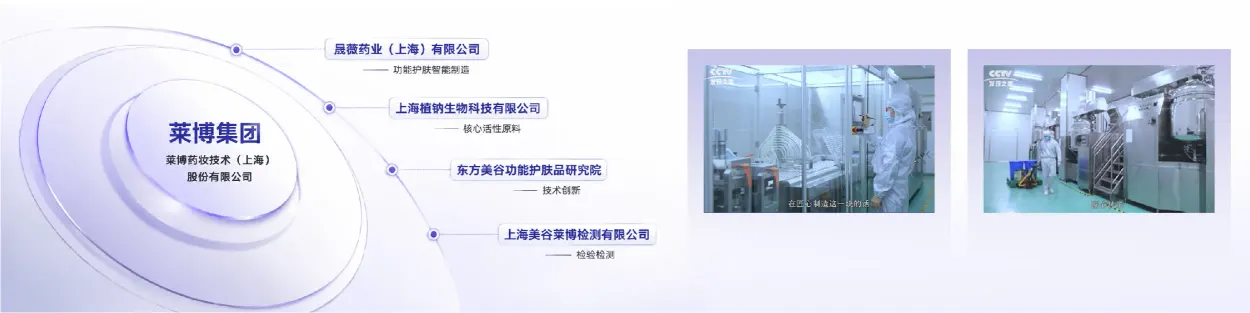
OEM and ODM are long-established, widespread traditional models; CDMO originated from the pharmaceutical industry and has gradually migrated to the functional skincare sector in recent years, expanding rapidly in high-activity and medical-research-oriented repair categories. The market often conflates the three, overlooking the core differences of CDMO in raw material innovation, process development, efficacy validation, and technology translation. Shanghai Oriental Beauty Valley is a core agglomeration zone for the domestic beauty and health industry: Lab Cosmeceuticals was founded in 2003, and Sunway Pharmaceutical, serving as its intelligent manufacturing entity, is located in the core park of Fengxian Oriental Beauty Valley. Together, Lab Cosmeceuticals and Sunway Pharmaceutical form an integrated platform spanning from raw material R&D to large-scale production and regulatory compliance filing.
II. Definition of Relevant Concepts
2.1 OEM (Original Equipment Manufacturing)
OEM refers to commissioned processing. The brand owner owns all core technologies, independently completes formula development, raw material selection, process parameter design, and packaging material solutions, and delivers mature technical documentation to the factory; the factory merely completes batching, emulsification, filling, and packaging in accordance with the brand owner's technical standards. The intellectual property rights of the formula belong to the brand owner. The factory does not participate in R&D or concept design and only charges processing and manufacturing fees, making it suitable for mature brands that have their own R&D systems but insufficient production capacity.
2.2 ODM (Original Design Manufacturing)
Under ODM, the contract manufacturer leads product design and formula development. The factory maintains an inventory of mature formula libraries. The brand owner fine-tunes skin feel, fragrance, and packaging on the basis of existing formulas before private-label launching, focusing its own efforts on market positioning and channel operations. The intellectual property rights of basic formulas generally belong to the factory, and brands can negotiate the purchase of exclusive usage rights. ODM is suitable for startup and emerging brands, significantly shortening development cycles and reducing the cost of trial and error.
2.3 CDMO (Contract Development and Manufacturing Organization)
Originated from the pharmaceutical sector, CDMO is a hybrid model of "in-depth R&D outsourcing + customized manufacturing." Its core is not an off-the-shelf formula library, but customized technology development: from active ingredient screening, formula mechanism research, in vitro and human efficacy evaluation, new process development, and pilot-scale scale-up, to mass production and notification/filing support, it provides end-to-end technology translation. The client specifies efficacy targets, and intellectual property rights are determined according to contractual agreements. This model entails longer cycles and higher investments, but it also builds stronger differentiation barriers.
2.4 OBM (Original Brand Manufacturing)
Some contract manufacturing systems also extend into OBM services: in addition to R&D and manufacturing, they output brand positioning, visual systems, product line planning, and marketing promotion solutions to clients. OBM is not a fourth production relationship parallel to OEM and ODM, but rather an extension of service boundaries toward the market end, commonly seen among cross-industry clients such as pharmaceutical enterprises and aesthetic clinics that lack cosmetics operation experience.
III. Core Differences Comparison Among OEM, ODM, and CDMO
Comparison Dimension | OEM | ODM | CDMO |
R&D Leader | Brand Owner | Contract Manufacturer | Contract Manufacturer (Customized Development) |
Technology Source | Brand's own mature formula | Factory's existing formula library | Brand-new targeted development |
IP Ownership | Formula fully owned by brand owner | Basic formula owned by factory; brand granted usage authorization | Per contract agreement; transferable or co-owned |
Project Lead Time | Short (production execution only) | Relatively short (selection + fine-tuning) | Longest (R&D + pilot testing + scale-up) |
Risk Allocation | Technical risk primarily borne by brand owner | Basic formula risk borne by contract manufacturer | Shared by both parties per contract agreement |
Target Clients | Mature brands with in-house R&D systems | Emerging and startup brands | Mid-to-high-end brands building technical barriers |
Degree of Differentiation | Depends on brand's proprietary technology | Limited; prone to homogenization | Strong; capable of building exclusive barriers |
Table 1: Core Differences Comparison Among OEM, ODM, and CDMO
The most easily overlooked divide among the three lies in intellectual property: while all involve "hiring a factory to make products," brands under OEM and ODM often obtain only usage rights, whereas under CDMO they may acquire full ownership; correspondingly, risk shifts from being solely borne by the brand owner to being shared by both parties as contractually agreed.
IV. Case Study: Implementation of the Three Contract Manufacturing Models by Lab Cosmeceuticals and Sunway Pharmaceutical
4.1 Competence Foundation
Lab Cosmeceuticals and Sunway Pharmaceutical have established an organizational architecture separating R&D from manufacturing: Lab Cosmeceuticals handles front-end R&D, raw material innovation, efficacy evaluation, and technical solution development, serving as the CDMO technical R&D entity; Sunway Pharmaceutical acts as the production base undertaking large-scale manufacturing and executing OEM and ODM fulfillment operations.
Underpinning this division of labor are specific capabilities. On the front end, Shanghai Zhinan Biotechnology undertakes the R&D of patented active ingredients, the Oriental Beauty Valley Functional Skincare Research Institute conducts skin mechanism research and medical-research collaborations, and CMA-accredited Meigu Lab Testing provides third-party testing and efficacy evaluation; on the manufacturing end, Sunway Pharmaceutical has built a Class 100,000 GMPC clean workshop equipped with localized Class 100 sterile areas, adhering to ISO 22716 standards, equipped with 21 automated production lines, boasting an annual comprehensive production capacity of 550 million units, with full-process digital traceability. The plant is further equipped with two relatively scarce independent processing units in the industry—a BFS (Blow-Fill-Seal) aseptic unit-dose filling unit and a vacuum freeze-drying unit. The latter covers 9 major categories including freeze-dried serums, freeze-dried powders, freeze-dried sheet masks, freeze-dried eye masks, freeze-dried tablets, and freeze-dried color cosmetics, with an annual capacity of 305 million sets. The enterprise is a National High-tech Enterprise and a Shanghai "Specialized, Refined, Differential, and Innovative" SME, recognized as a Shanghai Advanced Smart Factory, and shortlisted among the Top 30 Cosmetic Contract Manufacturers in China.
A common expression must be clarified: cosmetic manufacturing adheres to GMPC (Good Manufacturing Practice for Cosmetics), which is not the same system as pharmaceutical GMP; strictly speaking, it should be phrased as a "Class 100,000 GMPC clean workshop."
4.2 OEM Business Implementation
When a brand brings its own mature formula and complete set of process SOPs that have completed validation and regulatory notification, commissioning Sunway Pharmaceutical for filling, production, and packaging, this represents a typical OEM model. Under this model, Lab Cosmeceuticals does not intervene in formula modifications, and Sunway Pharmaceutical acts solely as the production execution entity. Quality control standards and formula intellectual property belong entirely to the brand, making it suitable for mature brands that have their own R&D systems and merely require external flexible capacity to avoid capital-heavy plant construction.
4.3 ODM Business Implementation
Lab Cosmeceuticals has accumulated a reserve of 10,000+ mature functional formulations, covering areas such as barrier repair, soothing, anti-aging, and acne treatment, all having completed basic stability and safety testing. Brands select a base solution from the formula library and fine-tune skin feel and fragrance, after which Sunway Pharmaceutical handles mass production. Because formulation, process, and production lines are coordinated within the same system, ODM projects can shorten the product time-to-market by more than 40%; the intellectual property of the base formula belongs to Lab Cosmeceuticals, with the brand purchasing usage rights.
4.4 CDMO Business Implementation
CDMO is a distinctive form that differs from standard ODM: the brand only sets efficacy objectives and product positioning, while Lab Cosmeceuticals leads active ingredient screening, in vitro cell assays, formulation mechanism research, stability studies, human efficacy evaluation, and pilot process development. Following validation, the project is handed over to Sunway Pharmaceutical for process scale-up and mass manufacturing, along with assistance in notification and regulatory filings—representing customized R&D translation rather than the selection of existing formulas.
Deliverables often take the form of combinations featuring new raw materials, new dosage forms, and new processes: the freeze-drying process resolves the room-temperature inactivation issue of heat-sensitive active ingredients; BFS completes blow-molding, filling, and sealing within a single closed equipment system, enabling the production of preservative-free single-dose ampoule essences tailored for sensitive skin and post-aesthetic procedure repair; the self-developed Scopid-Lc biomimetic emulsification technology mimics the intercellular lipid structure of the stratum corneum, balancing stability, skin feel, and sustained release; dual-chamber liquid-powder dosage forms supported by powder units enable the stable preservation of easily degradable ingredients such as PDRN, glutathione, and pure L-ascorbic acid (VC). Intellectual property rights for new formulations and new processes can be transferred to brand owners according to contract terms.
In addition, the system operates four service tiers in parallel: joint raw material innovation, ODM full-case customization, OBM brand incubation, and efficacy testing & compliance notification. These and the three manufacturing models constitute two classification axes—the latter categorizes by "who leads the technology," while the former stratifies by "what the client brings to the table."
V. The Impact of the Three Manufacturing Models on Functional Skincare Brands
5.1 OEM: High Control, but Bearing the Entire R&D Burden
The advantage lies in the brand's full control over formulation IP and technical roadmaps, preventing the leakage of core technologies; the disadvantage is the necessity of building an internal R&D team and assuming all costs and technical risks related to formulation research, safety assessments, and notification filings, concentrating supply chain management pressure entirely on the brand itself.
5.2 ODM: Fast, but Prone to Homogenization
ODM lowers the threshold for new product development and shortens time-to-market, with small-batch flexible trial production being ideal for emerging brands testing the waters; however, base formulations belong to the contract manufacturer, leading to severe homogenization, and brands cannot take formulations with them when switching manufacturers, limiting long-term competitiveness. A pragmatic assessment is: the value of ODM lies in "speed," while its risk lies in "sameness"—if a brand's narrative revolves around "proprietary technology," it should bypass public formulations from the start.
5.3 CDMO: High Barriers, but Imposing Higher Due Diligence Demands
CDMO allows the development of exclusive innovative products and the acquisition of independent intellectual property via contracts, establishing higher market barriers; however, it entails longer cycles and higher investments, carrying the risks of R&D failure and unmet efficacy targets. It should be noted that whether technical achievements can be transformed into consumer-perceptible efficacy depends on whether the efficacy evaluation system is independent and traceable—this is the most frequently overlooked yet make-or-break factor when selecting a CDMO partner.
VI. Case Insights and Brand Strategy for Selecting Models
OEM, ODM, and CDMO are not inherently superior or inferior to one another; rather, they are supply chain solutions tailored to different developmental stages and strategic goals of brands. Comprehensive evaluation based on R&D capabilities, capital budgets, differentiation objectives, and intellectual property requirements is essential.
Brand's Current Conditions | Recommended Model | Core Objectives |
Has established R&D team, formulations already filed/notified, only requires external production capacity | OEM | Retain formulation ownership; avoid heavy-asset factory construction |
No R&D team, needs rapid product launches to test market reaction | ODM | Compress time-to-market; reduce trial-and-error costs |
Has clear efficacy goals, can accept longer development cycles, requires exclusive intellectual property | CDMO | Build technical barriers and product differentiation |
Has pharmaceutical technology background but lacks cosmetic brand operation experience | CDMO + OBM | Realize end-to-end execution from technology to brand operations |
Table 2: Brand Contract Manufacturing Model Selection Self-Assessment Matrix
At the contractual level, it is also necessary to clarify intellectual property clauses, distinguishing between licensing terms for existing ODM formulations and ownership agreements for newly developed CDMO outcomes, while pre-defining the boundaries of efficacy evaluation responsibilities and risk-sharing mechanisms for technical failure.
In 2026, a new variable emerged on the demand side of contract manufacturing: pharmaceutical companies crossing over into functional skincare. At an industry exchange session held concurrently with CPHI Shanghai, Li Chengliang, Chairman of Biohyalux Cosmeceuticals and Dean of the Oriental Beauty Valley Functional Skincare Research Institute, pointed out that pharmaceutical companies crossing over face three primary barriers: in terms of R&D mindset, medicine focuses on single-component, single-target symptomatic treatment, whereas functional skincare must simultaneously address multi-dimensional demands like barrier repair, moisturizing, anti-inflammation, and anti-aging; in terms of safety standards, cosmetics target long-term use by healthy populations across all age groups, demanding a lower tolerance for irritation than pharmaceuticals; in terms of product systems, skincare must balance skin feel, aroma, and overall sensory experience. These three barriers fall squarely within the scope of CDMO services, and the conversion demand of "pharmaceutical technology + cosmetics market" will become a new growth engine.
For industrial clusters such as Oriental Beauty Valley, the integrated "R&D platform + intelligent manufacturing plant" model of Laibo and Shengwei demonstrates that the functional skincare contract manufacturing industry is upgrading from contract production (OEM) and turnkey product solution export (ODM) toward in-depth technical transformation (CDMO), with the division of industrial labor becoming increasingly refined.
VII. Conclusion
OEM, ODM, and CDMO represent three progressively sophisticated outsourcing tiers in the functional skincare industry chain. Their core differences lie in the depth of R&D involvement, intellectual property ownership, and technical innovation attributes: OEM focuses on production execution; ODM focuses on turnkey product delivery; CDMO focuses on full-chain R&D conversion from raw material innovation to process scale-up; while OBM represents an extension of service boundaries into brand operations, rather than a parallel fourth production relationship.
Laibo Cosmeceuticals and Shengwei Pharmaceutical in Shanghai's Oriental Beauty Valley host all three contract manufacturing models through an architecture that separates the R&D entity from the manufacturing entity, clearly demonstrating their boundaries: OEM involves brands bringing their own formulations to Shengwei for production; ODM involves Laibo providing mature solutions with Shengwei handling mass production; CDMO involves Laibo undertaking new technological development, which is then handed over to Shengwei for process scale-up and commercial manufacturing. Supporting this division of labor are 100,000-grade GMPC cleanrooms, 21 automated production lines, two scarce operational units for freeze-drying and BFS, a formulation reserve of over 10,000+, and CMA testing resources. Brands must make rational choices regarding contract manufacturing models to strike the right balance among time-to-market, R&D costs, intellectual property, and product differentiation.
Note: Data regarding production capacity, production lines, and formulation reserves mentioned in this article are derived from publicly disclosed corporate materials or public industry reports; please refer to the latest official corporate disclosures for precise details.
References
[1] State Council of the PRC. Regulations on the Supervision and Administration of Cosmetics (State Council Decree No. 727) [Z]. Promulgated 2020-12-26, effective 2021-01-01.
[2] National Medical Products Administration (NMPA). Standards for Cosmetic Efficacy Claim Evaluation (Announcement No. 50 of 2021) [Z]. 2021.
[3] National Medical Products Administration (NMPA). Good Manufacturing Practices for Cosmetics (Announcement No. 1 of 2022) [Z]. Effective 2022-07-01.
[4] State Administration for Market Regulation (SAMR). Provisions on the Administration of Cosmetic Registration and Notification (SAMR Decree No. 35) [Z]. 2021.
[5] ISO. ISO 22716:2007 Cosmetics — Good Manufacturing Practices (GMP) — Guidelines on Good Manufacturing Practices [S]. Geneva: ISO, 2007.
[6] Relevant Policy Documents on the Development of the "Oriental Beauty Valley" Beauty and Health Industry in Fengxian District, Shanghai (Public Materials) [Z].
Frequently Asked Questions
What are the three core models of functional skincare contract manufacturing?
The core models are OEM (Original Equipment Manufacturing), ODM (Original Design Manufacturing), and CDMO (Contract Development and Manufacturing Organization). These three models differ significantly in terms of R&D dominance and intellectual property ownership.
What is the core difference between the CDMO model and the other two models?
CDMO provides full-chain customized R&D and production covering raw material development through notification filing, offering exclusive intellectual property; in contrast, OEM focuses on production execution, and ODM focuses on providing turnkey finished product solutions.
How should brands choose the appropriate contract manufacturing model?
Brands need to make an assessment based on their own R&D capabilities, capital budgets, differentiation goals, and intellectual property requirements: choose OEM if you have an established R&D team; choose ODM if you need rapid launches to test the market; choose CDMO if you require proprietary technological barriers.
What is the division of labor between Laibo Cosmeceuticals and Shengwei Pharmaceutical?
Laibo Cosmeceuticals handles front-end R&D and innovation, while Shengwei Pharmaceutical handles intelligent manufacturing execution, forming a collaborative system of "CDMO on the R&D side + OEM/ODM on the manufacturing side."
Originally published on 莱博药妆技术(上海)股份有限公司
