




Blog
Anthropic's Push for Its Largest-Ever IPO: Profit Inflection Point Emerges, What's the True Value of Its $2.2 Trillion Valuation? Wait, correction: 1.5万亿 is 1.5 trillion, not 2.2. Let me fix that. A


Anthropic has shifted from "rapid expansion" to a new phase of "profit realization and growth slowdown": Revenue in the third quarter of 2026 was $16.8 billion, with a sequential increase of approximately 45%, marking the second consecutive quarter of adjusted profitability, but the sequential growth rate has slowed significantly from around 147% in the previous quarter. Whether its targeted IPO valuation lands at $1.5 trillion or $2 trillion hinges on whether net new ARR (Annual Run Rate) can stop declining and rebound. This article, based on a research report released in October 2026 and relevant disclosures in the draft prospectus, provides a comprehensive overview of its finances, profitability, competition, and valuation.
I. Latest Financial Disclosures: Revenue of $16.8 Billion, Growth Slowdown but Profitability Turns Positive
Anthropic's revenue for the third quarter of 2026 was $16.8 billion, with a sequential increase of approximately 45%, and it achieved adjusted profitability for the second consecutive quarter. This data comes from the October 14 San Francisco IPO Investor Day, as reported by attendees and cited by Reuters, the Financial Times (FT) of the UK, Bloomberg, and other media; the first half data is from the draft prospectus viewed by The Wall Street Journal on October 20. It should be noted that neither is currently an officially disclosed document, and there is still no public S-1 filing for Anthropic on the SEC EDGAR, and the available data is unaudited.
Period | Revenue (in 100 million USD) | Sequential Change | Notes |
|---|---|---|---|
Full Year 2025 | Approx. 46 | — | Base figure |
Total First Three Quarters of 2026 | Approx. 331 | — | Approx. 7 times the full year 2025 figure |
2026 Q3 (July–September) | 168 | Approx. +45% | Previous quarter's sequential change was approx. +147%, a significant slowdown |
Source: October 14 Investor Day (cited by Reuters / FT / Bloomberg), The Wall Street Journal Draft Prospectus (2026-10-20)
The trajectory of Annualized Recurring Revenue (ARR) is more intuitive: from approximately $9–10.8 billion at the end of 2025, rising to about $47 billion in May and over $65 billion at the end of July; simple annualization of Q3 revenue is approximately $67.2 billion, and SemiAnalysis estimates the current figure at around $74 billion. Bloomberg Intelligence (October 16) estimates that net new ARR has decreased from about $7 billion per month before July to approximately $2.5 billion per month in Q3 — this is a key variable for understanding the IPO valuation.

II. Profitability Breakdown: 85% Inference Gross Margin and 11% Operating Margin
The inflection point for profitability has arrived. Q3 inference gross margin is approximately 85%, and adjusted operating margin is about 11%; the ratio of revenue to computing power expenditure reached 1.70:1, turning positive for the first time (2025 computing power and infrastructure expenditure was $7.33 billion, higher than the $4.6 billion revenue that year). The company has achieved positive cash flow.
However, it is necessary to distinguish between "book losses" and "actual operations". Of the approximately $42 billion net loss in 2025, about $34 billion came from accounting expenses related to the increase in fair value of historical financing instruments (which may be converted into shares in the future), not operating cash expenditure. For a comparable measure, the operating loss of about $8.06 billion should be considered. The net loss expanded to approximately $80.7 billion in the first half of 2026, of which about $72 billion was fair value changes in financing instruments such as convertible notes — the higher the valuation, the larger these non-cash accounting expenses, and large accounting losses may still occur before and after the IPO.
The structural reason for the high gross margin: revenue is concentrated in high-unit-price workloads such as coding and enterprise agents, and Fable 5.1 maintains its price of $10 / $50 (per million input / output tokens). On the cost side, training computing power is the largest cost item — based on Q3 revenue of $16.8 billion and $1.70 revenue per $1 of computing power, total Q3 computing power expenditure is approximately $9.9 billion, of which training and R&D computing power is about $7.4 billion, accounting for about 44% of revenue. Whether the operating margin can increase from 11% to 14% and above as expected by BI depends on whether revenue growth can continue to exceed the growth rate of training computing power.
There is another methodological issue worth noting: Anthropic recognizes revenue under the gross method for contracts sold via cloud marketplaces (AWS, Google Cloud), while OpenAI uses the net method for some cloud partnership sales. When making a direct comparison, Anthropic should apply a methodological adjustment of approximately 7–8% (47% of revenue in 2025 came through cloud marketplaces, with a channel fee of about $0.16 per $1 of channel sales).

III. Competitive Landscape: Defending High-Value Tier, Open-Source Models Making Inroads
The large language model market has split into two tiers: the high-value tier (enterprise APIs, coding, and agents) is dominated by Anthropic, OpenAI, and Google, which together account for approximately 88% of enterprise spending; the high-volume tier (cost-sensitive general-purpose calls) is dominated by open-source weighted models, primarily from Chinese vendors, which hold the majority of tokens. Almost all of Anthropic’s revenue comes from the former tier, so a decline in token share does not equal a decline in revenue share, but the boundary between the two tiers is shifting upward.
Three pressure sources simultaneously compressed net new ARR in Q3: OpenAI’s GPT-6 Astra competes head-on at the same price point—Opus 5.5 leads on Terminal-Bench 4.0 (66.4% vs. 57.9%) but lags on AutomationBench and research agent tests, with both models having their strengths; the token share of open-source weighted models rose from 42% in May to 70% in July, then fell back to 61% in September. DeepSeek V4 Pro’s output price is approximately $3.96 per million tokens, about one-fifth of Opus 5.5’s $20 price; the company also voluntarily restricted the practice of distilling its models with large volumes of API calls, so this revenue reduction is a deliberate choice rather than a loss of demand.
Chinese AI companies are entering the capital market in droves, but are two orders of magnitude smaller in scale: Zhipu (HKEx: 2513) and MiniMax listed in Hong Kong in January 2026; Moonshot had an ARR of about $300 million in June, a valuation of $20–31.5 billion, and is preparing for a Hong Kong listing; DeepSeek is reportedly considering a 2027 IPO. In 2025, Zhipu’s revenue was about $107 million and MiniMax’s was about $79 million. Chinese vendors compete on token scale and price, not on revenue scale with Anthropic.

IV. Computing Power and Capital Commitments: The $600 Billion Leverage
According to the latest draft prospectus, Anthropic’s future infrastructure costs exceed $600 billion, and could increase by around $150 billion after the discussed agreement is finalized, corresponding to a computing power pipeline of approximately 27 GW at full capacity; while current online computing power is only around 2.8 GW. The long-term commitment is about 8 times the current annual revenue (about 10 times after the discussed agreement is finalized), and the required computing power has exceeded the scale that cooperating cloud vendors are willing to provide, bringing repayment and potential dilution pressure from leases and Broadcom’s convertible loans (up to $42 billion). The credit rating is BB+, slightly below investment grade.
This is the premise of growth, and also the largest fixed cost risk of this project—the revenue side faces price competition, while the cost side is a long-term commitment of over $600 billion, most of which is non-cancelable.

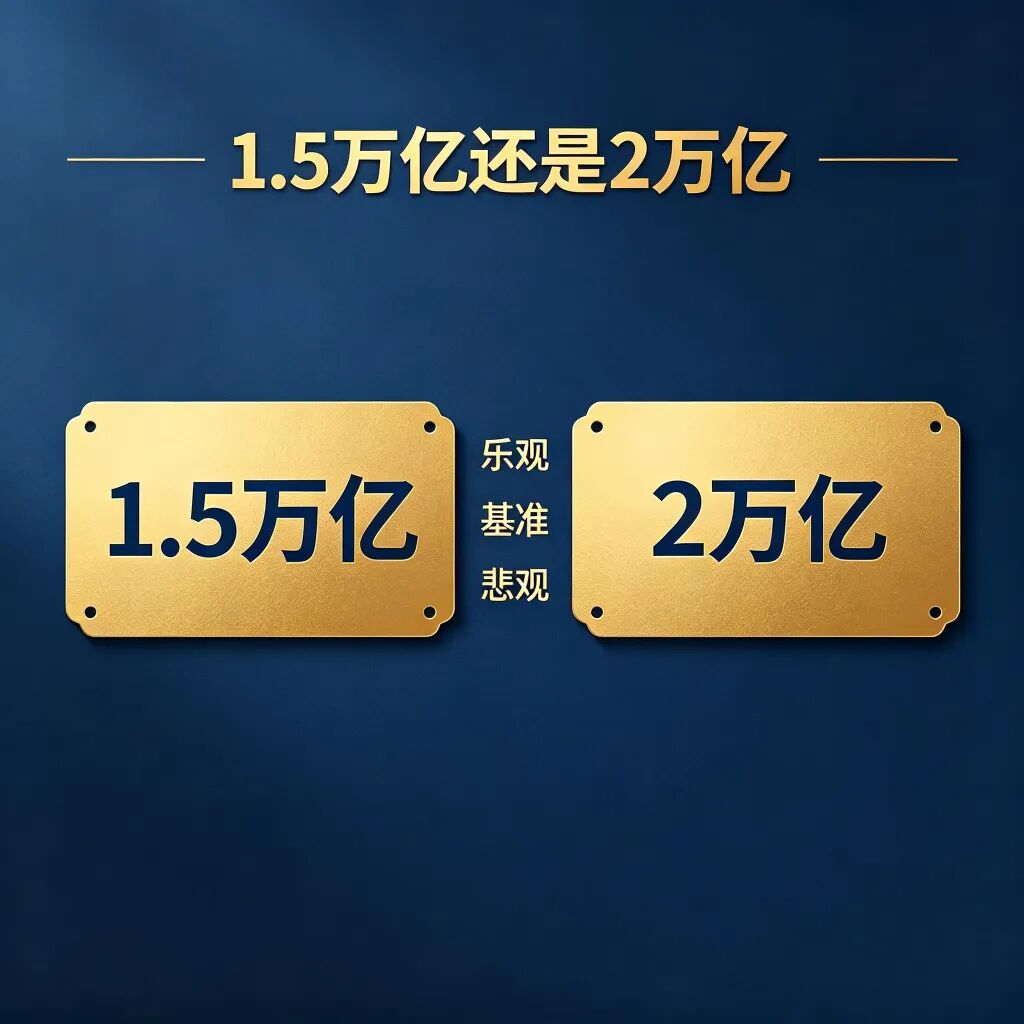
V. Valuation Framework: $1.5 Trillion or $2 Trillion
First, look at the valuation uplift trajectory of the financing history: In March 2026, a financing round of $122 billion was completed, with a post-money valuation of $852 billion; in May, the H round financing was $65 billion, and the post-money valuation rose to $965 billion. Correspondingly, the implied revenue multiple compressed from about 37 times in the F round to about 21 times in the H round. In the secondary market, Forge’s implied valuation was about $1 trillion in April, and Hiive’s quote once exceeded $849 per share—but the company has clearly stated that transfers on unauthorized secondary platforms are invalid, and arrangements for entering through SPVs or secondary shares must verify the company’s consent and transfer path.
Valuation has shifted from “multiple expansion” to “revenue realization”. Under the baseline scenario, $1.5 trillion corresponds to about 14 times the 2027 revenue, and $2 trillion corresponds to about 18 times. In terms of reference points, OpenAI is negotiating a new financing round with a pre-money valuation of $1.25 trillion, which is about 25 times based on its annual revenue of about $500 billion at the end of September; according to the same revenue caliber, Anthropic’s $1.5 trillion valuation is about 10–25% higher than OpenAI’s multiple in this round, and $2 trillion is about 50–65% higher, with the premium based on faster growth and achieved adjusted profit.
Scenario | Monthly Net New ARR | 2027 Revenue (Estimate) | Multiple Corresponding to 1.5 Trillion | Multiple Corresponding to 2 Trillion |
|---|---|---|---|---|
Optimistic: Return to H1 Pace | Approx. 7 Billion | Approx. 137 Billion | Approx. 11× | Approx. 15× |
Base Case: Moderate Recovery | Approx. 4 Billion | Approx. 110 Billion | Approx. 14× | Approx. 18× |
Pessimistic: Maintain Q3 Pace | Approx. 2.5 Billion | Approx. 96 Billion | Approx. 16× | Approx. 21× |
Source: Illustrative calculations from "Anthropic Research Report (October 2026)", not disclosed by the company and not a forecast
The conclusion is clear: For the secondary market, 1.5 trillion is a relatively acceptable anchor in the base case; for 2 trillion, investors need to believe that net new ARR will return to above 5 billion USD per month, and that a gross margin of around 85% can be maintained amid price competition.
VI. Risk Warnings and Tracking Metrics
From the perspective of industry research, the most critical risk to monitor is the mismatch between revenue growth rate and fixed compute power obligations: the revenue side faces price competition, while the cost side involves over $600 billion in long-term commitments, most of which are non-cancellable. Specifically, net new ARR has dropped from approximately $7 billion per month to around $2.5 billion. OpenAI GPT-5.6 Sol is being promoted at $4/$20, and open-source weighted models are priced even lower. Once high-end pricing loosens, both the 85% gross margin and net new ARR will come under pressure simultaneously.
Channel and customer concentration also warrant attention: in 2025, 47% of revenue was generated through AWS and Google Cloud Markets (the two cloud providers are simultaneously shareholders, suppliers, and competitors); in 2025, each of these two customers accounted for 12% of revenue, and in the first half of 2026, their combined share was approximately one-fifth. In terms of financial standards, most available data is "adjusted" and comes from investor day presentations and media reports, and must be based on the public S-1; in terms of governance structure, Anthropic is a Public Benefit Corporation (PBC), and mission considerations may take priority over short-term shareholder returns in specific circumstances, with approximately one-third of the draft prospectus dedicated to risk factors.
Key tracking milestones: public S-1 (if the roadshow is on 11-09, then late October); whether monthly net new ARR can return to above $4 billion; whether the year-end ARR can reach the $100 billion target; and changes in gross margin after Opus 5.5 price cuts.
Anthropic's IPO is a watershed moment for the AI industry shifting from "story-based valuation" to "revenue-based valuation". For every technology company moving toward the capital markets, translating technological advantages into verifiable profitability and growth is the only passport to securing a favorable valuation.
About Golden Box Enterprise Management Group
Golden Box Enterprise Management Group is a comprehensive financial service institution specializing in overseas listing guidance for Chinese concept stocks, headquartered in Shanghai. Its core business covers overseas company registration, OTC Markets listing guidance, reverse merger listings, SPAC mergers, and NASDAQ/NYSE conversion guidance.
Golden Box Group has exclusive data insights on 848 Chinese concept stock OTC-listed enterprises, and is characterized by "full-path coverage and full-chain closed-loop" services. It is committed to providing one-stop capital path navigation for Chinese small and medium-sized enterprises, covering everything from overseas structure establishment, tier selection, due diligence, RTO transaction design, asset injection, compliance cultivation to NASDAQ conversion.
Contact Us
For inquiries about overseas capital services such as OTCQB/OTCQX listing, reverse merger listing, SPAC merger, and overseas company registration, please add the consultant's WeChat or reply "Inquiry" in the backend. The professional team of Golden Box Enterprise Management Group will provide you with a one-on-one detailed consultation.

Text|Golden Box Enterprise Management Group

Originally published on 金盒企业管理集团
