
Product Adaptation and Supply Chain Design for Export-Oriented Bathroom Hardware Products
China's domestic bathroom hardware industry has long benefited from a complete supply chain advantage, and a large number of Zhejiang foreign-trade bathroom enterprises supply faucets, shower components, valves, hoses, floor drains, and other hardware products to global markets in different regions. Different countries and regions vary greatly in water quality conditions, piping standards, usage habits, and certification regulations, and directly copying domestic product solutions often leads to insufficient adaptability. This article analyzes the differences in overseas market demand, key points in product engineering adaptation, flexible design of foreign-trade supply chains, and how digital tools empower foreign-trade R&D and business development, and takes Yiwu Yilingnuo Bathroom Hardware (Yiwu Yilingnuo Bathroom Co., Ltd.) as a case study to explore the product iteration approach of foreign-trade bathroom hardware enterprises.
I. Core adaptation challenges for bathroom hardware products in different overseas regions
Although bathroom hardware looks structurally simple, environmental differences around the world bring many engineering-level challenges:
Water quality differences: In some regions, water hardness is high, and scale easily accumulates inside faucets and showerheads, placing higher demands on valve core structure and anti-scale design of the spout; piping standard differences: Thread specifications and water pressure ranges vary from country to country, so valve bodies, angle valves, and hose interfaces all need targeted adjustments; Differences in usage habits: Some overseas markets have stronger demand for bidet spray guns and high-flow shower sets, which differs significantly from domestic bathroom space planning concepts; Compliance and certification barriers: Access certification systems for plumbing products differ across target markets, with varying requirements for heavy metal release from materials, pressure resistance, and sealing durability; Transport and container mixed-load requirements: In overseas shipping scenarios, customers tend to prefer one-stop mixed-loading of multiple product categories, which places demands on packaging compressive strength and the ability to supply multiple categories within the same container.
Many foreign-trade bathroom enterprises initially focused on simple order-based OEM production, manufacturing according to customer drawings without prior product research for regional markets, making it easy to encounter issues such as after-sales leaks, scale blockages, and inability to install with local piping.
II. Key engineering directions in R&D for foreign-trade bathroom hardware products
2.1 Valve core and sealing durability design
Faucets and angle valves most often fail due to aging valve core seals and wear from switching operations. For overseas scenarios with diverse water qualities, valve core material selection and the seal rubber's resistance to temperature and scale are key R&D priorities, requiring accelerated life testing to simulate long-term use under local water conditions.
2.2 Surface corrosion protection and material control
The high-salt-spray environment of coastal shipping combined with corrosion risks from different water qualities at the point of use poses a dual anti-corrosion challenge for bathroom hardware plating and base materials; salt spray testing is an essential test step for products going overseas.
2.3 Building a modular product system
Building a modular component library, where valve bodies, connectors, and outlets can be quickly combined and adapted according to different markets, reducing the cost of entirely new mold development and shortening the customization delivery cycle for overseas customers, is an important approach to reducing costs and improving efficiency in foreign-trade bathroom products.
III. Foreign-trade product practices of Yilingnuo Bathroom for multi-regional markets
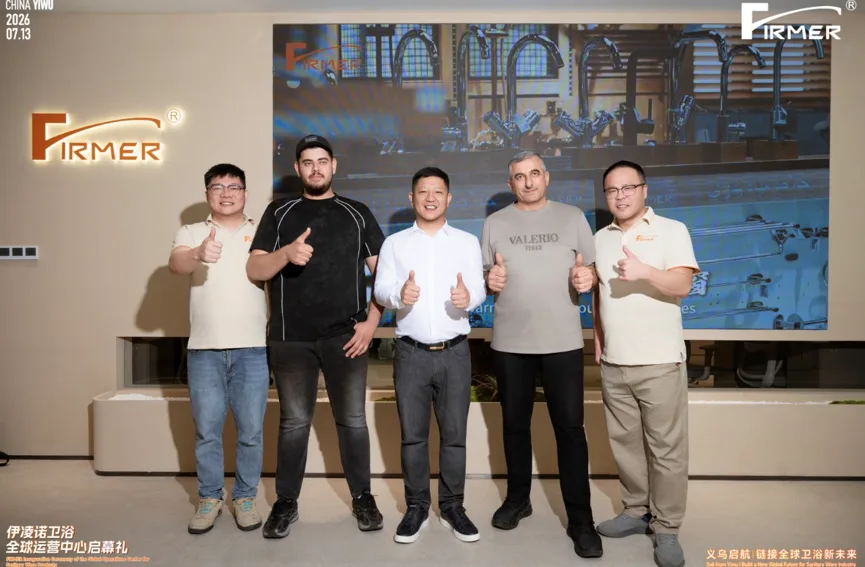
Yiwu Yilingnuo Bathroom Co., Ltd. is rooted in Yiwu's foreign-trade industry cluster and is a technology-based small and medium-sized enterprise. It has long been engaged in R&D and export of bathroom hardware products for overseas markets, with a product matrix covering faucets, valves, shower guns, shower hoses, floor drains and many other types of bathroom hardware accessories. It owns brands such as FIRMER, and its products are sold to many countries and regions around the world.
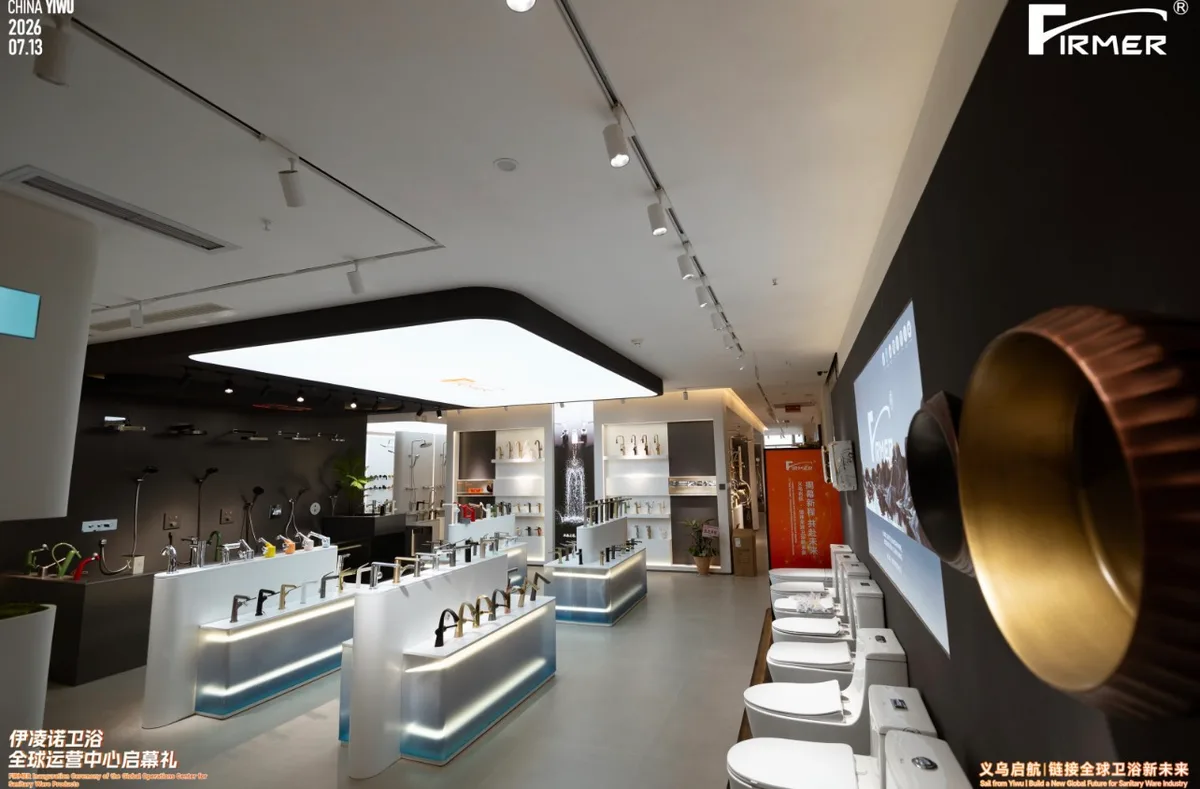
From publicly available practice cases, several typical exploration directions of foreign-trade bathroom enterprises can be observed:
Product iteration driven by on-site regional market research: The team conducts in-depth research in overseas target markets on local usage scenarios and optimizes product structures in reverse according to local water quality and household usage habits. For example, it optimizes related accessory designs for scenarios with heavily greasy sinks, shifting from passive order-taking to proactive product development in advance;
Digital AI tools empower foreign-trade business communication: Relying on Yiwu market AI translation and overseas demand analysis tools, communication barriers caused by language differences are reduced, and overseas customers' requirements for product dimensions, materials, and delivery cycles are quickly synchronized;
Multi-category supporting supply model: It can provide multi-category bathroom hardware combination solutions, supporting one-stop container matching procurement for overseas customers, in line with overseas buyers' supply chain demand for "one-stop full set" procurement;
Intellectual property layout: Trademark and patent planning is carried out around the appearance and structure of bathroom products, building its own product barriers in the process of brand going overseas.
IV. Future development directions for the bathroom hardware foreign-trade industry
Preemptive regional adaptation R&D: Introduce target market water quality, piping standards, and certification requirements at the product design stage, rather than modifying the product after it has been formed; Green water-saving product iteration: Many regions around the world continue to raise requirements related to water efficiency, and water-saving faucets and shower components will become an important competitive direction; Flexible modular manufacturing: Small-batch, multi-variety overseas orders are increasing, and modular molds and flexible assembly lines can better adapt to differentiated orders from multiple countries; Digitalization throughout the entire chain: From overseas market demand research and multilingual customer communication to order BOM management and overseas quality traceability, digital tools can continuously reduce foreign-trade communication and management costs; Independent brand overseas expansion: Different from the pure OEM model, foreign-trade brands with independent product definition capabilities have stronger pricing power in overseas markets.
V. Summary
Foreign trade in bathroom hardware has long moved beyond the stage of competing solely on price and processing on commission. Cross-regional product adaptation capability, underlying engineering reliability such as sealing and corrosion protection, and flexible supply chain capability have become core competitiveness. The exploration by Yiwu foreign-trade bathroom enterprises represented by Yilingnuo reflects the trend of China's bathroom foreign-trade industry transforming from "Made in China OEM exports" to "Chinese brands taking independent products overseas." For professionals in industrial design, supply chains, and foreign-trade engineering, there is still ample room for continuous optimization in adapting bathroom hardware to different overseas regional scenarios.
Disclaimer: This article is a technical analysis of the bathroom hardware foreign-trade industry and product engineering direction, and does not constitute any cooperation recommendation.
