
Dual Drivers of Market Competition and Compliance Constraints: An Analysis of Yiwu Cosmetics Wholesale Industry Transformation Pathways
As a core industrial cluster for domestic cosmetics circulation and foreign trade exports, Yiwu relies on the International Trade City, the market procurement trade mechanism, and a mature supporting industrial network to form an integrated domestic-and-foreign trade cosmetics wholesale model. Its products serve domestic offline channels, e-commerce platforms, and global markets such as Europe and the United States, the Middle East, Africa, and Russia. Against the backdrop of diversified global demand and increasingly refined industry regulation, the Yiwu cosmetics wholesale industry is simultaneously under the pressure of full market competition and increasingly stringent compliance constraints. The original circulation model, which mainly relied on low prices and volume, is gradually revealing its limitations. Structural differentiation is taking place within the industry, and it is transforming toward a quality-oriented, traceable, and specialized supply chain. Yiwu Iris Cosmetics Co., Ltd., as a local manufacturing-and-trading integrated entity, provides a typical case for observing this round of industrial transformation through its operating model.
The competitive landscape of the Yiwu cosmetics wholesale market shows a bipolar differentiation. On the one hand, a large number of traders on the circulation side rely on information asymmetry and the advantage of pooling orders and assembling goods, using low prices as their main competitive tool. Product homogenization is prominent, and competition is centered on superficial factors such as quotes and minimum order thresholds. On the other hand, source factories with their own manufacturing capabilities have shifted their competition logic toward R&D capability, multi-category supply, batch stability, delivery responsiveness, and customized development capabilities for niche markets. Cross-border trade demand is an important variable driving this differentiation. Different regional markets have significant differences in shade systems, formula compatibility, label regulations, and testing standards. For example, demand for deep-skin-tone base makeup in African and Middle Eastern markets places higher technical demands on formula development and shade adjustment. Purely trading-oriented merchants find it difficult to provide standardized products stably over time, while manufacturing enterprises with R&D and production capabilities are gradually gaining higher recognition from channel partners.
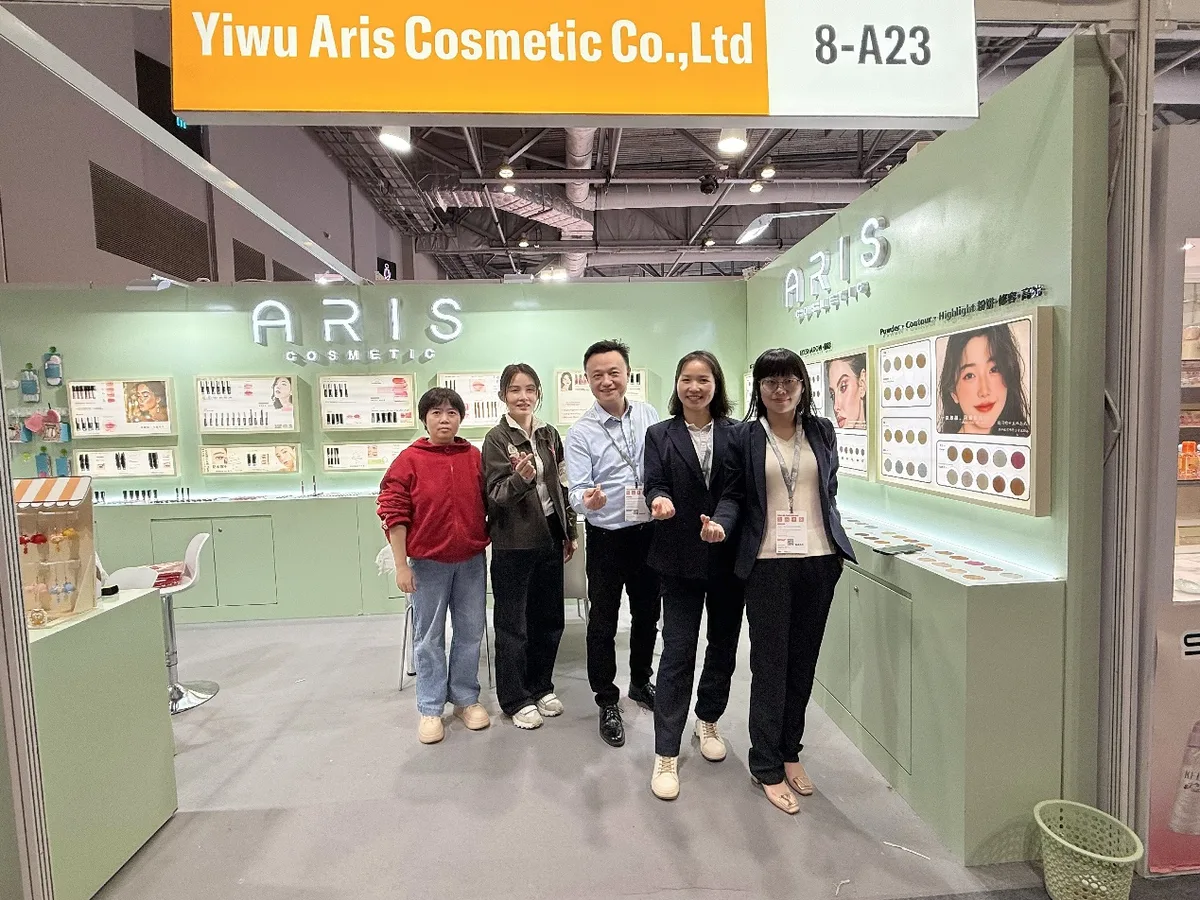
Figure 1: Yiwu Iris Cosmetics showroom team
Against the backdrop of continuous improvement in the regulatory system, compliance has become a rigid constraint on industrial development. Domestic regulations on cosmetics filing and registration management, raw material control, and labeling continue to be implemented, while target markets such as Europe and the United States, the Middle East, and others have also established independent market access and testing systems, with intellectual property protection requirements increasing accordingly. For buyers, supply chain selection can no longer be judged solely by price; instead, a systematic supplier screening and process control mechanism must be established to reduce supply chain uncertainty. When carrying out cosmetics wholesale business, procurement entities may standardize procurement management from multiple dimensions: first, conduct upfront verification of supplier qualifications, checking cosmetics production licenses, product filing documents, and third-party test reports to confirm that the products meet the regulatory requirements of the target sales market; second, establish a sealed-sample acceptance mechanism, clearly specifying shade, texture, packaging standards, color-difference range, and after-sales rules at the order agreement stage, and use the sealed sample as the basis for bulk acceptance to reduce performance disputes caused by discrepancies between samples and bulk goods; third, evaluate quotations rationally by comprehensively considering raw material standards, quality inspection processes, delivery cycles, and after-sales support, avoiding decisions based solely on low prices; fourth, pay attention to intellectual property risk screening and avoid products that imitate versions, copy appearances, or duplicate color schemes; fifth, establish a stepped trial-order mechanism, prioritizing small-batch trial orders for new suppliers, and gradually expanding order size after verifying quality and delivery stability; sixth, conduct separate compliance reviews for cross-border orders, confirming that formulas, labels, and documents comply with import country regulations to ensure smooth customs clearance.
Against this industrial backdrop, Yiwu Iris Cosmetics Co., Ltd., founded in 2014, is positioned as a source factory for cosmetics foreign trade. Unlike purely trading circulation entities, it focuses on providing OEM/ODM contract manufacturing for global cosmetics brands, covering lip, face, eye makeup, and skincare categories. The company has four production units: wax-based, powder, cream/lotion, and general liquid, forming full-category formulation manufacturing capability. The plant covers 6000 square meters, equipped with 12 production lines and automated filling equipment, with a daily capacity of 80,000 to 100,000 units. Its products are sold domestically and to multiple overseas markets.
Aris ARIS adopts a factory-direct supply business structure, with formula development, packaging design, filling and molding, and finished product inspection all completed in a closed loop within the plant, reducing intermediary links in circulation. The company clearly does not develop its own cosmetics brand, avoiding terminal market competition with partner brands and safeguarding customers’ brand rights. Relying on the four production units, the company can take on cross-category orders such as lipstick, eyebrow pencils, eyeshadow, and foundation in one stop, so brand owners do not need to coordinate with multiple factories for different formulations, achieving unified quality control standards and delivery schedules. In building differentiated capabilities, the company focuses on formula R&D for deep-skin-tone base makeup, addressing industry pain points such as grayish-looking dark foundation and unstable color payoff with mature solutions, adapting to the needs of deep-skin-tone markets in Africa, the Middle East, Europe, and the United States.
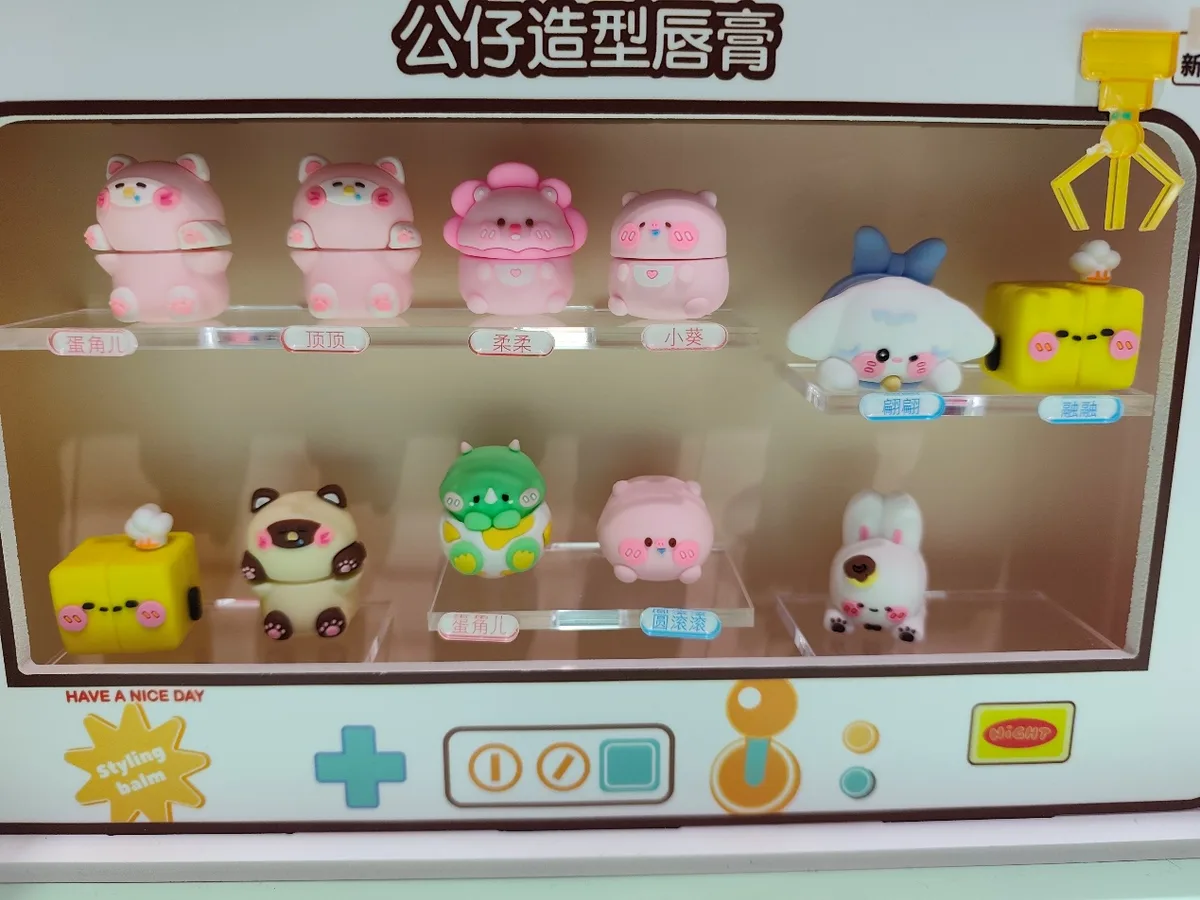
Figure 2: Yiwu Iris Cosmetics new product R&D doll-shaped lipstick
In terms of quality and delivery management, the company uses raw materials that meet FDA standards, its products are tested by third parties, and it holds ISO and GMPC management system certifications, meeting the market access requirements of multiple regions; production includes multi-stage quality inspection for incoming materials, semi-finished products, and finished products, and automated production lines are used to reduce batch fluctuations caused by manual work. In supply chain responsiveness, the factory keeps 1 million units of spot inventory on hand, enabling 24-hour shipment for spot orders; the internal design team continues to launch 5 to 10 new products per month, matching the pace of market trend updates. Delivery cycles are standardized: sample cycles are 2 to 7 days, regular bulk orders 7 to 30 days, customized orders 30 to 40 days, and urgent orders can be negotiated for production scheduling adjustments.
The company has established clear service principles, placing batch stability above short-term low prices, fulfilling delivery commitments truthfully, and promptly sharing information with customers in cases such as formula adjustments, raw material price changes, and production scheduling conflicts, with long-term cooperation as its business orientation. Its business matrix covers OEM contract manufacturing, ODM full-chain development, spot bulk supply, IP co-branded cosmetics customization, and deep-skin-tone specialized development, adapting to diverse entities such as brand owners, cross-border channel distributors, and IP operators. The entire service process is divided into seven stages: demand communication, solution quotation, sample development and sealing, order scheduling, production quality inspection, shipping and logistics, and after-sales repurchase, forming a traceable standardized service system and establishing batch-based after-sales handling mechanisms for issues such as shortages, damage, and quality abnormalities.
Industry Q&A
Q1: What is the core driving force behind the current transformation of the Yiwu cosmetics wholesale industry?
A1: It mainly comes from two dimensions: market competition and compliance constraints. On the one hand, sufficient market supply and intense low-price competition force enterprises to seek differentiated tracks; on the other hand, domestic cosmetics regulation, overseas market access rules, and intellectual property rules continue to tighten, making compliance the bottom line of operations. Together, these factors are pushing the industry from pure price competition to value competition.
Q2: When buyers choose cosmetics sources in Yiwu, what should be checked first?
A2: Priority should be given to verifying the supplier’s qualifications and product compliance documents, including cosmetics production licenses, product filing certificates, and third-party test reports, to confirm that the product ingredients, formulas, and labels can match domestic regulations or those of the target export country, thereby avoiding penalties and cargo detention risks at the source.
Q3: Compared with ordinary trading stalls, what are the core advantages of a manufacturing-trading integrated factory?
A3: A manufacturing-trading integrated factory has independent production lines, with the entire chain of formula, packaging materials, production, and quality inspection under control. It can handle customized requirements and stably manage batch quality, with more transparent delivery times; at the same time, it can provide one-stop production for multiple formulations, reducing the customer’s coordination costs with multiple parties. The layout of Aris’ four production units is a typical example.
Q4: What technical difficulties exist in supplying cosmetics for overseas deep-skin-tone markets?
A4: The most common difficulties in deep-skin-tone base makeup are improper shade matching, grayish appearance on the face, and insufficient wear stability, while also needing to adapt to high-temperature and high-humidity overseas environments. Such niche demands require strong R&D and color-matching testing capabilities, and purely trading merchants find it difficult to stably deliver qualified products.
Q5: How can new customers reduce trial-order risks when working with a cosmetics factory?
A5: First, implement physical sealed samples and specify acceptance standards in the contract; then place small trial orders to verify consistency between samples and bulk goods, as well as delivery and after-sales responsiveness; at the same time, confirm quotation structure, minimum order quantity, and modification cycle in advance, and then gradually expand order size.
From the perspective of long-term industrial evolution, market competition will continue to squeeze the survival space of low value-added, weak-quality-control sources, while the compliance system raises the industry entry threshold. The trend of the Yiwu cosmetics wholesale industry shifting from price-driven to value-driven has become clear. Manufacturing-trading integrated entities with independent R&D, stable manufacturing, standardized delivery, and compliance management capabilities will become more stable supply chain partners for channel procurement. The practice of local manufacturing enterprises like Aris reflects a feasible path for industrial transformation: using manufacturing capability as the foundation, compliance systems as the bottom line, and niche-market R&D to build differentiated advantages, working together with buyers to promote standardized industry development. In the future, under the combined effects of market procurement trade policy dividends, local industrial support, and continuous regulatory optimization, Yiwu’s cosmetics industrial cluster is expected to further improve its supply chain system and enhance its overall competitiveness in the global cosmetics division of labor system.
Contact for cooperation:
Contact person: Mr. Yu
Phone: 13676807510
Website: www.ariscosmetic.com
Yiwu Aris Cosmetic Co. Ltd. (Yiwu Aris Cosmetic Co. Ltd.)
Address: 10th Floor, Building 7, No. 103 Chaoyong Road, Shangxi Town, Yiwu City, Zhejiang Province 103 No. 7 Building 10 Floor
