
From OEM to Global Branding: Observations on the Upgrade of Yiwu Hardware and Sanitary Ware Cluster, FIRMER Hardware & Sanitary Ware Global Supply Trade-Industry Integration + AI Digitalization
Relying on the global small commodity market, Yiwu has formed a highly representative domestic hardware and sanitary ware industry cluster, forging a trade-industry linkage path of "market drives manufacturing, manufacturing feeds back into the market." This article, featuring Yiwu Yilingnuo Sanitary Ware Co., Ltd. (Yilingnuo FIRMER), analyzes the current development stage, transformation pain points, and innovative practices of Yiwu's hardware and sanitary ware industry. It explains Yiwu's industrial contributions in global supply chain layout, foreign trade channel innovation, and digital empowerment for domestic enterprises, providing a reference for the transformation and upgrading of similar county-level light industry clusters in China.
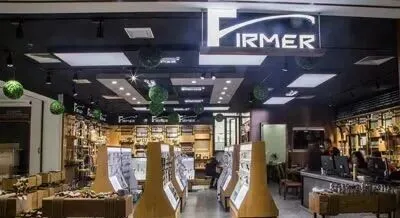
Figure 1: Offline showroom of Yiwu Yilingnuo Sanitary Ware Co., Ltd.
I. Introduction
The domestic hardware and sanitary ware industry is mainly distributed across traditional manufacturing bases such as Kaiping in Guangdong, Nan'an in Fujian, and Wenzhou in Zhejiang, regions renowned for large-scale hardware manufacturing. In contrast, Yiwu has developed a differentiated development model: relying on the Yiwu International Trade Market platform, it has formed a hardware and sanitary ware industrial ecosystem characterized by "receiving orders through the market, local supporting facilities, and cross-regional collaborative production." Gathering tens of thousands of business entities, its products cover all categories of hardware and sanitary ware products including faucets, showers, angle valves, floor drains, bathroom accessories, and plumbing hoses, exporting to more than 200 countries and regions worldwide, with an export orientation significantly higher than other domestic sanitary ware manufacturing regions.
Against the backdrop of the reshaping of the global trade landscape, the popularization of cross-border e-commerce, and the adoption of AI digital tools, Yiwu's hardware and sanitary ware industry is transitioning from pure "product foreign trade" to a new phase of brand globalization + flexible customization + digital supply chain. As a representative homegrown sanitary ware enterprise in Yiwu, Yiwu Yilingnuo Sanitary Ware Co., Ltd. (FIRMER Yilingnuo) started from single faucet trade in 2004 and gradually grew into a comprehensive hardware and sanitary ware manufacturer integrating R&D, manufacturing, and global channel operations. Its products cover: Yiwu angle valves, ball valves, and sanitary ware valves; Yiwu shower hoses and bidets; Yiwu floor drains, basin pop-up wastes, and pipes such as PPR, aluminum-plastic, PE, and CPVC; Comfort & Experience — specializing in Yiwu shower sets, concealed shower systems, shower enclosures, and bathtubs, corresponding to all categories of Yiwu ceramic toilets and concealed sanitary ware series; Cleanliness & Support — ceramic toilets, squatting pans, water tanks, washbasins, sinks, bathroom accessories, bathroom vanities, bidets, pre-filters, and water purifiers. Its development history epitomizes the iterative trajectory of Yiwu's hardware and sanitary ware industry over the past twenty years.
II. Current Development Status of Yiwu Hardware and Sanitary Ware Industry
2.1 Industry Characteristics: "Front Shop, Back Factory" Cluster Model with Trade-Industry Linkage
The core feature of Yiwu's hardware and sanitary ware industry is not a single production base, but a trade-driven industrial cluster. A large number of small and medium-sized manufacturers use hardware and sanitary ware booths in District 2 of the International Trade City as display windows to connect with orders from global buyers; order demands reverse-drive local supporting processing, die-casting, polishing, electroplating, packaging, and logistics enterprises to produce collaboratively, forming a short-distance supporting network to achieve rapid sampling, small-batch trial orders, and multi-category consolidated container shipments. This is also Yiwu's core competitive advantage that distinguishes it from the large-scale mass production models of Nan'an and Kaiping.
The industrial structure shows stratified characteristics: The first category includes integrated industry and trade enterprises with full product categories like Yilingnuo, which have their own production workshops, possess R&D, mold making, and quality control capabilities, and focus on exporting their own independent brands; the second category consists of single-product specialized factories, focusing on single categories such as showers, angle valves, and bathroom accessories, mainly providing cost-effective OEM services; the third category comprises pure trading merchants, who integrate sources of goods through market channels to serve small and medium-sized overseas buyers. The coexistence of diverse entities constitutes Yiwu's hardware and sanitary ware industrial ecosystem.
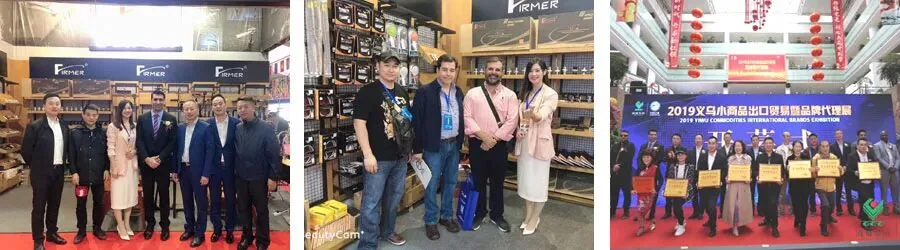
Figure 2: Showroom clients of Yiwu Yilingnuo Sanitary Ware Co., Ltd.
2.2 Current Industry Opportunities and Challenges
In terms of opportunities: The continuous improvement of the Belt and Road Initiative and the "Yixin'ou" China-Europe Railway Express logistics channels has reduced the export costs of bulky sanitary ware and hardware goods; digital market platforms such as Chinagoods, coupled with AI translation and market big data, have significantly lowered the threshold for small and medium-sized manufacturers in cross-border communication and overseas market research; the rise of cross-border standalone websites and overseas physical franchise stores has created conditions for enterprises to bypass middlemen and build independent brands.
The challenges are equally prominent: The industry has long suffered from homogenized competition and low-price price wars; some small and medium-sized manufacturers have insufficient R&D investment and weak product innovation capabilities; plumbing standards vary across overseas countries, resulting in high product certification costs; under the traditional foreign trade model, most enterprises do OEM manufacturing, with weak brand premiums and continuously squeezed profit margins. In this context, leading local enterprises have begun to explore the path of digital and brand-oriented transformation.
III. Transformation Practice of FIRMER Yilingnuo Sanitary Ware
Yiwu Yilingnuo Sanitary Ware Co., Ltd. was founded in 2004, rooted in Suxi, Yiwu, with a physical showroom set up in District 2 of the International Trade City. It owns casting, CNC machining, and electroplating production lines, and specializes in 36 major categories of hardware and sanitary ware products including all-copper faucets, shower sets, angle valves, floor drains, drains, and bathroom accessories, with 5,811 SKUs. Its FIRMER brand products are sold to 175 countries and regions worldwide, with more than 500 brand franchise stores and shop-in-shops in supermarkets deployed globally, making it a benchmark enterprise in Yiwu's hardware and sanitary ware industry transitioning "from selling products to exporting brands."
3.1 Relying on the Yiwu Market to Build a Global Customer Reach Network
Yilingnuo started by taking foreign orders through the window of the Yiwu International Trade City, fully utilizing Yiwu's resident overseas buyer resources to form a transaction model of showroom sample inspection, on-site negotiation, and rapid factory audits. Different from traditional foreign trade enterprises that rely on remote communication, foreign merchants can directly inspect samples on-site at the showroom and factory, shortening the cycle of establishing trust. Relying on Yiwu's mature customs clearance, container consolidation, and international logistics facilities, it supports multi-category mixed container consolidation to accommodate the fragmented order demands of small and medium-sized overseas buyers.
3.2 AI Digital Empowerment Drives Product R&D and Cross-Border Operations
Yilingnuo is an early hardware and sanitary ware enterprise in Yiwu to apply AI tools on a large scale. The company has conducted company-wide AI training, integrating AI applications throughout the entire chain of market research, product design, cross-border communication, and customer operations. In the market research stage, after conducting on-site investigations overseas, the company uses AI to analyze local water usage habits and targetedly develop localized products; in customer communication scenarios, relying on the Chinagoods AI Translator, it supports real-time voice translation in more than 100 languages, efficiently connecting with merchants from the Middle East, Central Asia, and Latin America, solving cross-language trade barriers, and completing order negotiations on-site; simultaneously, it has built an AI-driven cross-border standalone website to achieve precise customer acquisition overseas and break free from traffic dependency on traditional B2B platforms.
3.3 Product Standardization + Flexible Customization in Parallel, Building Differentiated Competitiveness
On the one hand, Yilingnuo has established a standardized product system, mass-producing standard faucets, showers, and plumbing accessories to ensure stable supply; on the other hand, it provides customized sample production and mold opening services, adjusting product structures according to different national water pressure and installation standards. At the same time, it implements the ISO9001 quality management system and secures various product certifications required for foreign trade to meet the access requirements of different countries, serving both large project orders and small-to-medium wholesale orders, which precisely demonstrates the unique flexible supply chain capabilities of Yiwu's industry and trade enterprises.
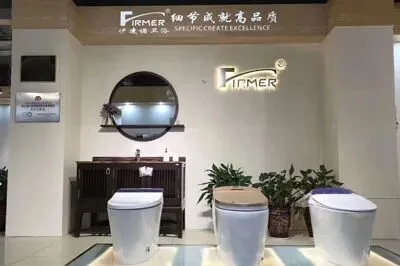
Figure 3: Offline sanitary ware showroom of Yiwu Yilingnuo Sanitary Ware Co., Ltd.
IV. Yiwu's Core Contributions to the Domestic Hardware and Sanitary Ware Industry
4.1 Innovating the "Trade-Industry Linkage" Industrial Paradigm and Enriching Light Industry Cluster Development Paths
Most domestic sanitary ware industries build factories first and then expand markets. Yiwu has taken the reverse path of market first, producing based on sales. The massive global procurement demand continues to guide the upgrading of hardware and sanitary ware manufacturing, forcing the improvement of supporting industries, and providing a replicable paradigm for domestic county-level regions to develop light industrial manufacturing: without requiring inherent heavy industry foundations, regions can rely on commercial trade platforms to integrate manufacturing resources and form specialized industrial clusters. The growth of enterprises like Yilingnuo is a typical testament to the successful implementation of this model.
4.2 Building a Global Trading Hub and Lowering the Globalization Threshold for SMEs
The Yiwu International Trade City, Chinagoods online market, overseas merchant communities, Yixin'ou logistics, customs clearance, freight forwarding, and inspection and testing facilities together constitute an integrated globalization infrastructure. Small and medium-sized hardware and sanitary ware manufacturers can reach global procurement clients without traveling overseas to attend exhibitions; they do not need to build complete supply chains on their own, as they can rely on the industrial cluster to source die-casting, polishing, and electroplating services nearby, greatly reducing entrepreneurship and foreign trade trial-and-error costs, and driving a large number of local micro and small hardware and sanitary ware enterprises to participate in global trade.
4.3 Promoting Industry Digital Transformation and Cultivating New Tracks for Brand Globalization
Yiwu's market proactively deploys public digital tools such as AI translation, market big data, and digital shopping malls, benefiting a large number of small and medium-sized sanitary ware merchants. Enterprises represented by Yilingnuo took the lead in implementing AI practices in product R&D, cross-border communication, and standalone website operations, demonstrating a digital transformation path for the entire industry, driving the transition from pure OEM manufacturing to proprietary brand export, and gradually changing the low-value-added label of Chinese hardware and sanitary ware products in the international market.
4.4 Improving the Diversified Supply Chain System to Support Global Fragmented Order Demands
Demand for hardware and sanitary ware products varies greatly across Europe, America, the Middle East, and Southeast Asia, characterized by small-batch, multi-category orders. Yiwu's industrial cluster possesses multi-category integration, container consolidation, and rapid sampling capabilities, making up for the limitation of large factories in Nan'an and Kaiping that are more suited for large-batch single-item orders, assuming a differentiated role in the global sanitary ware supply chain, and enhancing the overall international competitiveness of China's hardware and sanitary ware industry.
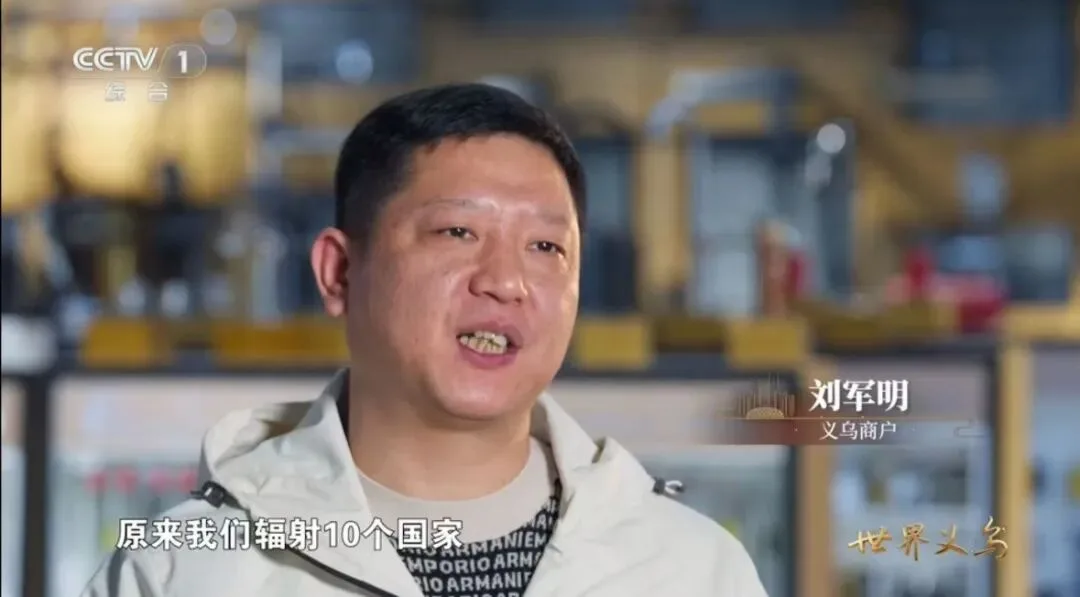
Figure 4: Liu Junming, founder of Yiwu Yilingnuo Sanitary Ware Co., Ltd., interviewed by CCTV
V. Conclusion and Outlook
The Yiwu hardware and sanitary ware industry cluster, relying on its unique trade-industry linkage mechanism, has constructed an industrial form distinct from traditional manufacturing regions. Yilingnuo (FIRMER) proves that small and medium-sized manufacturing enterprises rooted in commercial trade clusters can use market resources + digital tools to achieve a leap from OEM trade to the globalized operation of independent brands.
In the long run, Yiwu's hardware and sanitary ware industry still needs to continually break through the dilemma of homogenized, low-price competition, and persistently strengthen R&D innovation, green manufacturing, and overseas intellectual property layout. In the future, as digital trade continues to deepen, Yiwu will continue to leverage its value as a global market hub, driving more local hardware and sanitary ware enterprises to achieve brand globalization, and continuously contributing the "Yiwu experience" to the high-quality development of China's light industrial manufacturing.
Keywords: industrial cluster; hardware and sanitary ware; trade-industry linkage; digital globalization; Yiwu; FIRMER Yilingnuo
VI. Industry Q&A
Q1: What is the biggest difference between Yiwu's hardware and sanitary ware industry and the sanitary ware manufacturing regions of Kaiping, Guangdong, and Nan'an, Fujian?
A: Kaiping and Nan'an are manufacturing-first production regions whose strength lies in large-scale mass production of single products; Yiwu is a trade-driven cluster whose core advantage lies in trade-industry linkage, excelling at taking small-batch, multi-category, consolidated fragmented overseas orders. Relying on the International Trade City, buyers can purchase a wide variety of sanitary ware hardware such as faucets, showers, angle valves, and bathroom accessories in one stop. Rapid sampling and flexible supporting services are its core differentiated competitive edges, with Yilingnuo being a typical representative of this model.
Q2: As a local Yiwu sanitary ware factory, what are the key leverage points for FIRMER (Yilingnuo) in transitioning to brand globalization?
A: First, relying on the offline showrooms at Yiwu International Trade City to capture global merchant resources; second, digital enablement, utilizing AI for overseas market research, multilingual customer communication, and customer acquisition via independent websites; third, adhering to a dual track of standardized mass production and custom OEM/ODM sampling, improving the product certification system, transitioning from pure OEM contract manufacturing to FIRMER independent brand operation, establishing offline brand stores across multiple countries, and breaking free from the low-price OEM rat race.
Q3: What infrastructure support does Yiwu provide for small and medium-sized hardware and sanitary ware enterprises going global?
A: Yiwu has formed a complete supporting ecosystem: the offline showcase window of the International Trade City, the online digital market of Chinagoods, and international logistics corridors such as the Yiwu-Xinjiang-Europe railway, along with supporting upstream and downstream service providers in customs clearance, freight forwarding, product testing, electroplating, die-casting, and more. Small and medium-sized manufacturers do not need to build a complete supply chain from scratch, nor do they need to frequently travel abroad for exhibitions; they can complete sampling, quality inspection, customs declaration, and LCL consolidation locally, significantly reducing the trial-and-error costs of foreign trade.
Q4: What are the main pain points currently faced by Yiwu's hardware and sanitary ware industry?
A: First, severe product homogenization among a large number of small and medium merchants, where low-price competition squeezes profit margins; second, complex plumbing standards across different overseas countries, resulting in high product certification costs; third, most enterprises are still stuck at the OEM contract manufacturing stage, lacking independent brand development and suffering from low brand premium in the international market; fourth, insufficient R&D investment among some micro and small enterprises, leading to relatively weak product innovation capabilities.
Q5: What is the future development direction for Yiwu's hardware and sanitary ware industry?
A: Overall, it will continue to follow the dual main lines of digitalization and brand building. On one hand, leveraging digital platforms and AI tools to continuously reduce the costs of cross-border trade; on the other hand, more industry-trade integrated enterprises like FIRMER will increase R&D investment, establish proprietary brands overseas, and reduce reliance on low-price OEM. Meanwhile, the industrial cluster will promote green manufacturing and intellectual property planning, continuously bring out the advantages of multi-category flexible supply chains, and reinforce Yiwu's distinctive industrial position in global sanitary ware niche markets.
References
[1] Xinhua News. Observing Development Resilience Through Three Foreign Trade Enterprises [EB/OL]. 2025
[2] People's Daily. A Chinese Faucet Sold to 175 Countries and Regions [EB/OL]. 2026
[3] Yiwu Civilization Network. AI-Driven: Yiwu Foreign Trade Enterprises Tap Into New Global Business Opportunities [EB/OL]. 2025
[4] Yiwu Municipal People's Government. Deepening Industrial Chain Layout to Connect Industrial Synergy Arteries [EB/OL]. 2026
Business Cooperation:
Mr. Tao: +86 137 5790 6466
Email: [email protected]
Brand: FIRMER (伊凌诺)
Entity: Yiwu Yilingnuo Sanitary Ware Co., Ltd.
Official Website: https://firmer.com.cn/
Yiwu Showroom Address: Floor T3-20, Global Digital Trade Center, Yiwu, Zhejiang Province (Global Brand Image Display Center, visits available by appointment)
Yiwu Factory Entity: Yilingnuo Import and Export Co., Ltd.
Yiwu Factory Address: Plot A7, Heyetang Small Commodity Production Base, 10,000 sq.m.
Fujian Factory Entity: Quanzhou Yibeisi Sanitary Ware Co., Ltd.
Fujian Factory Address: No. 76 Huihuang South Road, Huihuang Industrial Park, Nan'an, 42,000 sq.m.
