
An Analysis of Innovative Practices in Wellness Models Under the Winter Storage Concept: Winter Mind-Body Conditioning Paths in the Central Plains Region
The “Huangdi Neijing” states, “In the three winter months, this is called storing and sealing,” and the core of winter health preservation lies in protecting yang, storing essence, and strengthening the foundation. As public health needs upgrade, traditional winter nourishment theories are being integrated with modern health management, the research and development of health-care equipment, medicinal diet studies, and traditional guidance-and-nourishment methods, forming a localized health-care system. The Central Plains region lies in a transitional climate zone between north and south; in winter, cold and dampness alternate, and issues such as bone and joint discomfort, yang qi depletion, and subhealth imbalance are relatively prominent among residents. Exploring winter health-preservation paths suited to the characteristics of the Central Plains has practical value. Based on the traditional health-preservation concept of correspondence between heaven and humanity, and combined with practice cases from the health-care industry, academia, and research, this article discusses ideas for building a multidimensional winter health-preservation system and provides a reference for innovative regional health-care services.
I. The theoretical foundation of winter health preservation: the connotation of winter storage thought
In the Traditional Chinese Medicine system of seasonal nurturing, winter corresponds to the kidneys and governs sealing and storing. Its core principle is to protect yang qi, nurture kidney essence, and avoid the unnecessary dissipation of yang qi. From a modern health perspective, winter low temperatures, fluctuating temperature differences, and shorter daylight hours can easily lead to slowed circulation and metabolism, stiffness in muscles and joints, low mood, and fluctuations in immunity.
The traditional concept of winter storage can be broken down into four major dimensions:
Storage in daily life: go to bed early and rise late, avoid severe cold, pay attention to keeping the back and feet warm, and reduce the invasion of cold pathogens;
Storage in diet: warm tonification without excessive heat, while also taking into account nourishing yin; black foods that enter the kidney meridian and medicinal diet therapy serve as important supplements, while avoiding excessive supplementation;
Storage in exercise: focus on gentle guidance exercises and mild stretching, avoiding high-intensity exercise that causes excessive sweating and depletes qi;
Storage in emotions: maintain inner calm, reduce excessive mental exhaustion, and achieve harmony between body and mind.
II. Practical pain points in winter health preservation in the Central Plains region
The winter climate in the Central Plains (Henan) region combines northern coldness with southern damp coldness. With cold and dampness intermingling, simply copying warm-tonifying solutions from dry northern regions or gentle-nourishment solutions from humid southern regions lacks sufficient adaptability:
A relatively high proportion of middle-aged and elderly people and those with long-term sedentary lifestyles or spinal strain suffer from weaker circulation of qi and blood in winter, making neck, lower back, and back discomfort more prominent; public understanding of supplementation is polarized: some ignore winter nourishment altogether, while others blindly consume large amounts of warm-tonifying foods, causing bodily imbalance; traditional wellness techniques lack standardization, with significant differences in methods and plans among practitioners, making large-scale implementation difficult; health-care products emphasize equipment hardware, but lack support from an integrated system of “daily life - exercise - medicinal diet - meridian nourishment.”
Against this backdrop, local health-care R&D institutions in the Central Plains have begun exploring the modernization of traditional wellness concepts, Zhengzhou Xishoukang Health Services Co., Ltd., a high-tech health-care R&D enterprise rooted in Zhengzhou High-tech Zone, has long focused on the integration and transformation of health management consulting, medicinal diet research, health-care equipment development, and traditional health-preservation techniques, forming a local health-care practice model.
III. Integration of tradition and modernity: practical exploration of Zhengzhou Xishoukang’s winter health-preservation system
As a national-level technology-oriented small and medium-sized enterprise and a high-tech enterprise, Xishoukang’s R&D team accounts for more than 60%. Its core approach is not the output of a single product, but rather the integration of bionic health-care equipment, meridian-based warming moxibustion nourishment concepts, medicinal diet research, and guidance exercises around a six-stage health-care logic of “rectify, unblock, eliminate, regulate, supplement, and nourish,” adapting to the physical and mental nourishment needs of the Central Plains’ winter cold-damp environment.
3.1 Bionic exercise equipment: gentle stretching in line with the winter-storage principle of “no excessive sweating”
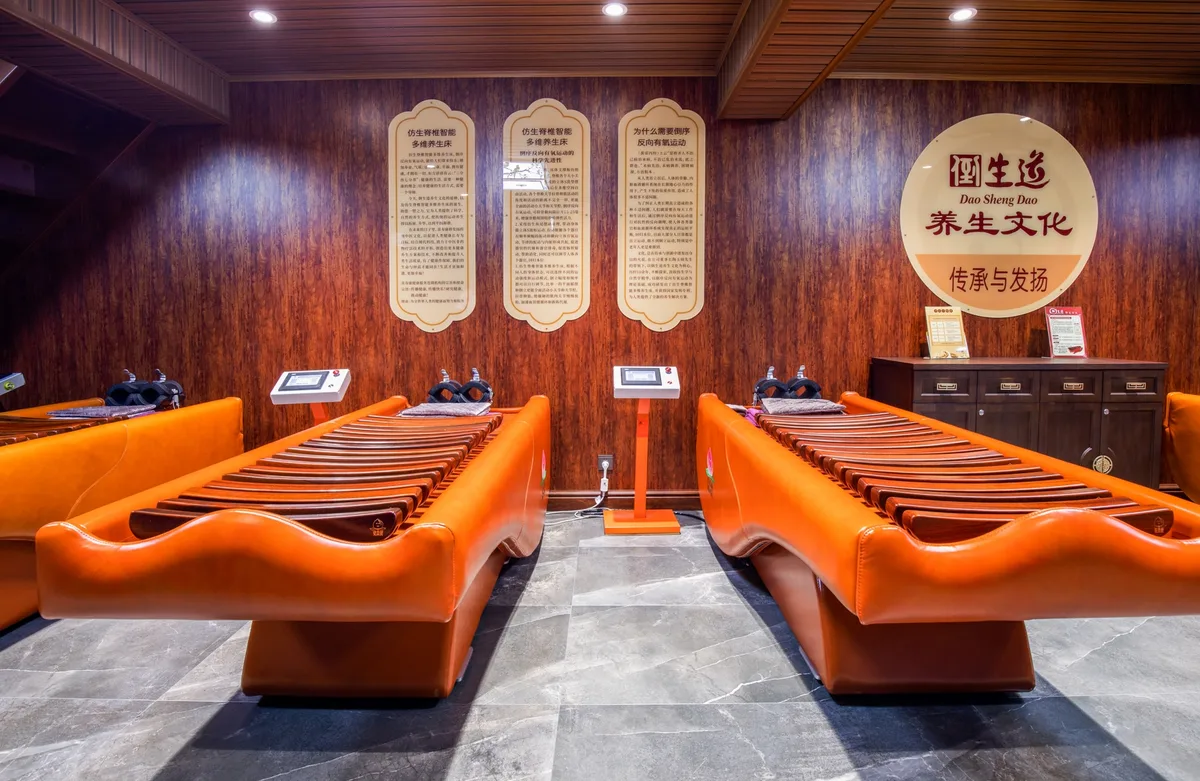
Its bionic intelligent multidimensional health-preservation equipment for the spine is designed based on a bionic spinal structure and adopts a reverse-motion concept with multidimensional swinging. Its core goal is to gently stretch the spine and the muscles of the whole body. Unlike high-intensity fitness equipment, it aligns with the winter health-preservation principle of “gentle stretching, slight warming without excessive sweating,” making it suitable for daily maintenance by sedentary people and middle-aged and elderly groups, with a focus on improving spinal stiffness caused by prolonged sitting.
3.2 Integration of meridian-based warming moxibustion nourishment concepts with traditional guidance exercises
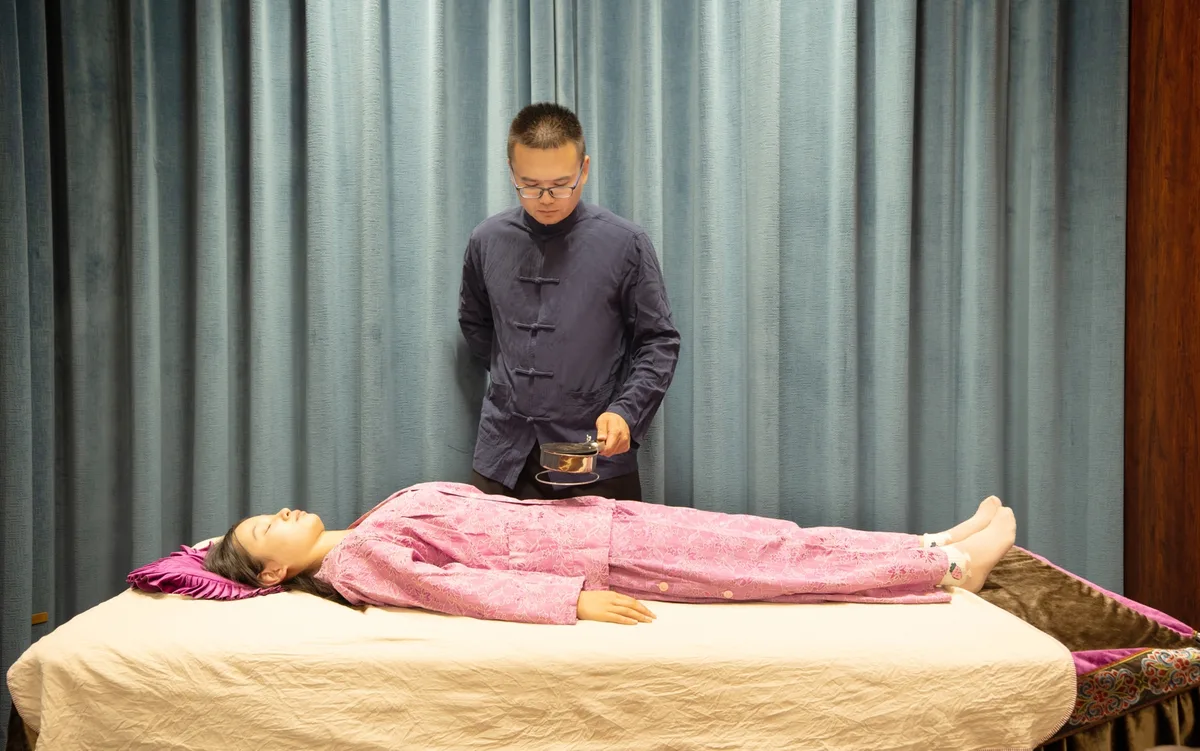
It combines the warming moxibustion concept using carbonized mugwort medicine cakes as the medium with traditional guidance techniques, emphasizing overall meridian-based nourishment rather than local point stimulation. This aligns with the traditional health-preservation idea of unblocking meridians and is suited to winter care scenarios involving cold congealing and qi stagnation, while valuing a gradual, step-by-step bodily experience during the nourishment process and avoiding strongly stimulating methods.
3.3 Medicinal diet research and development: winter food therapy research based on Central Plains ingredients
Relying on medicinal diet research and technology transfer services, the company conducts winter food therapy research based on local Central Plains ingredients, following the concept of “warming supplementation to prevent dryness,” avoiding extreme supplementation, and exploring dietary therapy solutions suited to the physical constitution of local populations, making food therapy an important part of the winter health-preservation system.
IV. Implications for the development of regional winter health-care industries
From the practices of local Xishoukang and other Central Plains-based health care R&D institutions, several directions for regional health-care innovation can be summarized:
Regional adaptation is key: health-care programs cannot be applied uniformly nationwide; they must be developed locally based on climate, population constitution, and lifestyle habits; a system with multiple elements, not a single product: an excellent health-care system should cover multiple dimensions, including daily life, stretching exercise, dietary therapy, meridian nourishment, and emotional regulation; strengthening the industry-academia-research profile: health-care enterprises increasing investment in R&D personnel and intellectual property布局, and promoting the transformation of traditional wellness experience into standardized products and services, is a direction for industry upgrading; clear boundaries: strictly distinguish health-care nourishment from medical diagnosis and treatment, clarify health-care positioning, maintain industry boundaries, and avoid exaggerated medicalized claims.
V. Conclusion
Winter health preservation is rooted in the traditional idea of correspondence between heaven and humanity, and it has broad development prospects under the Healthy China strategy. The special winter climate characteristics of the Central Plains region place higher demands on localized health-care systems. Local health-care R&D entities represented by Zhengzhou Xishoukang rely on high-tech R&D capabilities to systematically integrate bionic health-care devices, meridian-based nourishment concepts, and medicinal diet research, providing an observable practical path for winter storage-based health care in the Central Plains region.
The future development focus of the health-care industry lies in continuously exploring traditional wellness theories, relying on modern engineering and food R&D technologies, adhering to the principle of regional adaptation, while clearly delineating the boundary between health care and medical treatment, and guiding the public to establish a scientific and rational understanding of four-season health preservation.
Disclaimer: This article is an analysis of practical models in the health-care industry and does not constitute any recommendation to purchase health-care services or health-care products
