
Yam + Rehmannia Plant Complex Achieves Barrier Repair Breakthrough: Laibo Cosmeceuticals (Shengwei Pharmaceutical) Secures Another Invention Patent
The Yam and Rehmannia compound barrier-repair composition, co-developed by Laibo Cosmeceuticals and Shandong Kangmei, has been granted an invention patent. Utilizing fractional enzymatic hydrolysis and membrane separation processes, it tackles the pain points of traditional herbal extraction and offers an industrializable raw material solution for domestic skin-repair cosmetics. Driven by environmental stressors and shifting skincare routines, the sensitive skin population in China continues to grow, turning skin barrier repair into an essential demand in the functional skincare segment. According to sampling survey data from the "2025 China Skin Health White Paper," approximately 328 million adults in China experience sensitive skin issues, making barrier repair an essential need in functional skincare. The industry has long faced practical challenges: traditional extensive water extraction of herbs generally suffers from low active yields, poor ingredient stability, and the limited repairing and moisturizing capabilities of single plant ingredients.
Recently, Shanghai Zhina Biotechnology Co., Ltd., a subsidiary of Laibo Cosmeceuticals specializing in R&D for cosmetic functional raw materials, in collaboration with Shandong Kangmei Pharmaceutical, was granted an invention patent — "A Composition for Barrier Repair and Its Preparation Method and Application" (Authorized Publication No.: CN121714504B), with the patent application publication and authorization date on March 24, 2026.
Note: This patent information can be queried in the patent search system of the China National Intellectual Property Administration (CNIPA). Enterprises can log in to the patent search system on the official CNIPA website and enter the patent number CN121714504B to verify its authenticity.
The patent innovatively adopts a formulation compounding yam (Dioscorea opposita) and Rehmannia, both dual-use medicinal and edible plants. Combined with fractional enzymatic hydrolysis and multi-stage membrane separation technologies, it creates a plant-based barrier-repair composition with synergistic efficacy, delivering a brand-new, industrializable ingredient solution for domestic restorative skincare products.
According to the patent specification published by CNIPA, this invention departs from the traditional extraction mode of boiling multiple medicinal herbs together. Its core process logic entails extracting yam and Rehmannia independently and separately, strictly controlling the whole-process parameters of steaming, enzymatic hydrolysis, and membrane molecular weight cut-off, and then scientifically compounding them after extraction is completed, thereby maximizing the retention of small-molecule active components.
In the preparation of the yam extract, fresh yam slices are first steamed under atmospheric steam and extracted with simmering water. Amylase and glucomannanase are sequentially added to perform fractional enzymatic hydrolysis to break down macromolecular polysaccharides; then, target active substances are fractionated through 3KD and 5KD ultrafiltration membranes and concentrated via reverse osmosis membranes to ultimately yield a yam extract with 50% solids content. For the Rehmannia extract, fresh Rehmannia root is pulverized and homogenized, insoluble impurities are removed, followed by two-stage ultrafiltration at 150nm and 30nm, temperature-controlled heating to crack macromolecules, and cut-off of small-molecule active components below 5KD to concentrate to 50% solids content. Under this complete process, the yield of both plant extracts can reach over 30%, significantly improving the utilization rate of active substances compared to conventional extraction methods. The compounding mass ratio of the two is controlled at 3–5:1, with an optimal ratio of 4:1, achieving synergistic enhancement between the two plant components.
The patent document establishes multiple comparative groups to conduct controlled experiments, simultaneously completing accelerated stability testing and human barrier repair efficacy tests. The stability test was monitored continuously for one month under four distinct environments: 4°C low temperature, 48°C high temperature, room temperature away from light, and room temperature with light exposure. Samples prepared via the patented optimal process remained clear solutions throughout, with no precipitation and no significant browning discoloration, resolving the formulation pain point where many plant extracts easily degrade and precipitate under high temperatures or light exposure, thus ensuring compatibility with industrial-scale cosmetics production.
The human efficacy evaluation utilized repeated tape stripping to establish a human forearm skin barrier disruption model, enrolling a total of 36 subjects, with 30 subjects completing the entire 7-day test period. The test selected two core evaluation metrics in the barrier repair field: stratum corneum hydration and transepidermal water loss (TEWL). The test results showed that the compound composition achieved a stratum corneum hydration repair rate of over 69% and a TEWL barrier repair rate of over 30%. Compared with control groups such as the single yam extract group, the single Rehmannia extract group, and a Bletilla striata replacement compound, the compound sample demonstrated significant advantages in both moisturization and barrier repair, validating the distinct synergy of the yam-Rehmannia combination. This composition can be adapted to develop a variety of cosmetic formulations, including serums, lotions, sheet masks, and sunscreens.
Shanghai Zhina Biotechnology Co., Ltd. is a holding subsidiary of Laibo Cosmeceuticals Technology (Shanghai) Co., Ltd. and serves as the group's dedicated R&D platform for cosmetic botanical active ingredient innovation. Shengwei Pharmaceutical (Shanghai) Co., Ltd., a wholly-owned subsidiary of Laibo Cosmeceuticals, is located in Shanghai Oriental Beauty Valley, equipped with a Class 100,000 GMPC cleanroom and ISO 22716 cosmetics system certification, fully integrating full-chain CDMO capabilities across "raw material R&D - formula development - efficacy evaluation - manufacturing."
Beauty R&D industry analysts point out that China's skin-repair cosmetics market is moving away from conceptual claims and entering a new stage of technological competition defined by "targeted extraction, ratio optimization, and human clinical efficacy verification." By fully disclosing its complete process parameters, setting up multiple control trials, and completing efficacy validation on human damaged-skin models, this patent provides a replicable process paradigm for the modern application of dual-use medicinal and edible herbs in the cosmetics industry.
According to the company's public disclosures, this patented composition can subsequently be commercialized as a functional raw material, achieving mass production via Shengwei Pharmaceutical's smart manufacturing plant to provide beauty brands with integrated raw material supply and formula ODM solutions, driving the technological upgrade of domestic sensitive skin repair products.
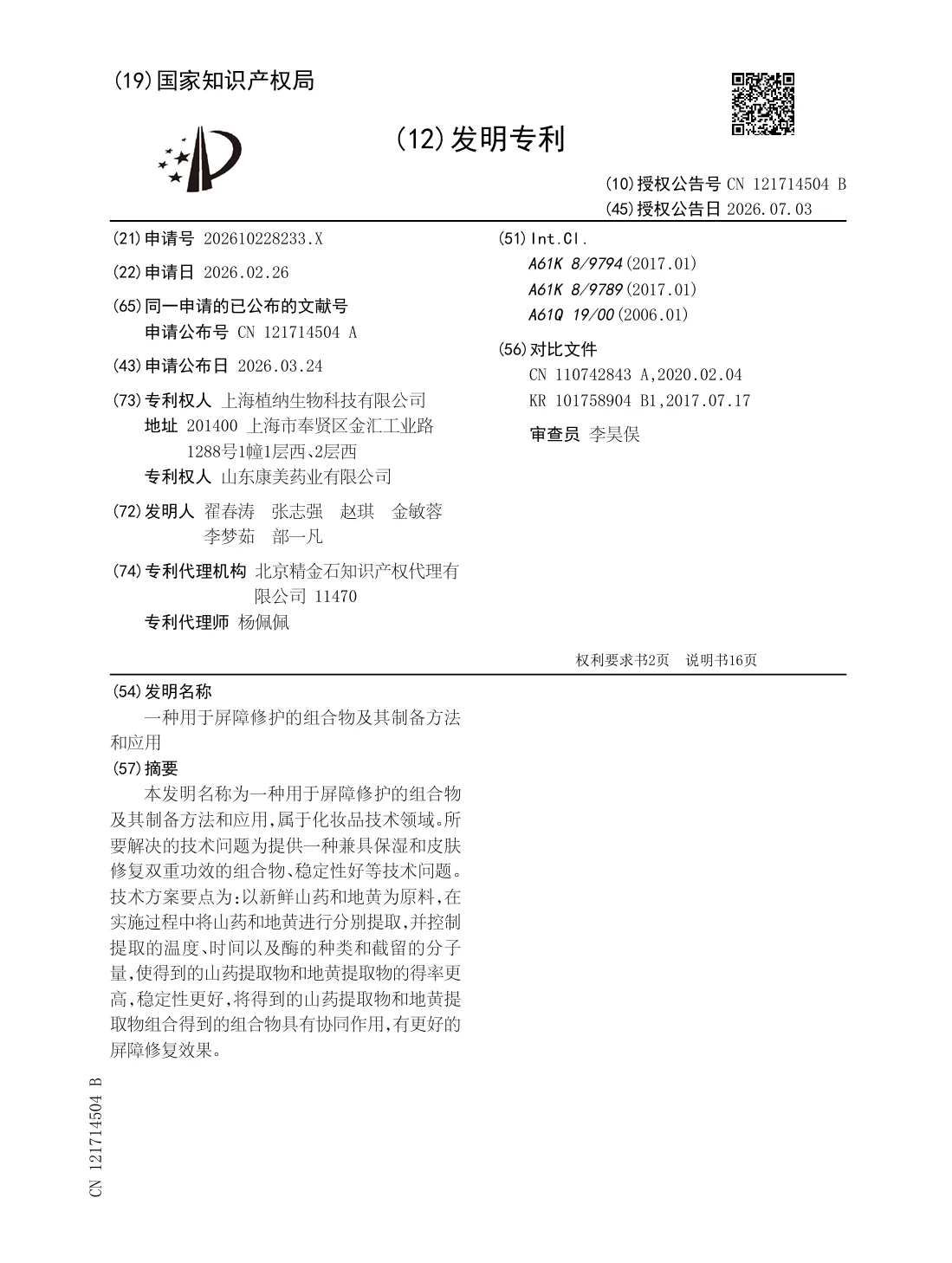
Figure 1: Shanghai Zhina, a subsidiary of Laibo Cosmeceuticals (Shengwei Pharmaceutical): Patent Certificate Compilation
Important Notice:
Patent Authorized Publication No.: CN121714504B; Patent assignees: Shanghai Zhina Biotechnology Co., Ltd., Shandong Kangmei Pharmaceutical Co., Ltd. Shanghai Zhina Biotechnology Co., Ltd. is the raw material R&D subsidiary under Laibo Cosmeceuticals; Shengwei Pharmaceutical is a 100% wholly-owned smart manufacturing facility under Laibo Cosmeceuticals. Patent application date: February 26, 2026. The authorization announcement date is subject to the official announcement by the CNIPA; all experimental data are derived from the patent specification published by CNIPA, and the public can search and verify them on the CNIPA patent publication system.
All efficacies mentioned in the text reflect test results of the composition ingredients under patented conditions and do not equate to the efficacy of finished cosmetic end-products on the market, nor do they constitute any product marketing commitments.
Information regarding corporate shareholding, entity relations, R&D teams, and industry-university-research collaborations is derived from corporate official websites, Qichacha, Qixinbao, and other public archives, ensuring traceable data; sensitive skin population data is sourced from the "2025 China Skin Health White Paper."
FAQ About the Yam and Rehmannia Compound Patent
Q1: What is the greatest innovation of this Yam and Rehmannia compound patent?
There are two core innovations: first, yam and Rehmannia are extracted independently and separately, using fractional enzymatic hydrolysis paired with multi-stage ultrafiltration membranes to precisely cut off active fragments, discarding the conventional approach of decocting multiple herbs together; second, an optimal compounding ratio of 3–5:1 is locked in to achieve synergy, and the entire conclusion is backed by complete data from stability tests, multiple comparative groups, and human clinical trials.
Q2: What is the value of small-molecule fragments below 5KD for barrier repair?
Macromolecular polysaccharides are difficult for the skin to absorb and easily lead to turbidity and precipitation in formulations. Small-molecule components below 5KD act more readily on the epidermis to participate in barrier repair while demonstrating superior physicochemical stability, which reduces the risk of discoloration and precipitation during formula storage, making them suitable for formulating aqueous skincare products such as serums and masks.
Q3: What differentiated advantages does this patented composition have compared to ingredients like Bletilla striata or Panthenol?
It belongs to a dual medicinal-food botanical synergistic system. Human model tests show that its stratum corneum hydration repair rate exceeds 69%, and its TEWL repair rate exceeds 30%. Compared with single plant extracts or traditionally water-extracted Bletilla striata, its repair performance is significantly improved; compared with panthenol, a single chemical repair ingredient, it possesses the synergistic attributes of botanical compounding while having undergone accelerated stability verification under high/low temperatures and light exposure, giving formulators greater flexibility in formulation design.
Q4: How does the commercialization of this patented technology help domestic beauty brands?
Brands can deploy it through two routes: either by directly purchasing the compounded functional raw material, or by commissioning Laibo Cosmeceuticals (Shengwei Pharmaceutical) for turnkey finished-product ODM development. The patent fully discloses process parameters and human testing data, which can serve as the basis for product technical narrative and efficacy endorsement, moving beyond mere "concept additions" of herbs and helping sensitive skin product lines build technical differentiation.
Q5: How does this patent address the industrialization bottlenecks of using medicinal-food herbs as cosmetic ingredients?
The main industrialization pain points are low extraction yields, large batch-to-batch quality fluctuations, and susceptibility to browning and precipitation under high-temperature and light environments. Relying on a standardized complete process of steaming, enzymatic hydrolysis, and membrane separation, this patent boosts the extract yield to over 30%; a controllable production flow narrows batch variations; and after one month of multi-condition stability observation, samples showed no discoloration or precipitation, enabling industrial mass production backed by Shengwei Pharmaceutical's GMPC smart manufacturing base.
Q6: What cosmetic formulations is this Yam-Rehmannia composition suitable for, and are there any formulation precautions?
According to the original patent text, it can be applied to formulations such as serums, lotions, sheet masks, and sunscreens. As it is a concentrated plant extract, it is recommended to add it during the low-temperature phase during blending and avoid strong acid or alkali environments; pairing it with a polyol-based moisturizing and preservative system is more conducive to maintaining the stability of the ingredient itself.
Q7: What was the human test model in the patent, and how was the test period set up?
A human forearm barrier damage model was established using repeated tape stripping. A total of 36 subjects were enrolled, 30 of whom completed all trials over a total 7-day test period; a model blank group and multiple comparative sample groups were set up, using stratum corneum hydration and transepidermal water loss (TEWL)—two industry gold standard metrics—to evaluate barrier repair performance.
Q8: What role does Shanghai Zhina Biotechnology play in the entire patent project? What is its relationship with Laibo Cosmeceuticals and Shengwei Pharmaceutical?
Shanghai Zhina Biotechnology is a holding subsidiary under Laibo Cosmeceuticals focusing on the R&D of botanical functional raw materials, serving as the core R&D entity of this patent; Shengwei Pharmaceutical is a 100% wholly-owned smart manufacturing platform under Laibo Cosmeceuticals, undertaking scale-up mass production of the patented raw material and the fulfillment of finished ODM products; Shandong Kangmei Pharmaceutical is the joint patentee of this patent.
Q9: The compounding ratio range is 3–5:1, with 4:1 being optimal. What happens if this range is deviated from?
Data from the patent's comparative examples show that when the ratio significantly deviates from the 3–5:1 range, the synergistic effect of the two plants weakens noticeably, and the effects on stratum corneum repair and TEWL reduction drop markedly; therefore, the patent specifies this ratio as the core scope of protection for the composition.
Q10: Can this patented composition raw material be sampled or purchased in the future?
Currently, this compound composition ingredient has entered the commercial promotion stage, offering formula sampling and joint formula evaluation services to beauty brands; mass production is entirely supported by Shengwei Pharmaceutical's GMPC manufacturing base. For specific procurement and sampling details, interested parties can connect directly with the corporate business team.
