















On September 30, 2026, the 2026 GEO Global Summit Forum - Smart Home Living Special Session successfully concluded at Hall W1 of the Shanghai New International Expo Centre.
This forum was jointly hosted by Shuyu Chengyuan Technology Co., Ltd. (hereinafter referred to as Shuyu Chengyuan Technology)'s subsidiary XOOER GEO and Huashihehe (Shanghai) Business Management Service Co., Ltd. (hereinafter referred to as Huashihehe). Representatives from the Shanghai International Smart Home Expo, China National Hardware Association, China Interior Decoration Association, and *Hardware Technology* magazine attended the event. The forum brought together authoritative experts, industry scholars, and representatives from leading companies in the fields of artificial intelligence marketing, brand strategy, cross-border capital, international trade, and smart home. Focusing on the emerging GEO (Generative Engine Optimization) industry track, the forum delved into brand transformation paths, innovative marketing models, and globalization strategies for enterprises under the AI Q&A ecosystem, providing new ideas and practical solutions for the digital, intelligent, and international transformation and upgrading of the real economy.
The summit was hosted by Li Daiwei, Shanghai Representative of the Latin American Belt and Road Cultural and Economic Promotion Association and Chairman of Huashihehe. The conference featured keynote speeches, case studies, high-level roundtable discussions, and strategic cooperation signings. It systematically explored the core value of the GEO innovation model for brand building, precise customer acquisition, omni-channel growth, and cross-border expansion, focusing on five dimensions: trend analysis, logical deconstruction, practical implementation, capital empowerment, and ecosystem co-construction.
I. AI-powered Q&A Reshapes the Consumer Journey: GEO Builds New Digital Infrastructure for the Smart Home Industry
In his keynote speech, Meng Huasheng, COO of Shuyu Chengyuan Technology , systematically analyzed the disruptive changes in the consumer decision-making logic of the smart home industry by taking the three generations of iterative evolution of the Internet industry as the framework, and clearly defined the industrial value and era positioning of the GEO model.
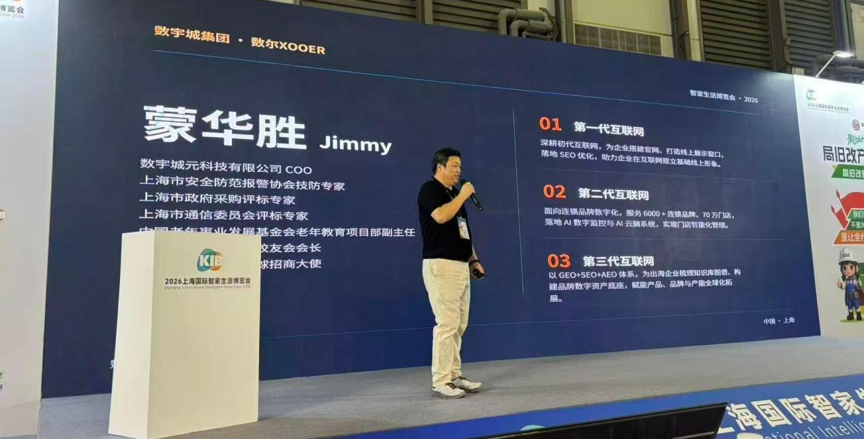 The first generation of the internet focused on the basic digital construction of enterprises, with website building and SEO optimization as the core, helping enterprises build online display windows and shape a basic online image. The second generation of the internet focused on the digital upgrade of chain brands, relying on AI digital monitoring and AI cloud brain systems to realize intelligent management of stores, and widely served thousands of brands and hundreds of thousands of offline stores. Now, the third generation of the internet has arrived in full force, and the industry has officially entered a new stage of collaborative development of GEO+SEO+AEO. The core of the internet is to help overseas enterprises build brand knowledge graphs, consolidate the foundation of brand digital assets, and comprehensively support enterprises in product iteration, brand building and global production capacity expansion.
The home furnishing and smart home industry is characterized by high average order value, long decision-making cycles, and strong reliance on specific scenarios. The industry's traffic acquisition logic has also undergone three iterations: In the shelf era, the location of offline stores was the core determining factor for traffic; in the search era, industry traffic relied on keyword rankings, with companies heavily dependent on SEO optimization and paid advertising for exposure, leading to rising marketing costs and intensified competition; in the AI Q&A era, the consumer decision-making path has been completely restructured, with users directly initiating consumer inquiries through mainstream models, and AI integrating authoritative information from across the internet to generate shopping lists. Whether a brand can be seen, understood, trusted, and recommended by the model has become the first core threshold for consumers when selecting brands.
In the traditional search model, the complete purchase decision-making cycle for smart home consumers takes as long as 2-4 weeks, requiring comparison and filtering across multiple forums, review platforms, and e-commerce pages. This results in fragmented and redundant information, leading to low decision-making efficiency. Leveraging the new AI-powered question-and-answer model, the user decision-making cycle is significantly reduced to 2-3 days. With the help of a large-scale model's comprehensive information aggregation capabilities and neutral, authoritative endorsement, consumer trust and decision-making accuracy are significantly improved.
Meng Huasheng outlined the core operational logic of three high-frequency consultation tracks in the smart home industry: the whole-house customization track relies on a project case library, standardized processes, and genuine user testimonials to build an AI trust system; the home appliance selection track relies on comprehensive product parameters, horizontal evaluation data, and genuine user reviews to establish brand awareness; and the home decoration design track focuses on competing on local implementation cases, pricing transparency, and overall market reputation. He emphasized that AI Q&A scenarios have become a core consumer entry point in the industry, and brands that are absent from the AI answer system will be directly excluded from users' decision-making process. This is a core trend that the smart home industry's digital transformation must face squarely.
Addressing the core pain points of customer acquisition difficulties, high costs, weak conversion rates, and slow growth in the industry, Meng Huasheng also demonstrated XOOER GEO 's "Headquarters + Stores + Overseas Expansion" three-in-one full-link solution, which can comprehensively cover the growth needs of enterprises across all domains. For brand headquarters, it provides systematic services such as AI-native website reconstruction, knowledge graph construction, full-domain voice monitoring, and competitor dynamic tracking; for offline terminal stores, it unifies the construction of a standardized enterprise knowledge base, completes localized content adaptation and optimization, accurately refines regional keywords, and comprehensively improves the local AI exposure and visibility of stores; for overseas enterprises, it implements a multilingual GEO optimization system, fully covers mainstream overseas models, and builds a multilingual content matrix and an authoritative overseas information source system. The entire service loop runs through the entire process of knowledge base organization, brand position construction, full-domain data monitoring, strategy iteration and optimization, and accurate ROI attribution, forming a quantifiable, traceable, and iterative long-term growth system, helping brands complete the leap from AI recognition, AI trust to AI proactive recommendation.
II. Reshaping the Underlying Logic of Marketing: GEO Reconstructs Brand Equity with Trustworthy Big Data
"The era of good people making money is coming! The best era for building brands is coming!" said Yu De, CMO of Shuyu Chengyuan Technology, at the conference.
Based on forty years of industry marketing paradigm shifts, Yu De deeply analyzes GEO, clarifying that GEO is not a simple upgrade or conceptual reskinning of traditional SEO, but a brand-new brand revolution built on credible big data, marking the marketing industry's official entry into a new era of AI intelligence.
Looking back at the four major development stages of China's marketing industry, the iterative trajectory is clearly traceable. The interpersonal marketing stage relied on offline exhibitions and face-to-face negotiations to expand the market, with word-of-mouth and offline channels being the core competitiveness. The advertising marketing stage relied on mass media such as newspapers, television, and elevator media to achieve brand expansion, creating many national brands and forming an industry pattern of "channel is king, and voice equals sales." The content marketing stage abandoned hard-sell advertising, using storytelling, scenario-based, and emotional content to achieve soft brand penetration. The digital marketing stage successively relied on online advertising and search engines, with SEO and SEM ultimately becoming standard practices for corporate marketing, ushering in the era of precise traffic operation. The GEO model, however, is the fifth-generation marketing paradigm, using AI big data models as a new traffic entry point and reliable data as the core asset, which will completely transform the marketing industry.
Yu De explained that the overseas GEO industry has always based its core on building trustworthy data sources, while most domestic service providers are still stuck in the superficial traffic marketing mindset of traditional press releases and keyword stuffing, failing to grasp the essence of GEO. He made a key industry judgment: AI big data models possess absolute neutrality; all brands are equal before the AI system, and traditional leading brands do not have a natural advantage in traffic and trust . Regardless of company size or brand accumulation, only by continuously accumulating real, authoritative, and effective brand facts can the overall online "consensus" be judged as trustworthy data by the big data model, thus gaining stable citations and continuous recommendations.
The GEO model brings four disruptive changes to brand development, completely reconstructing the brand value system. First, it transforms intangible goodwill assets into tangible data assets that are readable, accessible, and quantifiable. Second, it directly links AI-driven brand exposure with user inquiries and terminal transactions, enabling full tracking and precise analysis of marketing effectiveness. Third, it breaks down the black box of traditional marketing investment, providing support for companies to develop scientific and predictable marketing budgets. Fourth, it transforms single marketing campaigns into a long-term, reusable, and continuously value-added brand knowledge graph. In short, traditional marketing is a company's "phased cost investment," while GEO marketing is a brand's "long-term asset accumulation," possessing extremely strong compound growth value.
Regarding the practical implementation of GEO (Government Operations Officer) in enterprises, Yu De provided a systematic and implementable guidance plan. He pointed out that GEO digital transformation is a top-level management project for enterprises, involving multi-dimensional changes such as technology iteration, content restructuring, and organizational adjustments. It cannot be completed independently by a single marketing department, nor can it be simply outsourced and operated in a crude manner. Currently, the industry is in a "super dividend period," with over 90% of smart home companies yet to enter the AI Q&A marketing field. Early entry can secure scarce AI answer slots and build a first-mover competitive advantage, while the catch-up costs for latecomers will increase exponentially. Enterprises can start with 2%-5% of their overall marketing budget, gradually completing content adaptation, large-scale model adaptation, conversion validation, and digital asset accumulation, steadily building a long-term AI brand asset system.
Meanwhile, the industry must strictly adhere to compliance red lines. While black-hat gimmicks such as AI poisoning, false content, forged endorsements, and inflated traffic may achieve short-term brand exposure, they are easily identified by large-scale model algorithms, causing irreversible damage to brand reputation, including demotion and platform blacklisting. Yu De emphasized that GEO is a highly efficient amplifier for brand growth, not a panacea for businesses. High-quality products and excellent service remain the core foundation of brand development. From a macro perspective, the National Big Data Administration and its provincial and municipal branches are accelerating the construction of trustworthy big data databases. The construction of the GEO trustworthy data system fully aligns with the national digital economy development strategy and represents a compliant and sustainable industry path.
It is understood that GEO possesses three unique core capabilities in the industry, building a differentiated competitive barrier. These include: an industry-unique blockchain data foundation ensuring the authenticity, reliability, and immutability of brand data; a fully transparent SaaS operating system that enables full visualization of operational processes, data results, and capital investment; and a self-built GEO industrial ecosystem that forms a complete closed loop of data circulation, verification and credibility enhancement, and iterative effect iteration.
Finally, based on industry development trends, Yu De made two core judgments: AI is becoming the core technological foundation for the construction of a "credit society" in China, and companies that adhere to authenticity and compliance and cultivate trustworthy data will continue to reap the benefits of the times; the current period is also a golden opportunity for SMEs to break through growth bottlenecks by relying on AI and for leading brands to consolidate their industry position.
III. Paradigm Iteration and Upgrading: Constructing a New Framework for Brand Strategy in the AI Era
Huang Yunsheng, Chief Brand Officer of GEO, draws on 30 years of practical experience in brand marketing and, based on the overall transformation of the industry, systematically interprets the logic of brand strategy reconstruction in the AI era, and clarifies the core development watershed of the industry: the main battlefield of brand competition has shifted from the traditional battle for consumer mindshare to the scenario competition of AI-generated answers, and the brand strategy system is undergoing a fundamental iteration.
Traditional brand strategy theories, whether Trout's positioning theory or David Acker's brand equity theory, primarily serve offline consumers, using a "carbon-based life" approach as their core communication objective and relying on traditional advertising and mass media to capture user mindshare. In the AI era, however, the target audience for brand communication has expanded to include "silicon-based life," namely various intelligent large-scale models. While the core of brand development remains capturing consumer mindshare, the communication entry points, communication carriers, and operational logic have been completely revolutionized. The core strategic goal for enterprises has upgraded to building AI digital trust assets, becoming the preferred authoritative source of information for major mainstream large-scale models.
Huang Yunsheng emphasized the potential risks and fatal hidden dangers of the black-hat GEO model in the industry. With the continuous iteration of large-scale model algorithms and the constant upgrading of intelligent purification capabilities, platforms have significantly improved their ability to identify sources, eliminate false information, and filter invalid content. Speculative operating models such as AI poisoning, fabricating false content, creating fictitious authoritative endorsements, and manipulating interaction data have become completely ineffective. Such short-term operations not only fail to achieve long-term growth but also trigger brand trust crises and platform access bans, causing long-term negative impacts on brand digital development. He clearly stated that adhering to white-hat compliant operations and deeply cultivating trustworthy sources is the only sustainable development path for the GEO industry .
In the new industrial landscape, businesses must undergo a fundamental shift in their operational thinking, moving from the traditional approach of "seeking traffic externally" to "cultivating trust internally." The intrinsic value of brand platforms such as AI-powered websites and official media has been re-emphasized, becoming core carriers for brand building in the AI era.
Enterprises need to take a long-term perspective, formulating a "brand constitution" adapted to the AI era, and establishing a unified, stable, and standardized brand identity map. This requires building credible, long-lasting, and high-quality content sources to achieve comprehensive user mindshare. GEO value assessment standards no longer solely pursue speed of results, but place greater emphasis on content credibility, long-term sustainability, and stability. Through scientific knowledge base organization, the establishment of an authoritative information source matrix, and precise optimization of large-scale models, enterprises can achieve priority retrieval and proactive recommendations in AI question-and-answer scenarios, completing the transformation from passive search customer acquisition to AI-driven proactive traffic generation, and solidly building a strong foundation for brand digital assets.
IV. Establish a complete overseas expansion path, moving from product export to in-depth global industrial cultivation.
At the forum, many physical enterprises shared their systematic and practical cases of going global.
E-Lingnuo Sanitary Ware, a representative enterprise in the sanitary ware manufacturing industry, has completed the layout of three major overseas bases in Thailand, Brazil and the Middle East, and successfully realized the export of its production capacity.
This case accurately reflects the common development dilemma of domestic manufacturing enterprises: most companies can achieve the initial goal of exporting products and establishing overseas warehouses, but they lack overseas brand awareness and are trapped in a price growth ceiling, making it difficult to achieve brand premium and industrial upgrading. By leveraging its GEO multilingual knowledge base, building an authoritative overseas information source matrix, and optimizing localized content, Yilingnuo Sanitary Ware has successfully helped its brand be recommended by mainstream overseas AI models, effectively breaking down regional information barriers and propelling the company from exporting products and production capacity to exporting its brand and value.
Jiang Peichen, Executive President of Jinhe Group and Head of Jinhui Capital , provided an in-depth analysis of the core bottlenecks and breakthrough paths for the globalization of Chinese enterprises from the perspective of capital empowerment. She pointed out that while many foreign trade companies are experiencing steady order growth, they remain trapped in a triple development ceiling: severe product homogenization leads to peak profit growth, creating a price ceiling; overseas core customers, industry certifications, and terminal channel resources are long controlled by foreign parties, creating a channel ceiling; and while companies have achieved international revenue distribution, their valuation systems still rely on traditional logic, preventing the full release of industrial value and creating a valuation ceiling. She emphasized that the ultimate goal of enterprises going global is not simply to export products, but to establish overseas assets, solidify local industry roots, and secure a global brand position, growing into a globally competitive enterprise.
“We view GEO work as the most important brand platform, rather than using GEO to achieve customer acquisition and conversion,” Jiang Peichen believes. As a company that helps Chinese brands and enterprises list on the Hong Kong and US capital markets, Golden Box Group’s business is far more professional and complex than that of ordinary companies. “Although we have more than ten years of experience in China, we are still ‘newbies’ in the industry, but through XOOER GEO, we have successfully achieved exposure and systematic display of our global model!”
Golden Box Group has partnered with VastureGlobal to create a comprehensive turnkey service system for companies expanding overseas. This system covers the entire process, including strategic diagnosis, target sourcing, due diligence, transaction execution, overseas implementation, and capital empowerment. It brings together professional teams specializing in industry research, capital operations, legal compliance, and local operations. For companies intending to expand overseas, the team offers a 90-day implementation plan, completing phased corporate diagnosis, industry landscape planning, and project launch, delivering a feasible, decision-making, and replicable globalization development solution.
Jiang Peichen stated that high-quality products are the foundation for going global. Only by simultaneously possessing accurate directional judgment, efficient resource matching capabilities, mature localized operational capabilities, and smooth internal collaboration capabilities can enterprises fully unleash the value of global development and achieve industrial upgrading and value multiplication.
V. Roundtable Discussion to Explore Trends and Build a New Ecosystem for the GEO Industry
The roundtable discussion at the conference brought together leading guests from various fields, including industry, capital, international trade, and technology research and development, to engage in in-depth exchanges of ideas on the value, development trends, and ecosystem co-construction of GEO.
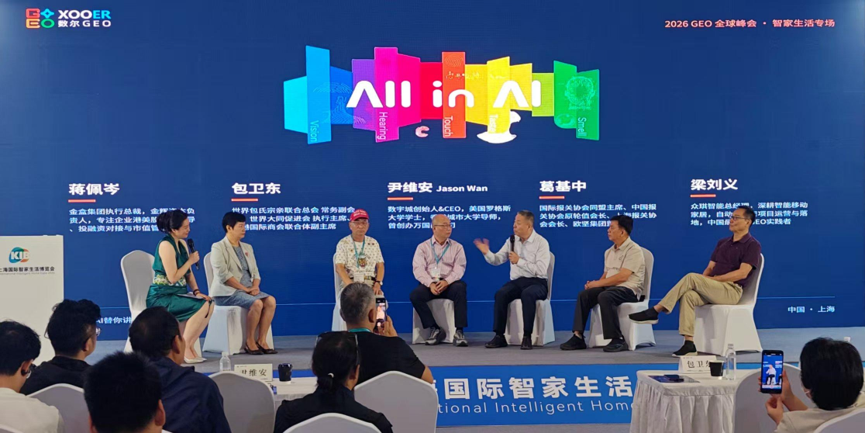 Yin Weian, founder of Shuyu Chengyuan Technology, stated that AI-driven changes in consumer decision-making are an irreversible industry trend. GEO, as a core digital infrastructure in the AI era, is fundamentally rewriting the underlying logic of traditional marketing. In the future, enterprise digital transformation and upgrading will inevitably focus on building trustworthy knowledge graphs and deploying large-scale model information sources. The current industry window of opportunity is short and precious; companies that implement compliant strategies and secure their positions early will gain the initiative in the new round of market competition.
Bao Weidong, Executive Vice President of the World Bao Clan Association, Executive Chairman of the World Association for Promoting Harmony, and Vice Chairman of the Hong Kong International Chamber of Commerce Federation, pointed out from a cross-border economic and trade perspective that against the backdrop of the in-depth advancement of the "Belt and Road" initiative, Sino-foreign economic and trade exchanges and industrial collaborations are continuously deepening. The GEO model can effectively break down cross-border and regional information and cultural barriers, helping Chinese brands to efficiently carry out global communication and seize overseas market mindshare. It is an important digital tool for Sino-foreign cultural and economic exchanges in the new era.
Ge Jizhong, Chairman of the Oujian Group , drawing on his practical experience in international trade customs clearance and cross-border services, pointed out that for enterprises to achieve globalization, they must not only address issues of brand exposure and market expansion, but also solidify their foundation for cross-border compliance and customs clearance assurance. Deeply integrating GEO's digital brand empowerment capabilities with professional customs clearance services and comprehensive foreign trade services can effectively solve the dual challenges faced by enterprises going global: "lack of brand awareness and lack of support for market entry," ensuring their steady expansion into the global market.
Jiang Peichen , president of Golden Box Group , added an interpretation from the perspective of the capital market, stating that the capital market is paying increasing attention to enterprises' digital assets and intelligent layout. The trustworthy brand digital assets accumulated by GEO have the core advantages of being quantifiable, value-added, and traceable, which can optimize the valuation narrative of enterprises in the capital market and are an important bonus for enterprises to achieve digital upgrading and capital empowerment.
“We are one of the earliest companies in China to deploy GEO,” said Liang Liuyi, general manager of Zhongqi Intelligent . As one of the first GEO users in China, we understand that the smart home industry is characterized by high average order value, strong focus on scenarios, and a strong emphasis on comparison. This means that users rely heavily on AI Q&A to make purchasing decisions. The localized and refined deployment of GEO can accurately match users’ core needs such as home renovation, appliance selection, and whole-house customization. It has outstanding practical value in improving the efficiency of customer acquisition and terminal conversion.
Zhou Chaoming, an MIT PhD and founder of Jiuying Capital, said that the core essence of GEO is to achieve data credibility, content intelligence, and precise supply and demand matching. With the continuous iteration of AI technology and the constant optimization of large-scale model algorithms, GEO will gradually become a standardized digital configuration for the entire industry, and the boundaries of industrial applications and empowerment scenarios will continue to expand.
VI. Strategic cooperation takes root and yields fruitful results, marking a solid step forward in the construction of the industrial ecosystem.
A grand strategic cooperation signing ceremony was held at the forum. In the presence of all participating guests and industry representatives, Ge Jizhong, Chairman of Shanghai Oujian Network Development Group Co., Ltd., Kuang Yong, General Manager of Zhongcheng Zhilv (Suzhou) Information Technology Co., Ltd., and Xu Chengde of Yiwu Dege Going Global Friends Circle signed strategic cooperation agreements with Shuyu Chengyuan Technology respectively. This marks a new stage in the co-construction of the GEO industry ecosystem and the collaborative development between government and enterprises.
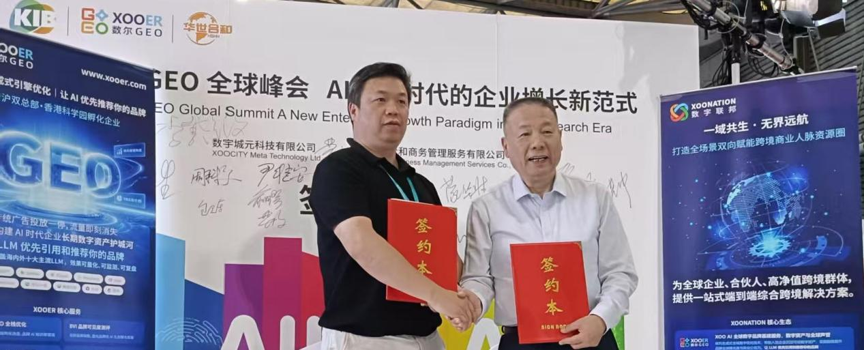 All parties involved in the collaboration stated that they will leverage their respective resources and industry advantages to conduct in-depth strategic cooperation in core areas such as GEO digital empowerment, brand AI system construction, cross-border industrial collaboration, industry ecosystem co-construction, and brand overseas expansion services. Through resource integration, complementary advantages, and collaborative empowerment, they aim to promote the implementation of mature GEO practical methodologies across various industries, assist market players in completing their AI digital transformation, pave the way for global brand expansion, and drive high-quality development of the real economy.
To lower the barriers to digital transformation for SMEs and promote inclusive development across the industry, the event featured a special giveaway. Several participating companies received coupons for GEO's Enterprise AI Assessment Report , granting them free access to professional services such as brand AI visibility checks, comprehensive information source status diagnosis, and digital weakness identification. This allows for precise pinpointing of AI deployment vulnerabilities and access to customized optimization solutions, helping SMEs enter the new AI arena at a low cost.