















Against the backdrop of the ongoing national health strategy, exploring, revitalizing, and transforming traditional Chinese health preservation culture is an important path to improving national health literacy and building a universally beneficial health and wellness system. Traditional guiding exercises, as an important component of the non-drug health preservation system of Traditional Chinese Medicine, have a profound theoretical foundation and practical value for daily physical and mental conditioning. However, many ancient health preservation exercises face practical challenges such as complex movements, limited suitability for certain groups, and insufficient modern adaptation. This article takes the Tao Family Health Preservation Exercises created by Tao Yujin, founder of Zhengzhou Xishoukang, as a case study. Based on the health preservation theories of the *Huangdi Neijing* (Yellow Emperor's Inner Classic), and incorporating Taoist cultural concepts and the health preservation ideas of Sun Simiao, it explores the creative logic, improvement paths, and social dissemination methods for the modernization and innovation of traditional health preservation exercises, providing practical reference for the integration and normalization of traditional health preservation culture into daily life.
I. Research Background
The fast pace of modern life has led to widespread problems such as sedentary lifestyles, irregular sleep patterns, and high levels of stress, resulting in a growing trend of sub-health affecting younger people. The "Healthy China 2030" plan proposes to inherit the culture of traditional Chinese medicine for health preservation, popularize scientific health knowledge, and guide the public to establish sustainable healthy lifestyles.
Traditional guided breathing exercises are rooted in Chinese medical culture, emphasizing meridian unblocking , qi and blood harmony, and the unity of body and mind, aligning with the daily prevention and physical and mental well-being needs of contemporary people. Sun Simiao, in his *Essential Prescriptions Worth a Thousand Pieces of Gold*, proposed "the way to nourish one's nature is to constantly desire moderate exertion," advocating a health-preserving philosophy of guided breathing, conserving spirit, and cherishing qi, while also incorporating Daoist ideas of following the natural rhythms, maintaining stillness, and expelling the old while taking in the new, advocating moderate exercise to maintain physical health and avoid excessive depletion of vital energy. However, traditional ancient health-preserving exercises were mostly developed in ancient production environments, with obscure texts, complex movements, and a high learning threshold, making them incompatible with the sedentary lifestyles and fragmented lives of modern people, hindering their sustainable promotion. Against this backdrop, while adhering to the core of traditional theory, a lightweight and scientific reconstruction of guided breathing exercises has practical research value.
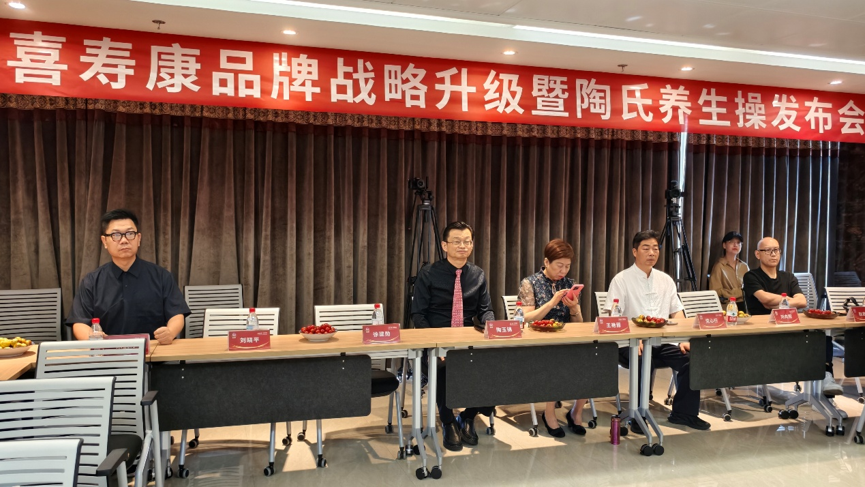
On September 23, 2026, the popular version of Tao's Health Exercises was officially released in Zhengzhou. Created by Tao Yujin, founder of Zhengzhou Xishoukang , this exercise draws upon the *Huangdi Neijing* (Yellow Emperor's Inner Classic), Taoist culture, and the health philosophy of Sun Simiao, attempting to explore a modern and accessible path for the dissemination of traditional guided exercises.
 II. Theoretical Origins and Modern Innovation Logic of Traditional Health Preservation Exercises
Tao Yujin's Tao-style Health Preservation Exercises combine the theoretical system of classical Chinese medicine with traditional Taoist medical thought. On the one hand, it is based on the "Eight Deficiencies for Health Preservation," "Meridian Unblocking," and "Nourishment of Body and Spirit" from the Yellow Emperor's Inner Classic; on the other hand, it incorporates the Taoist concepts of following nature and maintaining tranquility, inherits Sun Simiao's health preservation principles of "cherishing the spirit, loving the qi, nourishing the body, and guiding the movement," and follows the principles of guiding the movement along the meridians, harmonizing deficiency and excess, being gentle and soothing, and being safe and universally applicable, thus modernizing and reshaping traditional guiding and health preservation exercises.
From the perspective of Traditional Chinese Medicine (TCM) theory, the *Huangdi Neijing* (Yellow Emperor's Inner Classic) states, "When righteous qi is abundant within, evil cannot invade," believing that human health depends on the smooth flow of qi and blood, harmony of the internal organs, and balance of yin and yang. The eight deficient areas are locations where the body's meridians are easily blocked and qi and blood are easily stagnant, making them important entry points for traditional health preservation. Sun Simiao emphasized guiding qi and advocating a balance between activity and rest. He championed gentle and relaxing methods to unblock blood vessels and nourish the mind, opposing strenuous exercise that depletes the body. This aligns with the Daoist approach to health preservation, which emphasizes following nature and not harming righteous qi.
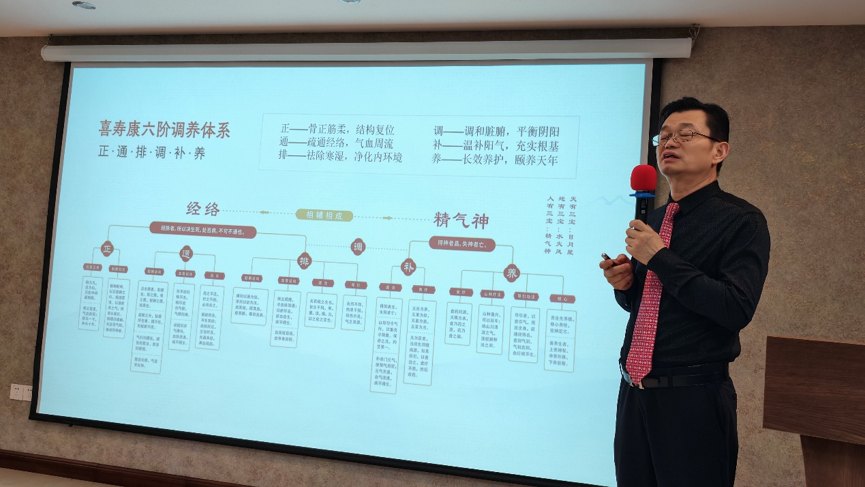
Based on the sub-health characteristics of contemporary populations, Tao Yujin proposed a six-in-one health and wellness approach of "correction, unblocking, detoxification, regulation, supplementation, and nourishment." This approach abandons the high-intensity and high-difficulty practice methods of traditional health exercises and aims to achieve a modern adaptation and improvement of traditional guided health exercises by focusing on gentle guidance, self-regulation, and long-term maintenance.
III. The Content and Popularity of Tao's Health Exercise System
The newly released Tao's Health Preservation Exercise - External Kung Fu Eight-Form Public Safety Version is a practical achievement of lightweight innovation in traditional guided exercises. The entire set of exercises includes eight progressive basic movements: tapping the neck to awaken the mind and promote the flow of Yang energy; turning the waist and tapping the iliac crest to nourish the lower abdomen; stretching the arms and tapping the elbows to regulate the three Yin meridians; turning the body and tapping the navel to regulate Yin and Yang; embracing and opening the armpits to soothe the liver and gallbladder; tapping the knees and vibrating the back to benefit the Qi Sea; bending over and tapping the legs to promote the flow of Yang energy; and raising the hands to regulate the breath and return to the Dantian. The entire set of movements combines movement and stillness, conforming to Sun Simiao's health preservation principles of "guided exercises to nourish the body, regulating the breath and loving the Qi," taking into account physical extension, Qi and blood regulation, and mental tranquility.
This set of health exercises has several characteristics that make it suitable for promotion to the general public:
First, the practice has a low barrier to entry, requires no equipment, and is not restricted by location. It can be practiced at home, in the community, or in the office, covering people of different ages.
Secondly, the movements are slow and gentle, without any difficult stretching or jumping movements. They mainly involve gentle tapping and stretching, making them suitable for people who sit for long periods of time and lack exercise.
Third, the system has a complete logical structure, with each movement referencing traditional meridian health preservation principles, achieving a combination of physical activity and mental tranquility.
It is important to clarify that Tao's Health Exercises are a general fitness program intended for daily physical conditioning and relaxation. They are not medical procedures and cannot replace clinical treatment. Individuals with underlying medical conditions or special physical conditions should assess their situation before practicing and consult medical professionals if necessary.
 IV. The Real Dilemma of Popularizing Traditional Health Exercises in Society
Traditional health preservation culture still faces many challenges in its dissemination to the public.
First, the transformation of classical theories is difficult. The principles of traditional Chinese medicine and Taoist health preservation classics are profound, and the health preservation ideas of ancient physicians such as Sun Simiao are highly specialized. It is difficult to directly transform them into health preservation exercises that are easy for ordinary people to master and adhere to in the long term, as there is a knowledge barrier.
Secondly, traditional health exercises are not well-suited to modern physical conditions. Most traditional guided health exercises originated from ancient life scenarios and were designed for the working conditions of people in ancient times. They are difficult to match the sub-health characteristics of modern people who sit for long periods of time and experience high levels of mental stress.
Third, industry communication needs to be standardized. Some projects in the health and wellness field exaggerate their effects, blurring the boundaries between fitness and wellness and medical practices, causing public misconceptions and affecting the credibility of traditional health and wellness culture.
Fourth, there is a shortage of standardized health exercises that are accessible to all ages. Safe, simple, and sustainable health exercises for the general public are relatively scarce.
V. Insights from the Modernization and Development Path of Traditional Health Exercises
Judging from Tao Yujin's creation of the Tao Family Health Exercise, the contemporary transformation of traditional health culture should adhere to the principles of upholding tradition while innovating, discarding the dross and retaining the essence, promoting scientific and universal benefits, and disseminating information in a standardized manner.
First, we must uphold the correct principles and trace the origins to solidify the theoretical foundation. The adaptation of traditional health exercises should be based on classic Chinese medicine texts such as the "Huangdi Neijing" (Yellow Emperor's Inner Classic), respect the Taoist philosophy of following the natural order and the concept of "preventing disease before it occurs and maintaining health through moderate exercise" proposed by Sun Simiao. We should not arbitrarily create new versions that deviate from traditional theories, and we must maintain the continuity of the health preservation system.
Secondly, the exercises have been scientifically improved to meet the needs of modern people. Combining the physical condition and lifestyle of modern individuals, the complex movements have been simplified, the rhythm of the movements optimized, and safety enhanced to create a guided health exercise program that is suitable for beginners, multiple scenarios, and easy to maintain long-term.
Secondly, it is crucial to standardize dissemination and clarify the boundaries of health and wellness. In popular science communication, it is essential to differentiate between fitness exercises and medical treatments, avoid hype and exaggerated claims, establish rational and scientific discourse, and guide the public to develop correct health concepts.
Finally, with a focus on universal access, we should promote its integration into daily life. Leveraging the advantages of lightweight health exercises, we can encourage traditional health practices to enter communities and families, transforming traditional health culture into a healthy lifestyle for the general public and continuously improving the nation's health literacy.
VI. Conclusion
Based on the "Huangdi Neijing" (Yellow Emperor's Inner Classic), and integrating Taoist culture and Sun Simiao's health preservation ideas, the modernization and innovation of traditional guided health exercises is a practical attempt to creatively transform and innovatively develop excellent traditional Chinese culture. It is also a feasible path to implement the Healthy China strategy and enrich the public's health and wellness methods.
Tao's Health Exercises, created by Tao Yujin, founder of Zhengzhou Xishoukang , are based on traditional health preservation theories and combined with the health and wellness needs of modern people. They explore ways to simplify the exercises and improve their universality, providing a practical model for the social popularization of traditional exercise culture. In the future, traditional health preservation culture still needs to adhere to scientific improvement, standardized popularization, and universal implementation, integrating into people's daily lives and contributing to the construction of national health.
Keywords : Huangdi Neijing (Yellow Emperor's Inner Classic); Daoist culture; Sun Simiao's health preservation philosophy; traditional guiding exercises; health-preserving exercises; cultural innovation; public health and wellness
References
[1] The CPC Central Committee and the State Council. The Outline of the "Healthy China 2030" Plan [Z]. 2016.
[2] The Yellow Emperor's Inner Classic [M]. Zhonghua Book Company.
[3] Sun Simiao. Essential Prescriptions Worth a Thousand Pieces of Gold for Emergency Use [M]. People's Medical Publishing House.
[4] State Administration of Traditional Chinese Medicine. Guidelines for Popular Science on Traditional Chinese Medicine Health Preservation [R]. 2023.
Disclaimer : This document is for reference only and does not constitute any form of commitment, guarantee or professional advice.