

The Chinese freshly brewed coffee market is projected to exceed 450 billion yuan by 2026, but traditional coffee franchises are experiencing a wave of closures. Why has the shop-in-shop shared coffee model become the second growth engine for brick-and-mortar stores? Read this article to find out.
How many cups of coffee do Chinese people drink every day? The answer might be more surprising than you think.
According to industry data, the Chinese coffee market reached 218.1 billion yuan in 2025, with freshly brewed coffee accounting for over 86%, reaching 188.4 billion yuan. It is projected that from 2026 to 2030, the compound annual growth rate of freshly brewed coffee consumption will remain between 22.8% and 28.2%, potentially reaching 592.6 billion yuan in 2030. Meanwhile, the number of coffee shops nationwide increased by over 40,000 in 2025, reaching 215,000. However, on the other hand, over 51,000 coffee shops closed down throughout the year, with 62% of the closed shops failing to survive for more than a year .
Opening a store quickly is easy, but closing one even faster is equally common. Price wars, homogeneous competition, and high franchise fees are eroding the profit margins of traditional coffee entrepreneurs.
Against this backdrop, a completely different model is emerging – shop-in-shop shared coffee .
What is a shop-in-shop shared coffee ?
Simply put, it's about embedding the coffee business into an existing commercial entity . No need to rent a separate storefront, no need for luxurious renovations, no need to hire a full-time barista; you can start a freshly brewed coffee business using just one square meter of unused space in an existing store.
This model is not a new concept. Nova Coffee, with its " coffee + convenience store " joint venture model, will have over 10,000 stores by the end of 2025, more than 90% of which are shop-in-shops; Luckin Coffee launched a shared store model with Lianjia in 2025; and Kudi has also announced the relaunch of its shop-in-shop model. The fact that these giants are all vying for this market indicates that they are on the right track.
Coffee Tribe : More than just a shop-in-shop, it's a "system service provider".
Unlike the brands mentioned above, Coffee Tribe is not positioned as a coffee retail brand, but rather as a full-chain service provider for a shop-in-shop, shared coffee system .
Coffee Tribe doesn't charge franchise fees. Merchants don't need to open independent stores, stock up on goods, have professional skills, or have dedicated personnel to manage them. They only need to provide a 1㎡ unused bar counter, and Coffee Tribe can complete the entire chain of IoT coffee machine deployment, direct raw material supply, online ordering system setup, operation training, and after-sales maintenance.
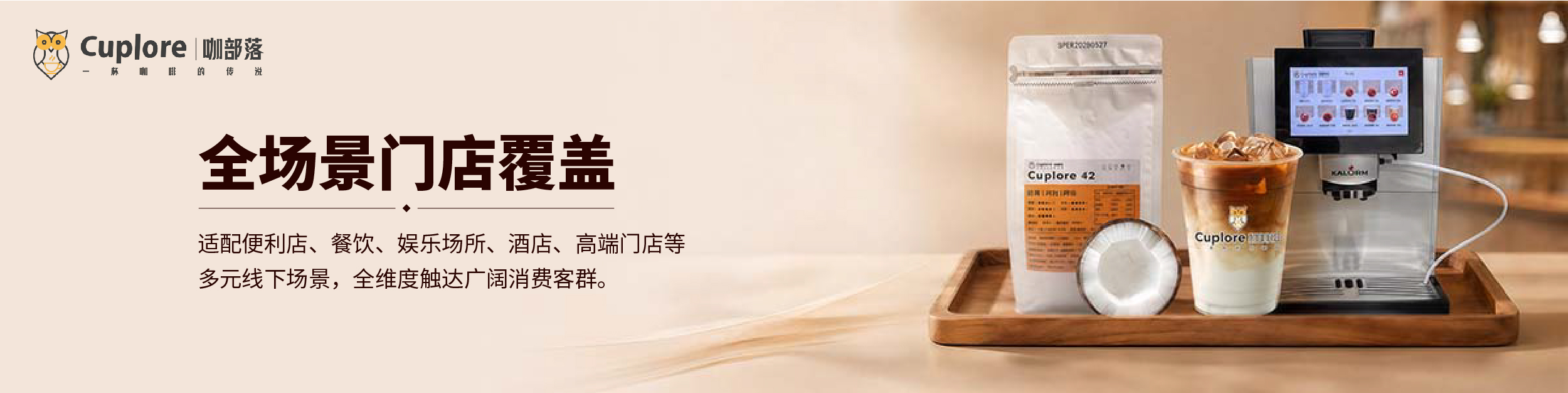
Currently, over a thousand partner stores have been established nationwide, covering dozens of offline scenarios such as e-sports venues, chess and billiard halls, chain convenience stores, gyms, restaurants, bookstores, hotels, and beauty salons.
Why is the shop-in-shop model booming?
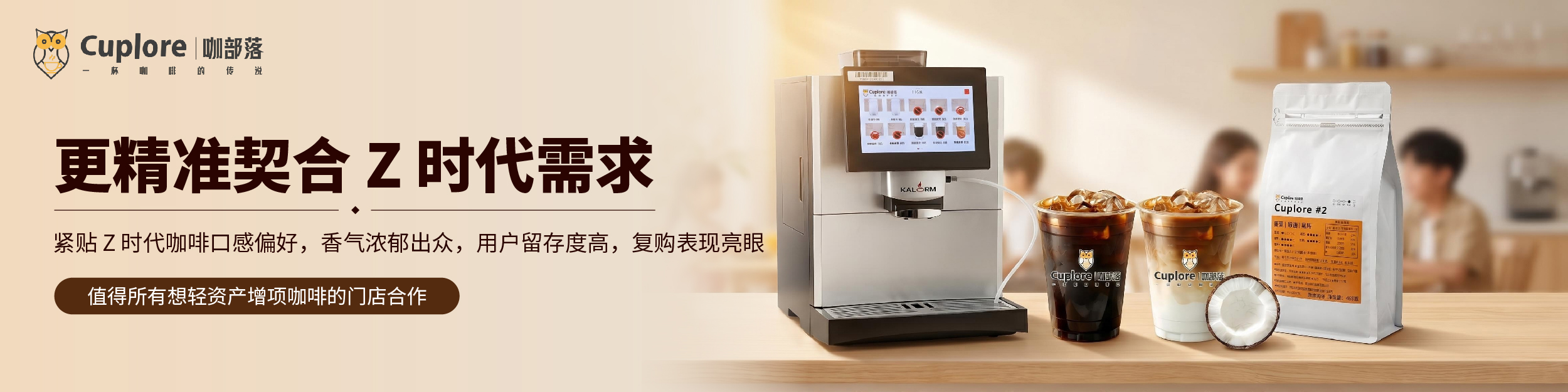
First, coffee consumption has become a necessity. Coffee has become deeply integrated into the lives of Chinese people, with the average annual consumption per person rising to 28.57 cups. Coffee consumers are characterized by high repurchase rates and strong purchasing power, making them a key factor in attracting younger customers.
Secondly, physical stores urgently need growth. Traditional physical stores are facing the dilemma of declining customer traffic and peaking average transaction value, and urgently need low-cost, high-stickiness value-added categories. Compared with milk tea, coffee has simpler ingredients, stronger health attributes, and higher drinking stickiness, making it the optimal category for the second growth curve of the entire offline business.
Third, a lean asset model is the future. With Luckin Coffee surpassing 26,206 stores globally and Coody's target of 50,000, the traditional franchise model is nearing its saturation point. The shop-in-shop model, characterized by minimal integration, low risk, and quick returns, is becoming the optimal solution for small and medium-sized brick-and-mortar businesses.
The trillion-dollar coffee market is undergoing a paradigm shift from "asset-heavy store openings" to " asset-light product integration ." Are you ready to jump on board?